

Listen to this article
Veteran Community Integration Services program provides housing and employment resources for veterans navigating the transition to civilian life.
More than 200,000 U.S. service members transition out of the military each year. While some veterans adjust smoothly to civilian life, for others, reintegration can be more complicated. Challenges with employment, housing stability, and mental health can make the transition difficult long after military service ends.
According to research by the U.S. Department of Veterans Affairs (VA), about 15 percent of veterans report struggles related to their social, financial and vocational well-being, and early reintegration support may help prevent long-term mental health challenges.
The Salvation Army’s Veteran Community Integration Services (CIS) program in Southern California aims to help veterans navigate those reintegration hurdles by providing housing and employment assistance across Los Angeles, Orange, San Bernardino, Riverside, Ventura and Santa Barbara counties.
“We work with community partners to identify or assist any veterans who are homeless or seeking to increase their income for sustainability,” said CIS Director Rene Ceballos. “So not only is our benchmark to place them into a career or path to earn enough income to sustain themselves, but we also try to help them with housing.”
The two service components are intertwined to achieve the shared goal of self-sufficiency as veterans acclimate to civilian life.
Ceballos knows firsthand how important it is to have resources like this available to veterans.
“A lot of veterans get out of the military and don’t know what the next step is. I’ve been there, I’ve experienced that. When they come out of the military, all that experience and work that they’ve done doesn’t really mean a lot when you translate that here in the civilian world,” Ceballos said. “A lot of veterans tend to get discouraged because they were managers in the military. They were leading multiple soldiers. They were leading multiple troops, and now, they have to start from the bottom, and struggle to find peace and income to pay their bills.”
As far as housing goes, CIS helps veterans secure transitional or permanent housing, receive rental assistance to prevent homelessness and build long-term housing stability through gradual subsidy programs.
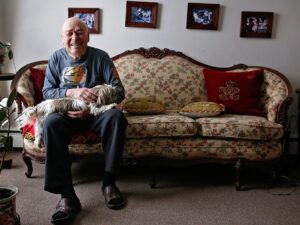
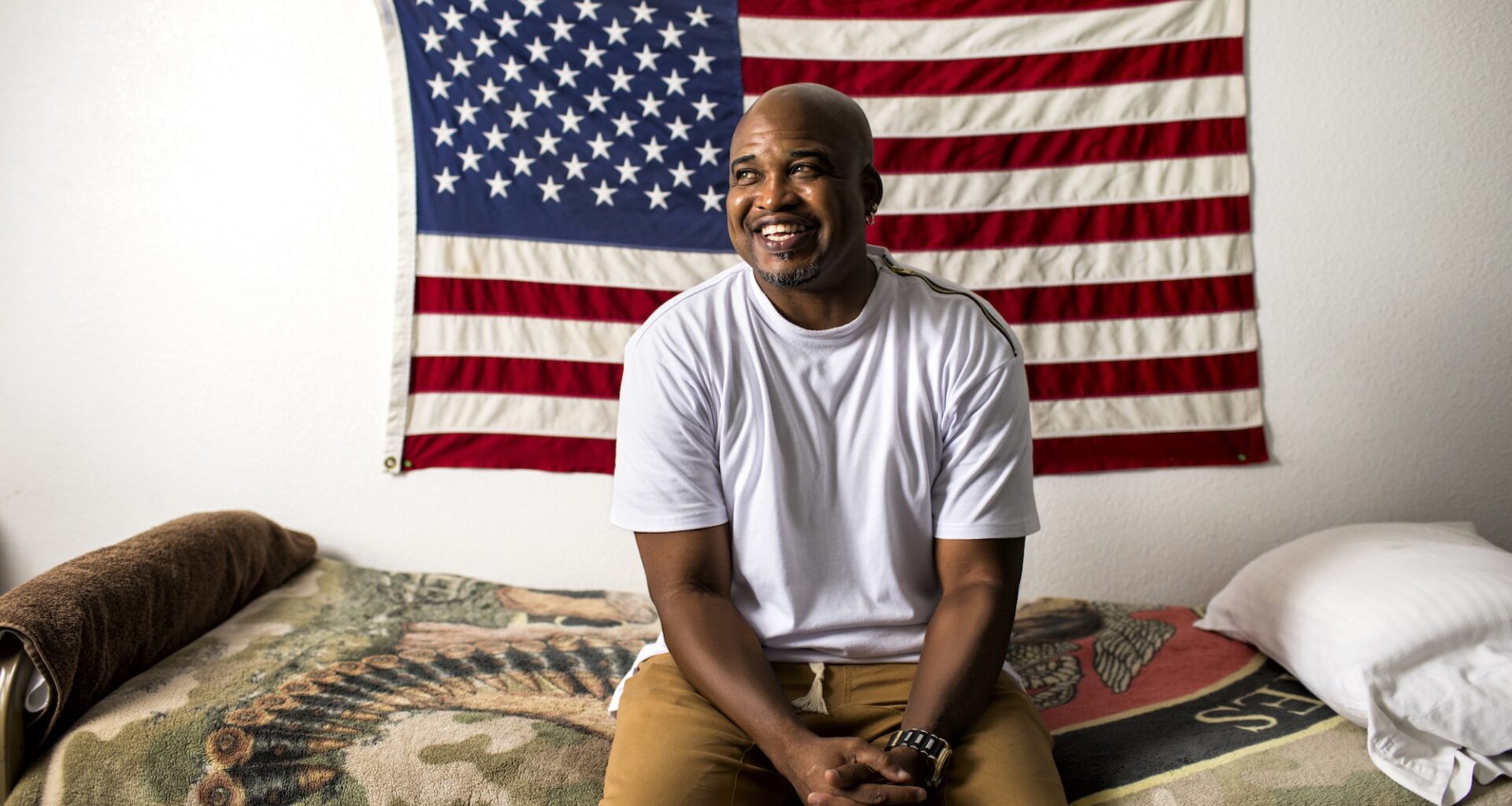
U.S. Navy veteran Leon Knighton turned to CIS when he needed help finding a more stable housing situation after retiring from the VA. Through the program, he worked with a case manager to find housing and received rental assistance after moving into his new home.
“It meant everything to me,” Knighton said. “It just made life a lot less stressful than it was. It made it easier for me.”
Even after experiencing setbacks, Knighton checked in with The Salvation Army weekly as he searched for a new home. And then one day, he did.
“I had to pound the pavement looking for the place, but it all came together,” Knighton said. “When I found the place I really, really wanted and got it…was just great.”
He vividly remembers the day he moved into his new apartment.
“It was like I was born again,” Knighton said. “I’m getting my rest. I have peace of mind now.”
Knighton emphasized that reintegration assistance programs like CIS are critical for veterans facing difficult circumstances.
“People need that support and backing for them to get themselves going every now and then,” Knighton said.
Employment is another critical component of reintegration, providing veterans with the income needed to maintain stable housing. Through CIS, veterans can receive job search assistance, resume support, interview preparation and ongoing guidance.
For U.S. Army veteran Danielle Harris, those services helped her rebuild confidence and find a new path forward after struggling to secure employment following her release from prison in 2024.
“When I first came home, I was really, really struggling to find a job. I already had my Bachelor’s degree before going in, so I felt like with my degree I was going to come out, get a job, and it would go like that, but that’s not how it happened at all,” Harris said. “I went to so many places, and I got turned down. So just for them to even give me the opportunity was amazing.”
Her grandmother gave her a flyer for a job fair on her birthday, and that’s how she got connected to The Salvation Army’s CIS program, which changed her life.
Harris worked with a case manager to find job opportunities and navigate the application process.
“I was really, really grateful for the support that I had because when you’re in prison, they have all these resources and all these programs to help, but knowing my background, I just felt like when I came home, I wasn’t going to have that,” Harris said. “I didn’t know how I was going to find the right people and how I was going to find that positivity, that structure, that support, and so it just kind of fell in my lap. That was perfect for me because I was so afraid of just kind of going backward.”
The Salvation Army supported her outside of finding a job, too.
“They were just so good about always checking in with me, sending me flyers for events to keep myself busy, so that I didn’t revert back to those old habits in my old environment,” Harris said.
Eventually, she landed a job as a client ambassador at the front desk of The Salvation Army Bell Shelter in Bell, California. Five months later, she was promoted to veteran case manager—helping others facing the same challenges she encountered after serving in the military.
“It really is so rewarding, and I love it because I feel very relatable to the clients here,” Harris said. “I feel like it makes them trust me a little more, and it’s just such a good feeling at the end to see them go from coming here with sometimes nothing and then they leave with everything they need to be successful.”
Her journey through the program taught her lessons she now brings into her role.
“They truly helped me realize that my past doesn’t have to define me because for the longest time I struggled with that,” Harris said. “And I came here, and everybody just had such a different approach. They were like, ‘No, you can do it, and there are options out there for you.’”
Now, Harris maintains this mindset as she pursues her Master’s degree in social work while continuing her work with veterans at Bell Shelter.
“I feel like [The Salvation Army] really set me up for success. They truly did. I haven’t backtracked at all,” Harris said. “My mind is just, ‘I have a goal, and I feel like I’m equipped to make that goal.’”
Do Good:
- The Salvation Army exists to meet human need wherever, whenever and however we can. See more here.
 Download this page as a PDF