



Listen to this article
Program assigns volunteer graders to review lessons and return feedback by mail.
When Beverly Locke was incarcerated, she completed The Salvation Army’s Bible correspondence course.
“To be honest, when I first started doing it, it was because I didn’t have anything else to do,” she said. “But then it started getting into me.”
Over time, she said, the lessons became more meaningful, shaping her faith. After her release, she began attending The Salvation Army Inglewood (California) Citadel Corps—and she returned to the Bible correspondence course as a volunteer grader. She’s been grading lessons for about five years.
Today, in a world of instant communication, the Bible correspondence course offers a different approach. The course—handwritten lessons sent through the mail and returned with feedback from volunteers—is designed for incarcerated individuals who choose to participate. In some cases, immediate family members may also enroll to participate alongside their incarcerated loved one.
Students complete lessons and return them by mail to The Salvation Army Western Territorial Headquarters, which then forwards them to the graders, who play a central role in the program. Working primarily from home, graders review completed lessons using provided guides and write brief, encouraging feedback. The role requires consistency, attention to detail and thoughtful engagement with each student’s responses.
Correctional Services Supervisor Bertha Salguero said it takes about an hour and a half to grade each lesson.
Locke said her own experience shapes how she approaches each lesson. She remembers waiting for her graded lessons while incarcerated.
“It was exciting to get something in the mail,” she said. “Those Bible studies were more than just me learning about God. They were encouraging me to change my life.”
Salguero said the role of grader tends to attract a specific kind of volunteer.
“Prison ministry is not for everyone,” she said. “You have to be able to see the person and not the crime.”
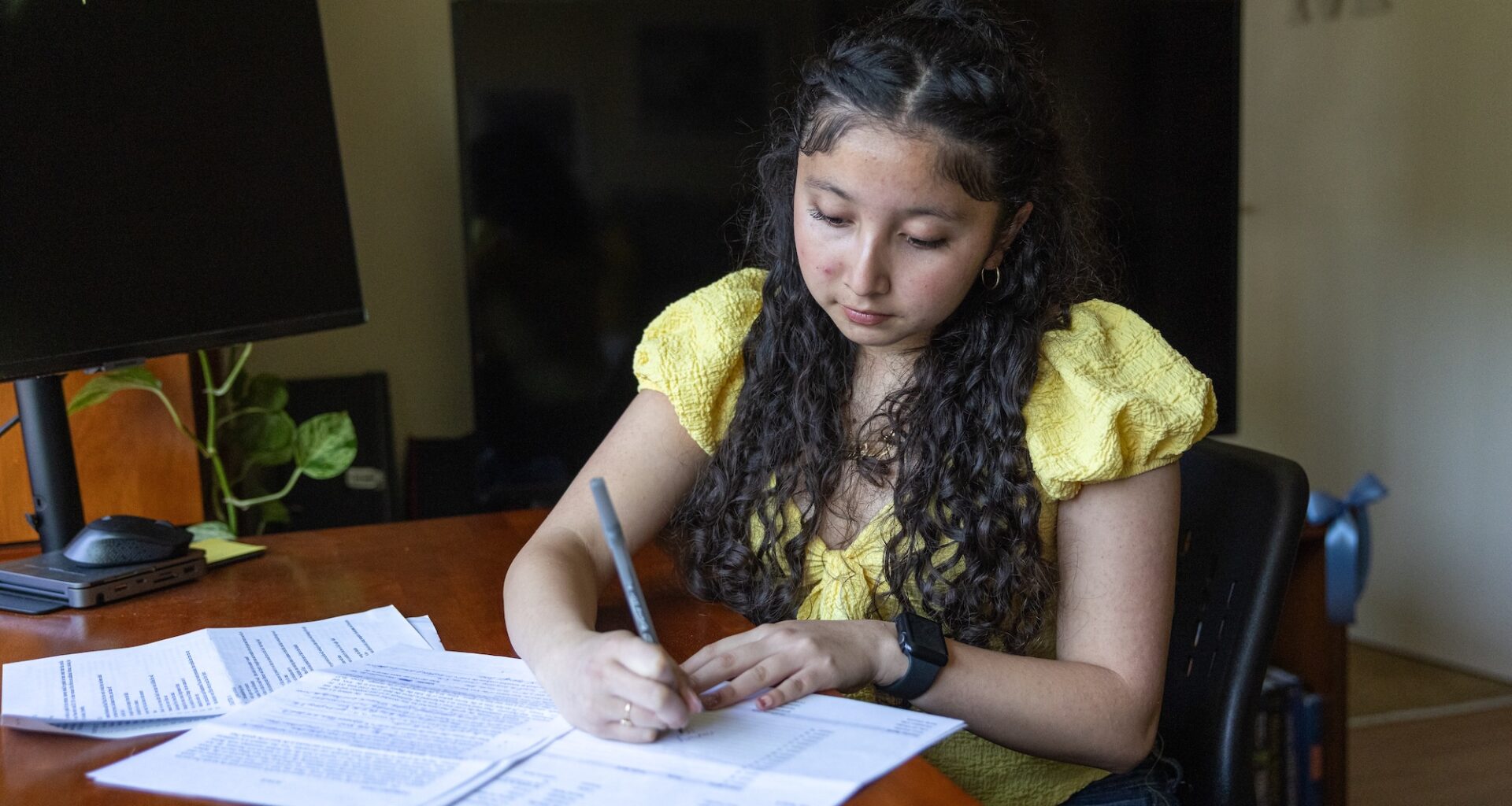
High school student Merary Hernandez, 17, is one of those volunteers, grading lessons after school. She learned about the opportunity from her parents, Cadets Carlos and Olga Hernandez, currently training at The Salvation Army College for Officer Training in Rancho Palos Verdes, California, after Salguero introduced the program at a seminar.
Merary said she believes God gives everyone the opportunity to grow and change.
“It was exciting to get something in the mail. Those Bible studies were more than just me learning about God. They were encouraging me to change my life.”
Beverly Locke
“Even small acts of service can have a bigger purpose and impact in ways we might not always see,” she said, adding the work has encouraged her to be more intentional about her relationship with God. “In a way, it’s not just about helping them grow, but about helping me grow, too.”
The coursework itself, offered in both English and Spanish, is designed to be completed over time, with each lesson building on the last. The first course, “Life of Christ,” covers the four Gospels—Matthew, Mark, Luke and John—exploring Jesus’ early life, his miracles and parables, and the lives of his disciples, culminating in the resurrection and ascension.
Some participants complete a full coursebook of about 12 lessons in a matter of weeks, while others take months. Upon completion, participants receive a certificate and may continue on to additional units.
In the first six months of this year, volunteers in the Western Territory graded 3,360 lessons, and Territorial Headquarters issued 380 course completion certificates. She added that while many individuals enroll, about 30 percent continue through the full 12-course sequence.
Many student responses reflect turning points. One participant described returning to faith after a difficult decade, writing that reading the Bible again helped him “get back on the right path.” Another shared a desire to grow into a better father, saying he wanted God to “mold me to be the father my children need.” Others wrote of leaving behind past involvement in gangs or discovering a deeper understanding of their faith while incarcerated.
One student, Margaret, just started the first course. Responding to the question, “How are the Gospels important to you?” she wrote: “By living Jesus’ way, I can be assured of salvation and eternal life—something I am striving for.”
At the national level, a committee guides curriculum and policy for correctional ministries across the country. At its most recent meeting, leadership approved a shift in terminology from “Correctional Services” to “Correctional Ministries,” reflecting an emphasis on the program’s spiritual focus.
Salguero noted the Bible correspondence courses continue a long-standing emphasis within The Salvation Army on prison outreach.
“That’s how The Salvation Army started, and we are just following what the founder began,” she said, referencing the organization’s early prison ministry efforts under Founder William Booth.
Known for his emphasis on reaching people in prison and on the margins of society, Booth declared in a well-known speech, “While men go to prison, in and out, in and out… I’ll fight to the very end.”
While the Bible correspondence course can provide structure during long periods of incarceration, it may lead to much more. That’s what motivates Locke.
“Sometimes I really want to tell them, ‘I was in your shoes, and this worked for me,’” she said. But she keeps her written comments brief: “Keep up the good work. God bless you.”
Do Good:
- No matter what your skills or interests are, there is a volunteer opportunity that is a good fit for you. Discover an opportunity close to home.
 Download this page as a PDF