

Listen to this article
An often overlooked US Territory in the western Pacific, Saipan is closer in proximity to the Philippines than it is to Hawaii.
Living there has its undeniable challenges: the high cost of living, the economic isolation, the incessant storms.
But the island is also very much alive. Azure waters, white sand beaches, verdant jungles and WWII-era ruins fuse with a dynamic Chamorro and Carolinian native culture to create a place that is entirely unique.
Journey with us to this fascinating, faraway paradise, and see how the Lord is using The Salvation Army on the beautiful island of Saipan.
Below is a transcript of the video, edited for readability.
Envoy Wayne Gillespie: Saipan is one of those places where we’re always looking over our shoulders for the next typhoon or the next storm, earthquake, tsunami, whatever it might be.
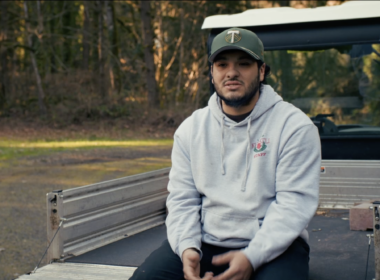
Major Eric Tumale: Greetings from Saipan. Saipan is the capital of the Commonwealth of the Northern Mariana Islands, one of the five Overseas Territories of the United States. It is a small tropical island 6,000 miles west of the US mainland.
The primary native ethnicities on the island are the Chamorro and Carolinian peoples, each with their own unique language and culture. The island was under Japanese control until World War II, when the Americans landed and fought the Battle of Saipan. The legacy of that battle still looms large on the island today.
Envoy Wayne Gillespie: Most people who were around back then are no longer with us. When Annie’s mom was just a young girl during World War II, her family fled to a cave. There were bullets ricocheting through the cave. So Annie’s mom lost her father.
Major Eric Tumale: After World War II, the Northern Marianas, including Saipan, became part of the UN Trust Territory, and in 1975, they voted to officially become part of the United States as an Overseas Territory.
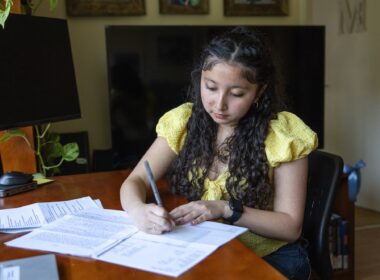
Envoy Annie Gillespie: When I was a kid, we were 14 kids in the family. My mom and dad had seven boys, seven girls. We don’t have a car, so when we were going to go somewhere we always have to walk, walk to school, walk to our families. We go with my dad to go catch fish for our food. If we catch a lot, we’ll share it with the neighbors. And so we enjoy what we have.
Envoy Wayne Gillespie: Annie was from here originally, but there was no Salvation Army unit here, so we felt that it was our duty to run a corps.
It’s a beautiful island with beautiful people and some of the best culture that you’ll ever experience. We have a lot of gorgeous plant life, beautiful azure blue water.
The locals are some of the most polite that you’ll ever meet. Families are very close here. My nieces and nephews, I think of them as my sons and daughters and I refer to them [as] that.
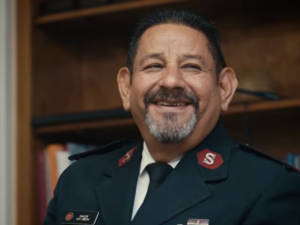
Major Eric Tumale: I’m Major Eric Tumale, the Micronesian Coordinator for The Salvation Army. I’m visiting from Guam to assess the operational needs here, and how we can best support them. I’m so grateful for the leadership of Envoys Wayne and Annie, for making the Army present in the community.
Envoy Wayne Gillespie: There are some unique challenges that most places in the mainland don’t face. Gas is extremely high here. Electricity is especially expensive. When you bring supplies and equipment in, there are import duties and taxes and shipping costs.
And we have a lot of typhoons. They’re fairly constant. In the last 60 days or so, we’ve had four typhoons. And so we are constantly getting set back.
Local small businesses will often close and families lose their paychecks. We end up helping those families with food assistance.
Major Eric Tumale: This is the first time that I witnessed the outreach to the community. It’s very impressive, their work. The volunteers were already there at the corps, preparing the food.
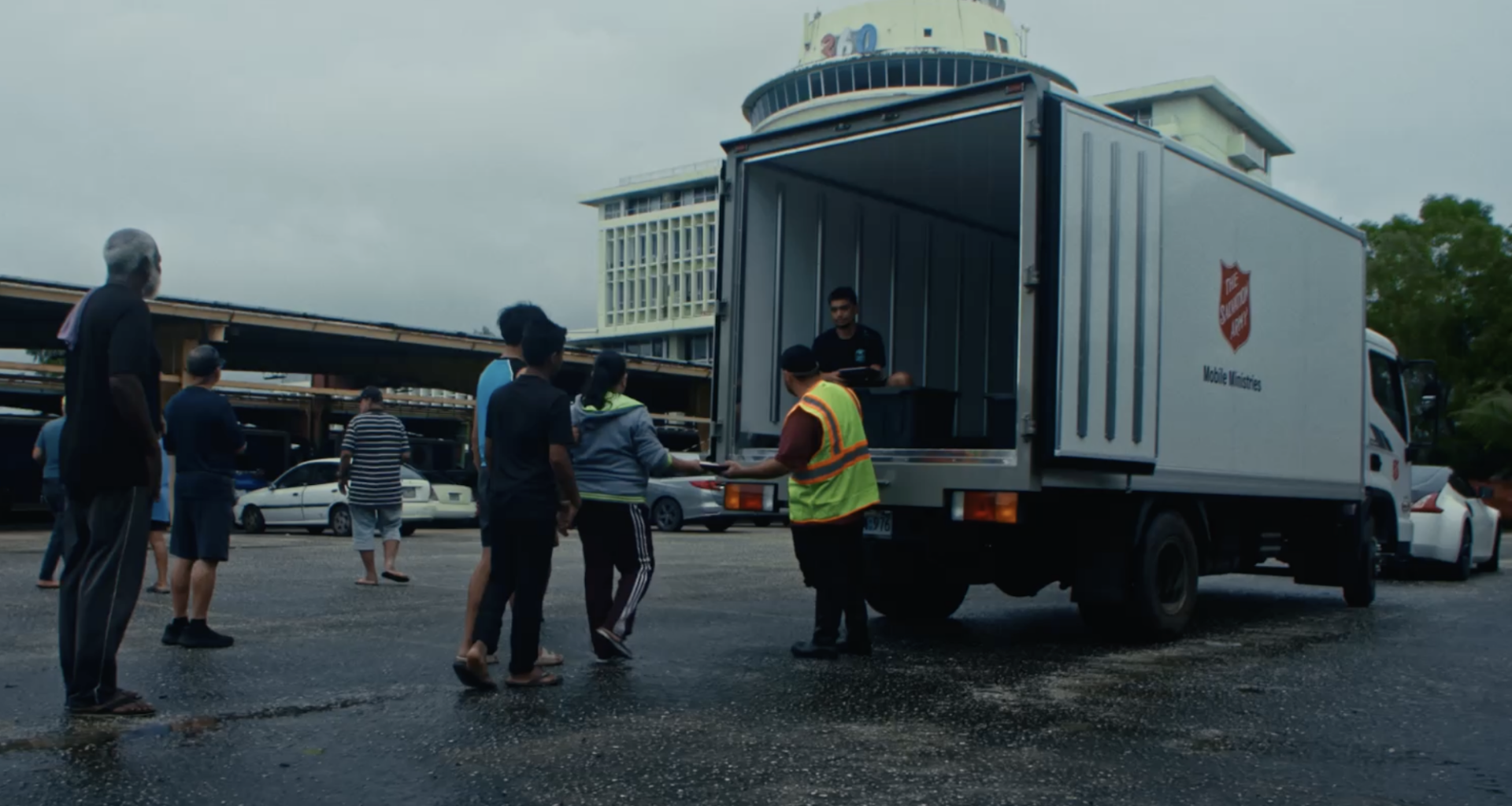
Envoy Wayne Gillespie: On Saturday, we have a distribution to the general public. We’ll serve around 150 to 200 meals. We also distribute food for the homeless after our outdoor church service. So our congregation is very experienced in food preparation and distribution.
The core of our volunteers are the congregation. I don’t even like to call them volunteers. They’re more like heroes.
One of the super typhoons that we had, our soup kitchen pushed out about 2,000 meals in a little over an hour. They can get maximum volume pushed out the door in minimum time.
Envoy Annie Gillespie: Congregation, you know, it’s like family. We’re really close and we praise the Lord for them, really.
Envoy Wayne Gillespie: The Lord is doing through The Salvation Army what he always has. He’s called people to do a certain work and sent us out. As Christians, this is what we’re called to do.
Envoy Annie Gillespie: It’s all about the Lord. We don’t think of ourselves that, the Lord needs us, we need him.
Envoy Wayne Gillespie: So there’s always these constant challenges and trying to adapt, and having to live outside the box, as it were. But then again, that’s what The Salvation Army is about.
We have a long history of God calling people into The Salvation Army and blessing us with the ability to do things for nothing. So I think he’s been merciful to us and we’re able to adapt to these things.
Do Good:
- See more videos like this in our video feed.
 Download this page as a PDF