

Listen to this article
Nathan Lyons was just 22 years old when he was deployed to Iraq in 2003—part of one of the largest mobilizations of the Oregon National Guard since World War II. After a particularly brutal first night in Iraq, Nate attempted to find the military chaplain, only to discover he got scared and left.
To Nathan, God had abandoned him when he needed Him most. But after an injury that could have killed or left him paralyzed, Nate’s faith changed, and he knew he had to make the most of his second chance.
Below is a transcript of the video edited for readability.
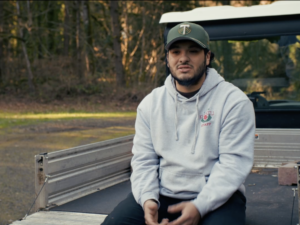
Nathan Lyons: It’s funny the things that come back to you when you look at these.
My life has taken me in several different directions, but it’s been a journey that all led to where I am currently.
When I joined the Army, I remember calling my parents to let them know that I had enlisted. I told my mom to make sure she was sitting down and she cried, as probably most mothers would.
At the very beginning of the Iraq war, we flew into Kuwait. From there, we moved up to Iraq, 15 miles south of Baghdad.
And it was the old communication towers. This kind of shows you what it looked like when we moved in. It is rubble. We had no cold water. We didn’t have air conditioning. It’s 135 degrees outside.
That’s where we set up shop. That was our home. Just under camo nets, sitting around playing cards during the day. And then we’d go out and do our missions throughout the night.
This picture here is me. In the background, you see this plume of smoke right here. I’m just posing for a photo, and here’s a mass explosion when you least expect it.
Our first night there, I don’t think I slept much that night. I was laying in the cot and would watch the tracer rounds fly overhead. You’d hear jets fly over. You could hear explosions. It was a pretty scary moment, kind of that realization that you’re really in it. Like, now it’s time to watch your back.
Our chaplain at the time had a big meeting and said, “Hey, anybody who wants to pray, let’s come pray.” I thought, I’m going to go talk to this chaplain. I went to find him, couldn’t find him anywhere. I said, “Hey, First Sergeant, so where’s the chaplain?” He said, “Oh, he went back to Kuwait. He got scared.”
I took that moment and said, oh, so when you need God, he abandons you. I looked up at the sky and I said, I don’t need you either. I actually started telling people there was no God.
People would say, “Oh, hey, I’m going to pray for you.” I said, “Why? God abandons you when you need it, man. If he’s even there.”
I ended up getting injured. I was carrying the saw gun, which is a fully automatic weapon. Our squad leader made me carry the whole thing on my back. It was a very insane amount of weight.
So when this pack came down on me, it would just send this shooting pain down my back. My fingers, all the time, were tingly and numb. They gave me pain meds, and I went through the whole year and a half deployment, just them saying, “Here, no, you’re fine. It’s just a pinched nerve.” Here’s pain meds, pain meds, pain meds.
When we got back stateside, I was going in for injections into my neck every six months that were supposed to help with the pain. If it lasted six minutes of pain relief, I was lucky. Until finally one day the doctor said, “Has anyone done an X-ray on your neck?” I said, “Nope.” So she sent me in for an X-ray.
My C1 and C2 were broken. I ended up having to get it fused immediately. That’s the axis that your head hangs on. I had essentially broke my neck. The Chief of Neurosurgery said, “How you’re not dead or quadriplegic is a miracle.”
In that moment, I lost it, because…cause I’m alive. And I’m sitting there telling people, “There’s no God, man. There’s no God.” But here I am, because He had other plans.
It just was this, I don’t even know how to describe it. Just something filled me. You know, we can call it the Holy Spirit. We can call it hope. I knew there was more, and I wasn’t living up to it.
I knew I was supposed to help people. So I went down a lot of routes. I thought, maybe I can help people in treating them. I thought pharmaceutical sales was maybe part of that route. Then I went back to school to become a physician assistant. I was realizing maybe that really wasn’t the path I wanted to take.
And it wasn’t until I really stopped and listened to what God was calling me to, and visions that he was actually giving me, I couldn’t have heard it more clearly. My calling was to work with veterans.
I spoke to a pastor, and I said, “You’re going to think this is absolutely nuts, but I think God is calling me to ministry.” She said, “You know what? Have you thought about chaplaincy?” I thought, no, I don’t like chaplains. Like, they rub me the wrong way.
And she said, “Well, I got this email this morning for this chaplaincy clinic at our church, but I think maybe I got it because I’m supposed to send you there.” Thought, okay, I’ll go. I don’t think I’m going to get anything out of this, but I’ll go.
I went to that seminar that weekend. The first words that were spoken, “Do you have the ability to go where you’re needed and to be the hands and feet of Christ? If you’re willing to answer that call, you’re already a chaplain.” Once it sank in, I was like, this is, this is what I’m supposed to do.
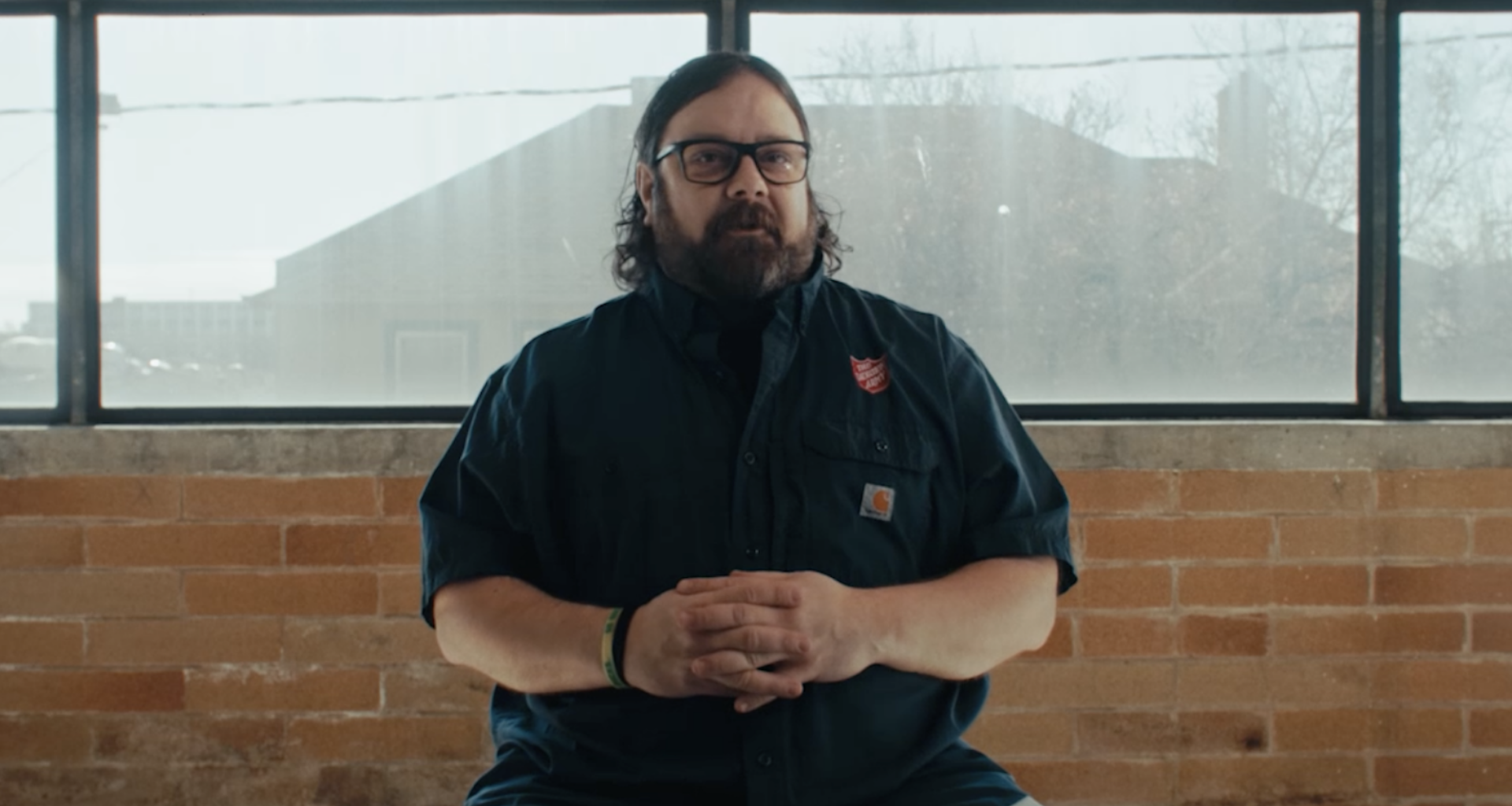
A great mentor of mine put me in touch with The Salvation Army Veterans and Family Center. When I started working in chaplaincy, the Veterans and Family Center aligned perfectly with not only the calling but with what’s needed within the veteran community.
These are veterans who have really lost almost everything. Over 60% of homeless veterans are more than likely to have drug addiction, alcohol abuse and severe trauma. That’s a staggering number. It’s a very severe issue with very, very little help.
The Veterans and Family Center provides a program for each veteran that’s individualized for what they’re trying to seek. It allows for temporary housing, three meals a day. We offer a gardening program, computer literacy, a chapel evening. We encourage a lot of recovery classes, mental health classes, sobriety.
My job is to walk alongside the veterans there, to be their spiritual guidance. Mostly what I do in here is counseling with folks. One on one. We’ll come in here either for prayer, we’ll talk about life.
Being a veteran myself, I think a lot of folks find it pretty easy to talk to me. I myself have been through a lot of what they’ve been through.
I believe that showing what love looks like, what caring looks like, will lead people to Christ. And so it is extremely rewarding to be able to walk alongside these folks and then see the transformations in their lives as well.
Do Good:
- See more videos like this in our video feed.
 Download this page as a PDF