

Listen to this article
A volunteer partnership through Pepperdine University pairs older adults with youth programs.
Every day, kids in The Salvation Army Long Beach Red Shield After School Program come in for a snack after playing outside.
Today, over bowls of popcorn, they chat with each other. Some play, others engage with older adult volunteers seated at the tables.
Then it’s upstairs for homework support. When it’s all done: game time.
“Michael is the Uno king,” said Brenda Doby of fellow volunteer Michael Jackson.
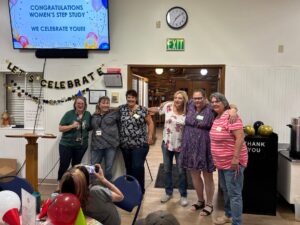
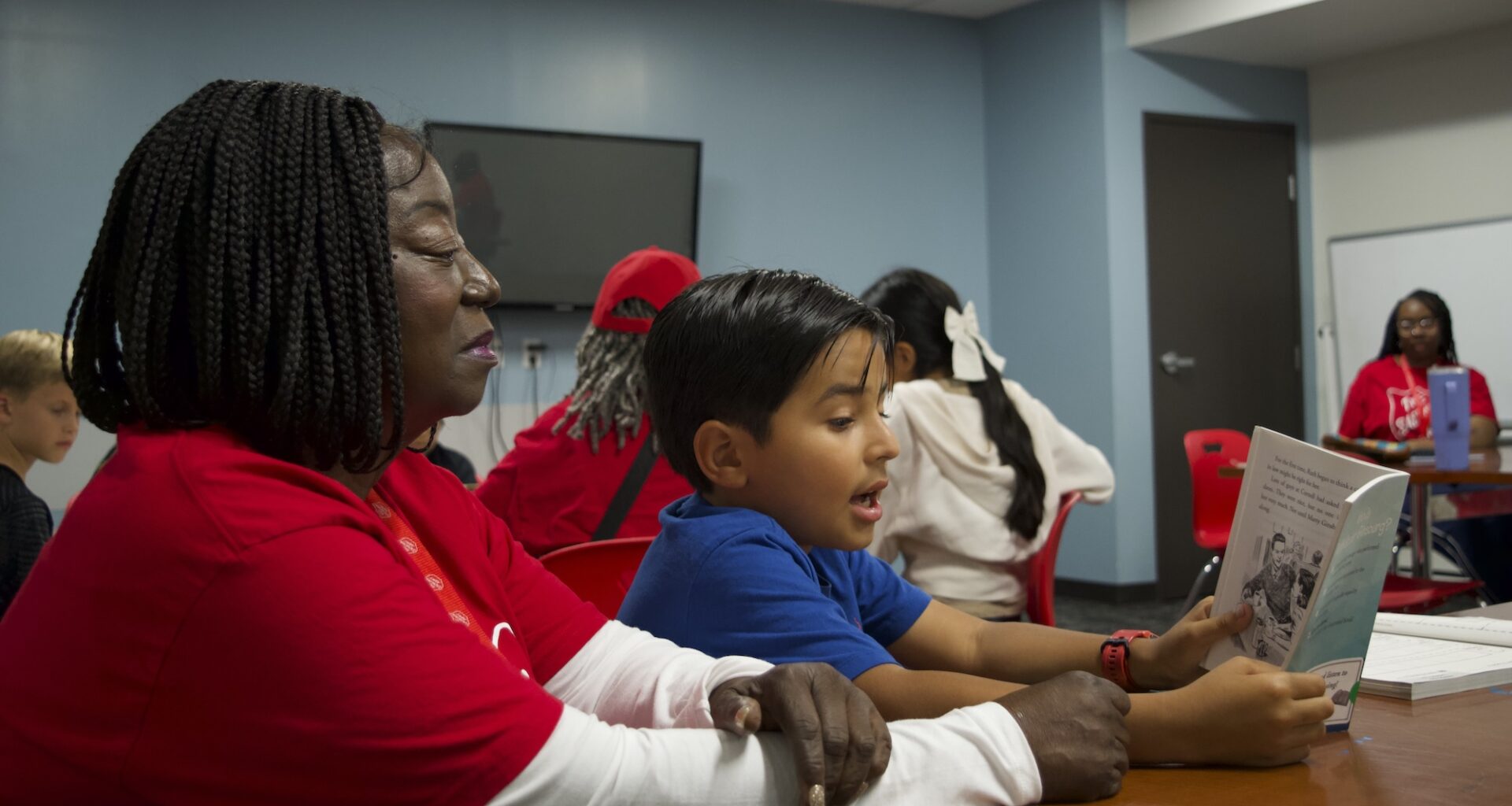
Doby and Jackson are among a group of volunteers known as Foster Grandparents. The group supports Salvation Army staff, helping kids in the program with homework and reading and serving as a needed presence—and friend—during snack and activity times.
“There’s so much negativity out there that you just want to be positive,” said Foster Grandparent Winnie Girard, who has served about three years in Long Beach after relocating from Connecticut, where she also served as a Foster Grandparent.
The Foster Grandparent Program began in 1965 as a national initiative of AmeriCorps Seniors. In Long Beach, the foster grandparents came to The Salvation Army through Pepperdine University, which has been a sponsor of the Foster Grandparent Program since 1972.
The Foster Grandparent Program aims to give older adults the opportunity to volunteer with youth up to age 21 who have exceptional needs and circumstances. After all, intergenerational mentorship is proven to benefit all parties involved.
“The impact is deeply mutual,” said Pepperdine Foster Grandparent Program Executive Director Dr. Shanetta Weatherspoon. “Children benefit from individualized support, mentorship, patience and emotional connection from older adults who bring wisdom, consistency and life experience into classrooms and community spaces…For older adults, volunteerism often provides renewed purpose, fulfillment, social connection and community involvement.”
Across the program’s end-of-year surveys, volunteers consistently describe benefits such as reduced isolation, increased confidence, emotional wellbeing, stronger social relationships and a sense that they are continuing to make a meaningful impact in their communities, Weatherspoon said. She added many volunteers also express that serving children gives them joy, motivation and a continued sense of purpose.
The trained older adults have been vetted through rigorous background checks and also receive monthly inservice training for further skill development through Pepperdine, along with a small stipend and transportation and internet reimbursement.
“Our goal is not simply to place volunteers, but to build partnerships with organizations that value intergenerational programming and recognize the wisdom, love, mentorship and support older adults contribute to school and organizational environments,” Weatherspoon said.
Some 150 Foster Grandparents serve at some 25 locations in Southern California, including The Salvation Army Long Beach Red Shield, Los Angeles Day Care and Siemon Center as mentors, tutors and friends.
At The Salvation Army Los Angeles Day Care, a pair of foster grandparents work closely with teachers, giving additional emotional and academic support to students who need extra attention, Director Maria Rodriguez said.
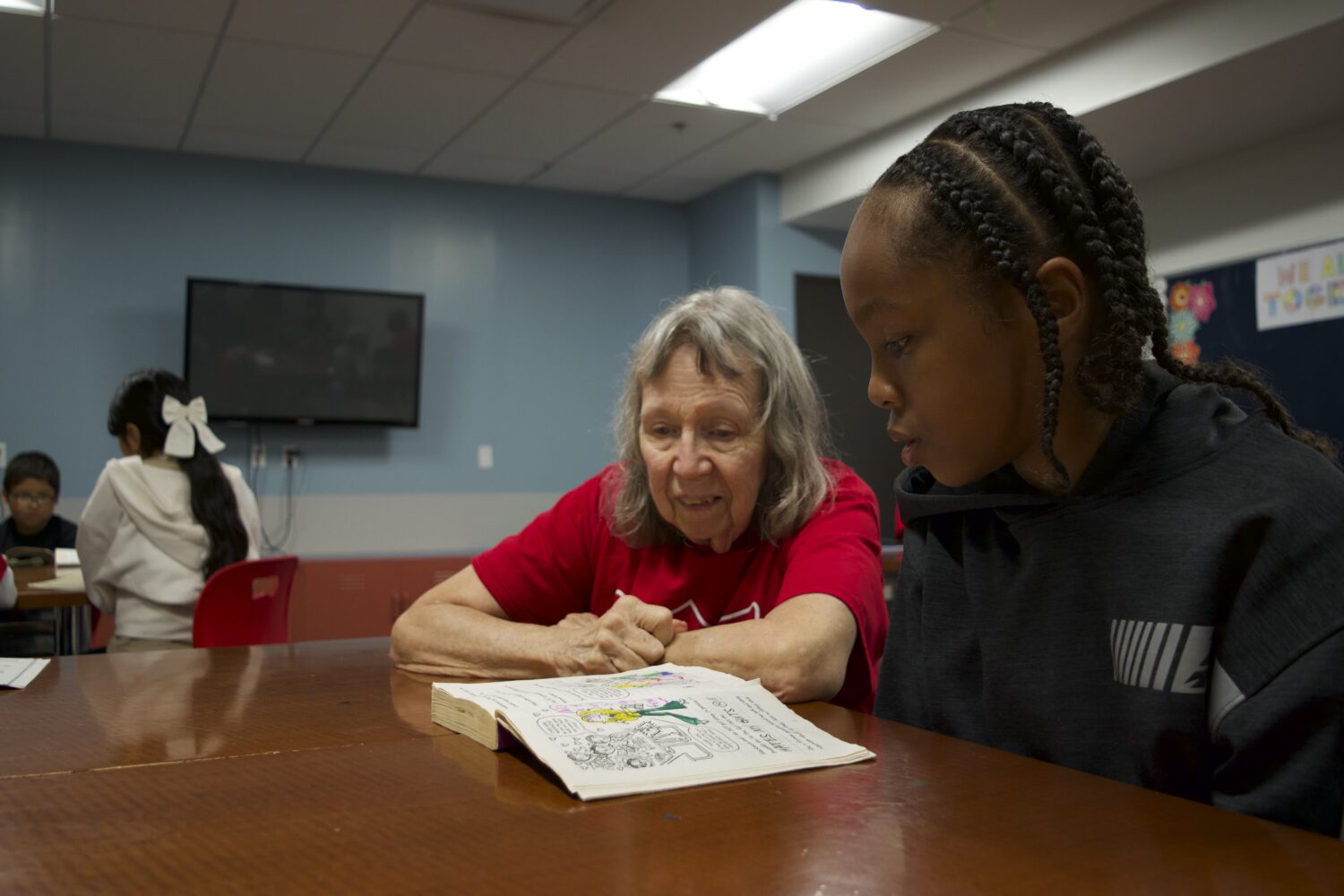
The day care borders LA’s fashion, produce and flower districts, where immigration raids have impacted the local landscape. Inside, the presence of Foster Grandparents helps create a nurturing and supportive classroom environment.
“Students respond very positively to them,” Rodriguez said. “Many of the children lovingly refer to them as ‘Grandma,’ and they truly enjoy having them in the classroom.”
For some students who do not have grandparents nearby, Rodriguez said these kinds of relationships become especially meaningful, and they form strong emotional connections.
In Long Beach, these kinds of bonds form too—over bowls of popcorn, math homework, outdoor play, reading assignments, and in the quiet moments.
“If they’re usually really jolly and friendly and, if they’re sitting to themselves and quiet, you want to ask them: ‘Are you OK?’” said Doby. “Sometimes they will tell you and other times they won’t tell you what’s going on, but at least we notice things.”
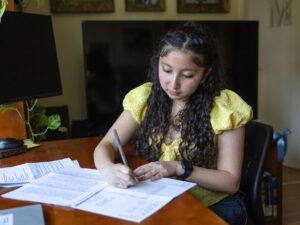
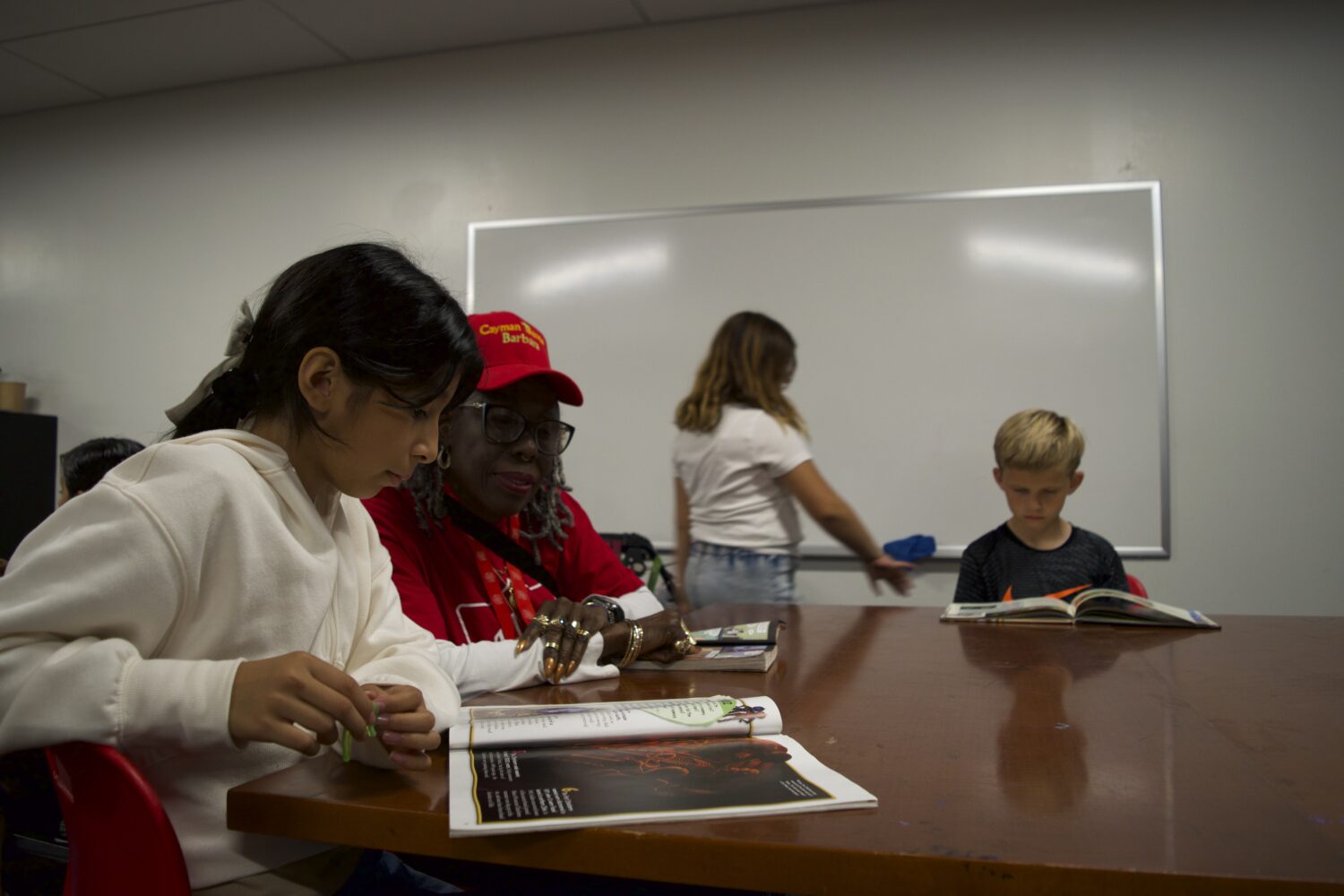
Foster Grandparent Barbara Niles noticed knowledge gaps when helping one girl with her math homework.
“You don’t know your times tables?” she asked.
When the girl didn’t, Niles told her she needed to tell her parents to help when she got home.
The next day, nothing had changed. Niles started writing the multiplication tables out, from the twos all the way to the 12s.
“She couldn’t believe it, that I remembered,” she said. “They’re looking at us like,‘They’re old. They don’t know too much.’”
Niles gave her a copy, and she continues to keep a spare in her purse, just in case.
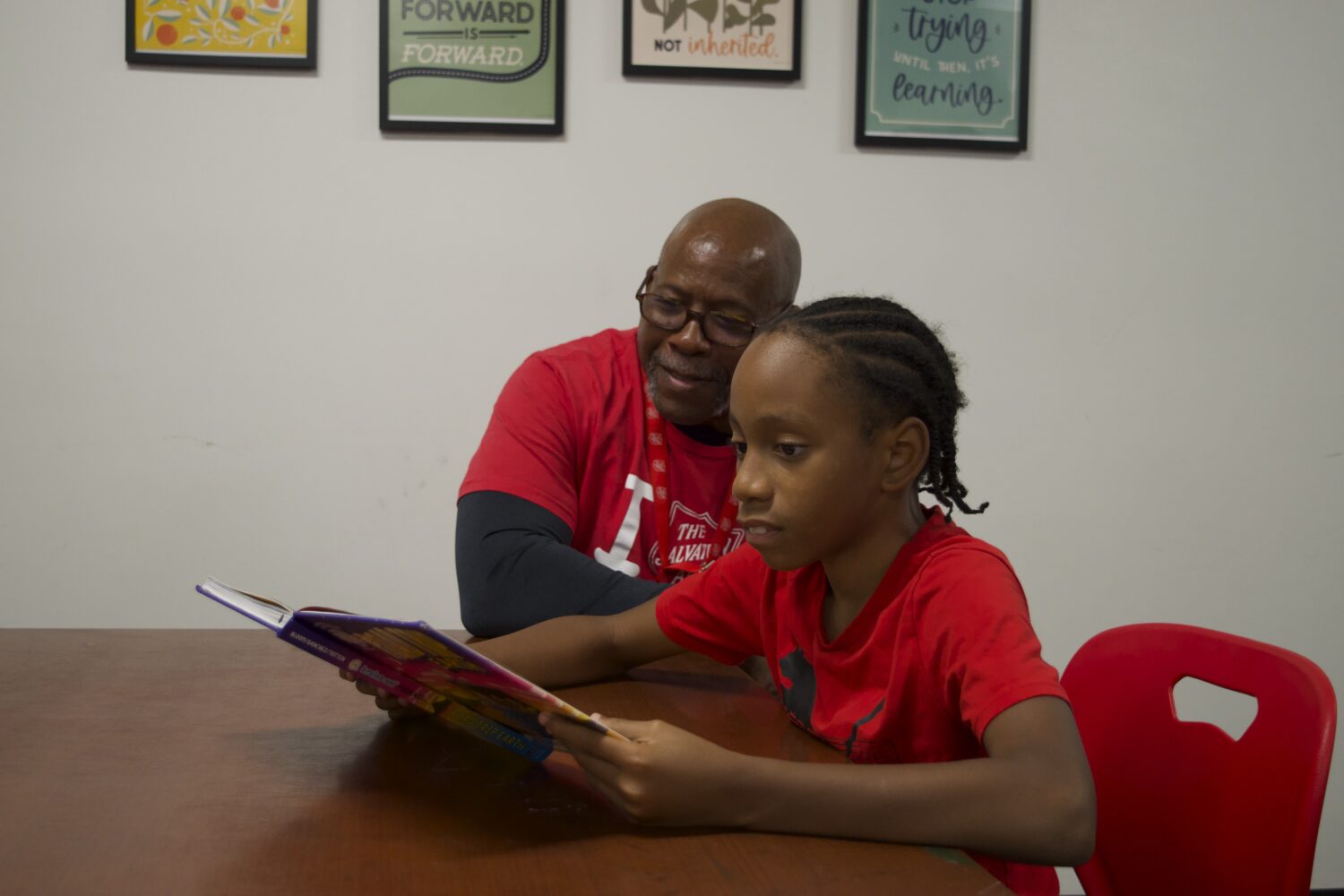
Recently, Niles was recognized as the volunteer of the month across the Pepperdine program for her “joyful servanthood.”
“Barbara’s patience, creativity and dedication enrich our program and remind our students that they are capable, supported and valued,” said Long Beach Volunteer Coordinator Jenny Santic.
Santic has worked with the Foster Grandparents since she started her role about three years ago—most of the Foster Grandparents have served longer, each coming to the program through various ways, all guided by a love of children that stems from the ones in their life—grandkids, great-grandchildren and kids from the block.
“We truly appreciate the support our Foster Grandparents provide to our youth each day,” said Santic. “Their patience, encouragement and steady presence make a meaningful difference in the lives of our students and strengthen the heart of our program.”
As far as volunteers go, the five current Foster Grandparents are committed, each serving for three or more years. Santic said she has a waitlist of other Foster Grandparents who want to support the Long Beach program, but she’s “not giving up a good thing” with the bunch she has.
Most even travel large distances to be there—Doby and Jackson drive in from LA. Niles, who takes the transport service, Access, joked that she tells the driver: “You are going around the world tonight” when she’s picked up.
But for the group, the alternative seems unbearable.
“If I stayed home, I would be bored,” said Doby. “But coming here, it keeps me active, just doing what I love—working with kids.”
For the Foster Grandparents, much of the reward is in the growth.
“You meet them when they were real little,” said Jackson, who has been at the Red Shield for four years. “And now that they’re older, they’re more knowledgeable and they treat you better, listen better. It’s something to watch them grow up and then to get to know you—the individual that they’re dealing with.”
One day, a boy Jackson’s known for years started naming the people who were his friends, numbering them one by one.
He said, “Michael Jackson is my seventh friend.”
“I said ‘OK, I’ll take that,’” Jackson said. “Seventh friend—that’s pretty good.”
Do Good:
- The Salvation Army exists to meet human need wherever, whenever and however we can. See more here.
 Download this page as a PDF