


Listen to this article
The future of The Salvation Army rests on corps that grow leaders and send them.
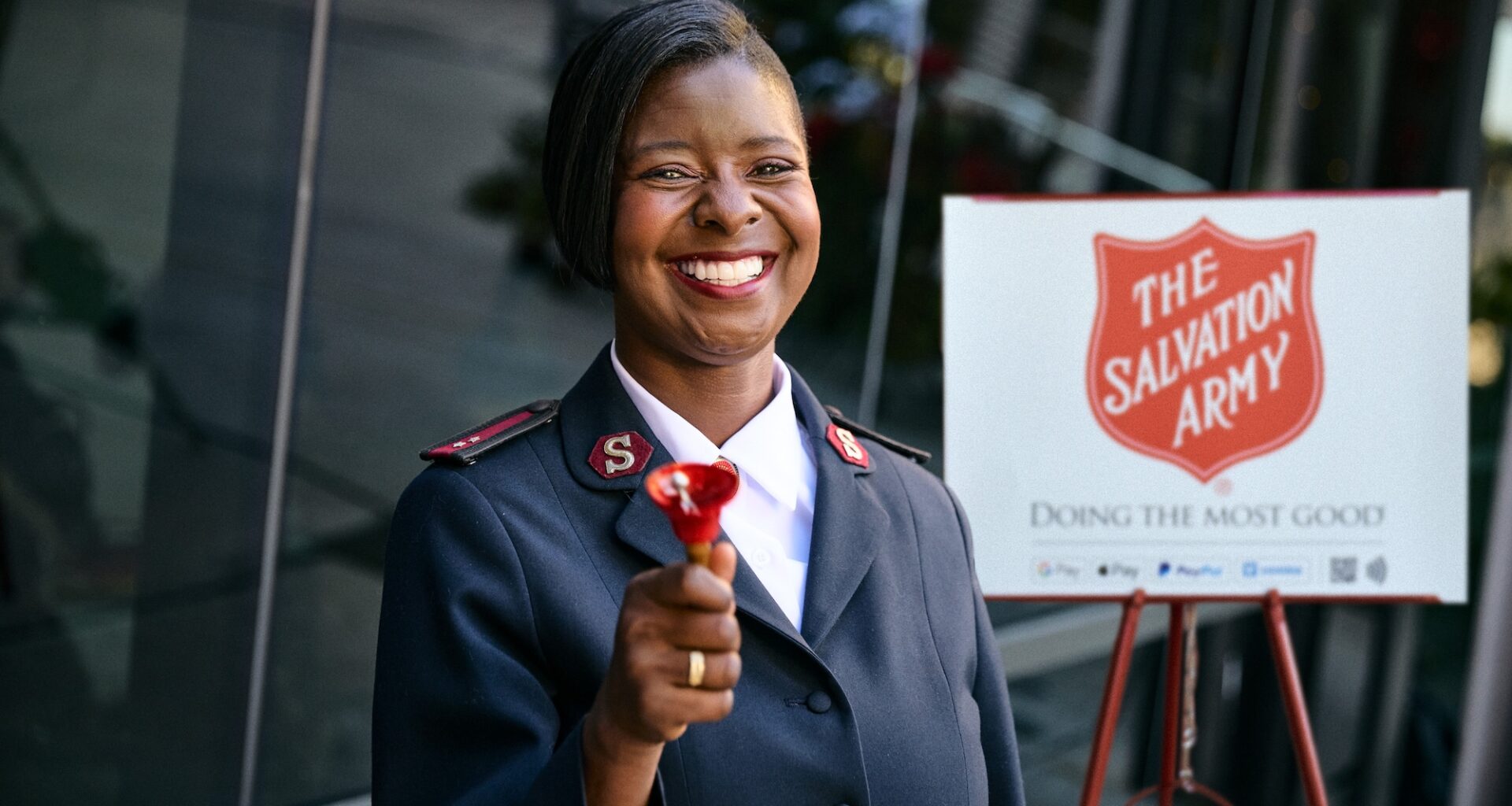
In The Salvation Army, leadership rests primarily with its officers—commissioned leaders who serve as pastors and administrators.
It’s a special calling that begins at the corps, or congregation, level, where future leaders are identified and formed long before anyone enters the College for Officer Training (CFOT).
“We’re just praying that God would provide the right people,” said Western Territorial Candidates’ Secretary Major Jennifer Masango. “We don’t want just anyone. We need people who are called by God.”
That need is pressing across the Western Territory. Ideally, some 25 new cadets are needed per session to keep pace with retirements, Masango said. In recent years, however, the number has been about half that.
While there is no denying the numbers, Masango is quick to note the task of finding qualified candidates is more than that.
During her five years in the role, Masango said she has kept in mind a particular image well known in The Salvation Army, based on William Booth’s spiritual revelation “A Vision of the Lost,” depicting a river crowded with people in danger and rescuers standing along the bank.
“This picture has really driven my ministry here—that we need healthy people,” she said. “If we’re just trying to fill the ranks with whoever, they’re not pulling anybody out of the water because they’re not healthy.”
“The most important thing is, first and foremost, to be a genuine and transparent officer—one who shows great love and patience toward people. In this way, people will open up to you, and you will be able to get to know a little more about their lives.”
Major Patricia Giron
The goal, then, she said, is to cultivate spiritually grounded leaders who are prepared to serve others well. And some corps in the Western Territory are doing just that.
There are similarities in the corps that consistently send cadets to training—officers who intentionally identify and invest in people while also being willing to release them when the time comes, Masango said.
“It would be easier for them to hold on to people because the ministry is big—they need help,” she said. “But instead, they’re asking, ‘Who’s going to be in our seat one day?’”
These corps have what Masango describes as a “sending culture,” where leadership development is built into corps life.
The Phoenix Kroc Center and the Santa Ana (California) Temple Corps are examples where the approach has resulted in multiple candidates entering training in recent years, Masango said.
Across the sessions spanning 2024-2028, the Phoenix Kroc Center sent nine cadets and the Santa Ana Temple has sent four.
At the Phoenix Kroc Center, Corps Officer Captain Caroline Rowe said leadership development begins with a theology of surrender and calling.
“We teach and preach about the calling for every believer to take up their cross and follow him,” she said, “even when that means stepping into things that feel scary or beyond what we feel equipped to do. Yet he equips us for his good work.”
Rowe said that mindset shapes how leaders recognize and encourage potential future officers.
“We pray before every service, over all the seats,” Rowe said. “We pray that as people sit and worship, they are stirred by the Holy Spirit to get saved, surrender and to hear his voice.”
She said those who express a sense of calling are mentored over time.
“We meet with those who express a call regularly, talking through the calling and what officership looks like,” Rowe said.
In the fall, this mentorship will take a different form when Phoenix Kroc Center Corps Officer Captain Dustin Rowe will become CFOT training principal, shaping the next generation of Salvation Army officers.

At the Santa Ana Temple Corps, Corps Officers Majors Lex and Patricia Giron take a long-term approach to leadership development, focusing on relationship building and discipleship.
“The most important thing is, first and foremost, to be a genuine and transparent officer—one who shows great love and patience toward people,” said Major Patricia Giron. “In this way, people will open up to you, and you will be able to get to know a little more about their lives.”
Giron said that relationship building helps corps officers recognize spiritual gifts and leadership potential within the congregation.
“We identify people’s talents and their potential to serve within ministry,” she said. “And finally, we strive to encourage and disciple them so they may learn more about Christ and The Salvation Army, and be confident this is where God wants them to serve.”
Major Lex Giron said the process is rooted in spiritual formation as much as leadership development.
“This is a process that takes time,” he said. “It varies depending on the individual and their desire to grow in their knowledge of the Word of God, which leads to spiritual maturity. We help them discover their spiritual gifts and develop them by putting them into practice.”
Corps with a “sending culture” do not see developing future officers as losing people, but as part of their mission, Masango said. Ultimately, the goal is not simply to produce more officers, she said, but to cultivate people willing to follow God’s leading wherever it takes them.
“You have not arrived if you’ve become an officer,” she said. “Rather, we need people who are being obedient to God, right where they are.”
Do Good:
- You can make an impact for good with whatever time and skills you have. Whatever your interest, there is a you-sized need for goodness in the world. Volunteer here.
 Download this page as a PDF