



Listen to this article
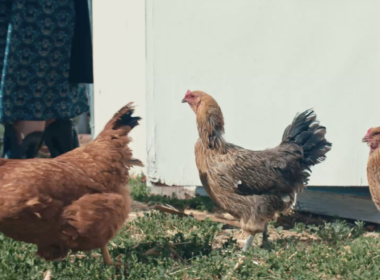
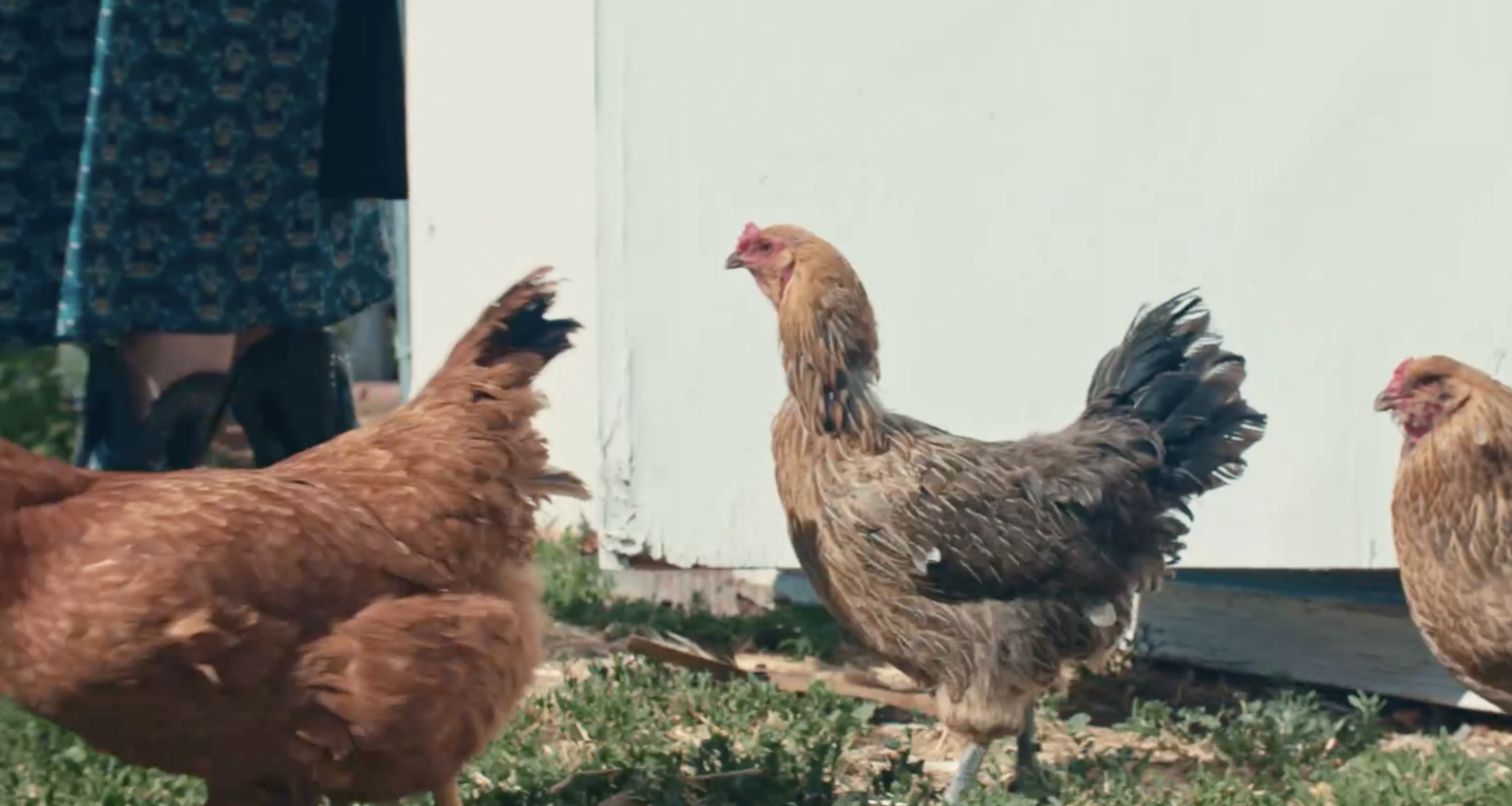
Outside Denver, Colorado, the women’s Adult Rehabilitation Center has added a unique wrinkle to their recovery program. The Salvation Army’s rural property is filled with animals, most notably a coop of chickens.
Their presence provides a host of benefits to the residents, from animal therapy to the responsibility and teamwork needed to take care of a living animal.
For some, their time evokes the soothing experience of certain farming video games.
Below is a transcript of the video edited for readability.
Julie Wirtz: We are currently at the Denver ARC, also known as Cottonwood in Arvada, Colorado. So we’re a six-month residential treatment center for women. We help women get clean and sober and save lives. We help give them the tools to live a real life.
We have a big house. It sits on eight acres of land. There’s a lot of trees, there’s a lot of flowers. This is a special property. It is just special. We have five chickens, four pigeons.
Soni Atencio: There’s cats and dogs. It’s just good to have animals around. There’s chickens here as part of the therapy.
Julie Wirtz: And it gives people responsibility. We clean out the coops every day so they don’t have to sit in dirty straw.
Soni Atencio: We collect their eggs in the evening, made sure they have food. They all like melon. They like their worms most definitely. That’s their favorite snack. I had very good conversations with them. They were my best friends in the program. Definitely.
Julie Wirtz: This program, it’s very structured, and I know when I came through here, that’s what I needed.
Soni Atencio: For a lot of years, I was a drug dealer. You don’t really show up for people for that, you know, you just kind of show up for the money. So I lost the big part of me that liked to do a good job and build a life.
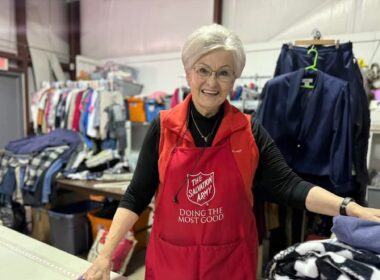
When you come here, it gives you very many life skills. You get up, you do a chore, you cook breakfast, you cook dinner, you make your lunch. You go into work therapy. You get there at seven in the morning, and you work the back end of a Salvation Army thrift store.
Major James Gallop: Well, work therapy, it’s a big factor in realizing that they can not only do this, but they can do it successfully and thereby move into the next step in their lives.
Recovery from alcohol, recovery from drugs is a big thing, of course. But, moving towards something that has meaning for them is vital too.
Major Rachel Gallop: It’s not just work. It shows them how to be productive, how to set goals, how to work with other people.
Major James Gallop: And that’s vital in their recovery as well. Because the bottom line is, they’re more often than not, used to a Helter Skelter, chaotic life.
Julie Wirtz: A lot of them are moms, so the kids are always a big deal. A lot of times, “Oh, I can’t come in. I have kids that I have to take care of.” And, you know, I try and tell them, were you taking care of them, though, before you came in?
And a lot of times kids are way smarter than anyone thinks they are. And they know, that mom’s been drinking, mom’s been passed out, mom’s in jail, and so they’re happy, usually because, for one, they don’t have to worry anymore and mom’s getting the help she needs.
Soni Atencio: There’s a lot of tortured souls out there. And it was really sad to me that it was a lot of children. I’m a mother of five.
I don’t know how to put it without sounding totally nuts, but in my addiction, I felt like I was in a video game. And, I used to call it Fortnite style, fighting off the spirits of addiction.
I wanted to see the kids be happy and to have parents that were healthy. That’s kind of the reason why I wanted a faith-based program for myself. All things are made new through Christ, and in order for me to be a new person, I had to have a new walk of life.
When I gave my life over to God is when my life started to change. And I trust when he tells me stay and I trust when he tells me go. And he definitely told me to come here, and it changed my life.
The chickens, they were most definitely a big part of my recovery. There was days that I just really wanted to run away, and walking outside and seeing them helped to ground me out very much.
Julie Wirtz: Chickens can remember up to 100 faces and they like the ladies, and I think animals are very comforting. They’re always there for you. They don’t judge. They are like our safe “people”.
Soni Atencio: I graduated Cottonwood, September 2024. I play offline farming on Roblox and I also have a farm on Fortnite. Once I seen there was farm life on there, I got really excited. Because it’s very similar to what we do in this place.
Major Rachel Gallop: Your life is not always perfect, it’s not always good. But you don’t have to walk this journey alone. God is going to open doors that you never saw coming. We do it one day at a time.
Soni Atencio: I’m accomplishing something every day by staying sober. It makes me feel excited for the future, and it makes me feel excited for the right now. Because right now I get to see my children, and I get to know that my grandchildren love me and that I am doing what’s right for them.
Major Rachel Gallop: I see miracles through people like Soni every day. They come in with their handcuffs, not knowing freedom, and they walk out of here unshackled, unburdened, walking in freedom.
Julie Wirtz: Beautiful, strong women have come through these doors, and this program has saved a lot of lives. It is just special here.
Do Good:
- See more videos like this in our video feed.
 Download this page as a PDF