




Listen to this article
A new livestream shopping experiment is helping Salvation Army thrift stores reach new buyers—and generate additional funding for Adult Rehabilitation Centers.
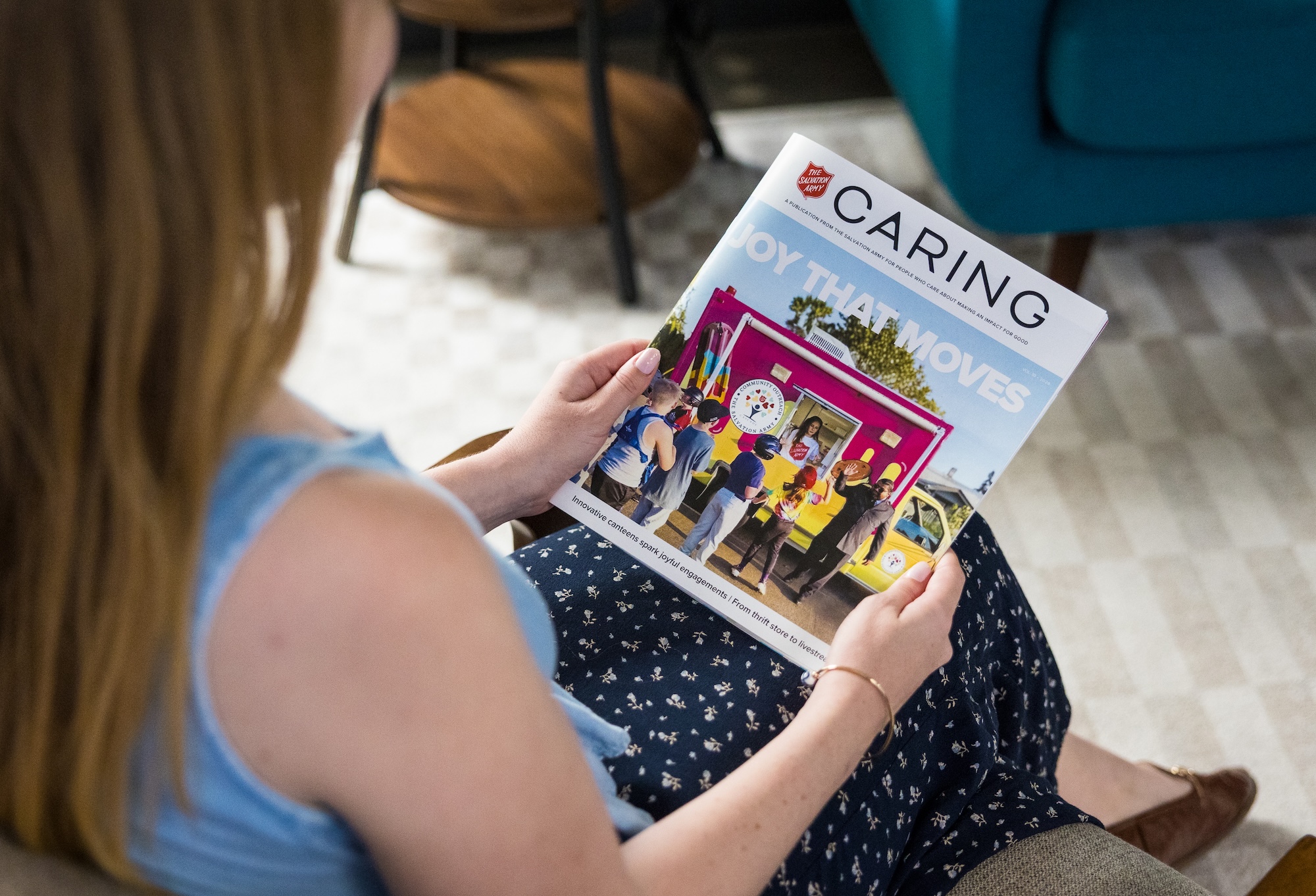
This story is part of Caring’s 2026 print edition, “Joy That Moves,” featuring lives changed through the joy of giving. Read the issue here.
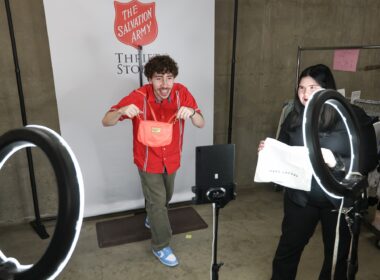
Under bright ring lights, a Michael Kors shoulder bag is held up to the camera. Viewers race to place bids in a livestream auction.
The countdown starts at 15 seconds, with bidding opening at $10.
Within moments, bids flood in from dozens of shoppers, driving up the price until the timer runs out.
Sold! For $29.
Each week, shoppers join in The Salvation Army’s livestream auctions like this one, webcasted from the back corners of select Salvation Army thrift store sorting warehouses across the western U.S.
Armed with a smartphone and racks of donated fashion, staff go live five days a week on Whatnot—a livestream shopping platform—auctioning off unique clothes, bags and accessories to online thrifters.
To date, The Salvation Army has hosted more than 250 livestream auctions. Each session generates about $2,800 on average, with a record high of $5,190 during a Long Beach stream.
“We’re selling brand-name items like Michael Kors, Marc Jacobs, Loungefly, Lululemon and Coach,” said Jacob Presnell, Salvation Army E-Commerce Live Sales Supervisor. “Many shoppers are surprised by what they can find for a good deal.”
Presnell was one of the first hosts when the livestream shows debuted at the Long Beach (California) thrift store in May 2025. The auctions have since expanded to other Salvation Army thrift stores in the region: Anaheim, Santa Monica and Riverside.

Livestream shows run every weekday from 10 a.m. to 4 p.m., with each location assigned its own time slot on a shared account. During each show, more than 200 items are presented online.
“Shoppers tell us they love the format and they catch on pretty quickly,” Presnell said. “For some, it becomes a fun game where they want to win the prize.”
Once a bid is secured, the item is passed to a sorting team while hosts move on to the next piece. A separate team packs orders after the show, with items typically shipped within 24 hours.
“Everything happens fast,” Presnell said. “At the same time, we’re answering questions—checking the material, measuring the length or even modeling the item.”
Presnell said he takes current trends into account when suggesting how someone might use an item, drawing on his sales experience to highlight its value and help close the deal. Prior to his role with The Salvation Army, he ran a thrifted clothing business, sourcing and reselling items nearly every day.
“I have an idea what people are often looking to find secondhand,” he said. “They like brand names and vintage pieces, so I try to pull items that fit those categories or what’s popular at the moment.”
One of his go-to strategies for closing a sale is suggesting how an item can be used or worn.
“This blazer can be great for the office or dressed up for a night out,” Presnell told a viewer, helping convince her to make the $20 purchase.
Every dollar matters
While live, Presnell reminds viewers that every purchase—whether in-store at Salvation Army thrift stores or through livestreams—helps fund the West’s 18 Adult Rehabilitation Centers (ARCs), residential programs that provide assistance to individuals experiencing a variety of social, emotional and spiritual challenges, including issues relating to substance abuse.
“We’ve had several viewers comment that they didn’t realize The Salvation Army runs Adult Rehabilitation Centers, and learning this inspired them to make a purchase to show their support,” Presnell said.
According to Piers Fairclough, ARC Director of Business, since launching, the livestream sales channel has generated more than $608,000 in revenue.
“The livestream auctions build on what our thrift stores are already doing—bringing in funding that helps sustain our Adult Rehabilitation Centers,” Fairclough said, adding the Whatnot platform allows stores to make use of high donation volumes while connecting with a broader audience of shoppers online.

E-Commerce Supervisor Fatima Jimenez said that while The Salvation Army has had a website where it has sold clothing and accessories for years, “livestreams add energy and create connections with shoppers.”
“The goal is to make sure every donated item has the best chance to sell and support the program,” Jimenez said.
In 2026, the goal is to expand the livestreams to 10 active locations and generate $200,000 per month in total through Whatnot sales, totaling $2.4 million for the year.
A growing audience
Each livestream nets a range of 50 to 100 viewers at a time, leading to an active chat where people ask questions, share feedback and react in real time.
That continuous interaction, combined with added verification measures, has helped build buyer confidence and attract repeat shoppers.
Since the ARC introduced Certificates of Authenticity (COAs) in November 2025, Scott Cha, Director of E-commerce for the ARC Command, said buyers have grown more confident purchasing higher-priced designer items.
“We included verification for select items to strengthen buyer confidence and support stronger realized pricing,” Cha said. “This helps us sell items closer to their value.”
High-value items, such as designer bags, are verified through a third-party online service, where images are submitted and details like stitching, patterns and tags are evaluated before the item is shown. Once verified, certificates are shipped alongside items.
The highest-selling item to date? A verified Burberry handbag for $400.

Fairclough said the online sales channel is ideal for reaching new shoppers by catering to those who prefer to shop virtually.
“We’re reaching those who seem to prefer the online experience,” Fairclough said, noting the channel has nearly 18,000 followers, and many tune in every week.
“Some get to know the host’s name and stop by just to say hello,” he said.
One shopper, Amber Andrade-Foltz, joined a livestream and mentioned she was looking for a Lululemon workout set. Presnell acknowledged her request, and off-camera staff quickly searched the nearby Whatnot inventory.
Within 10 minutes, staff returned with a Lululemon dress to showcase. After Presnell noted that the built-in shorts made it ideal for exercise, Andrade-Foltz placed her first bid on Whatnot and won the dress for $26.
“I wasn’t expecting you to actually find something,” she said.
Do Good:
- Sign up to shop your first Salvation Army livestream auction and get $15 free credit at whatnot.com/invite/shopthesalvationarmy.