



Listen to this article
How one act of care becomes many
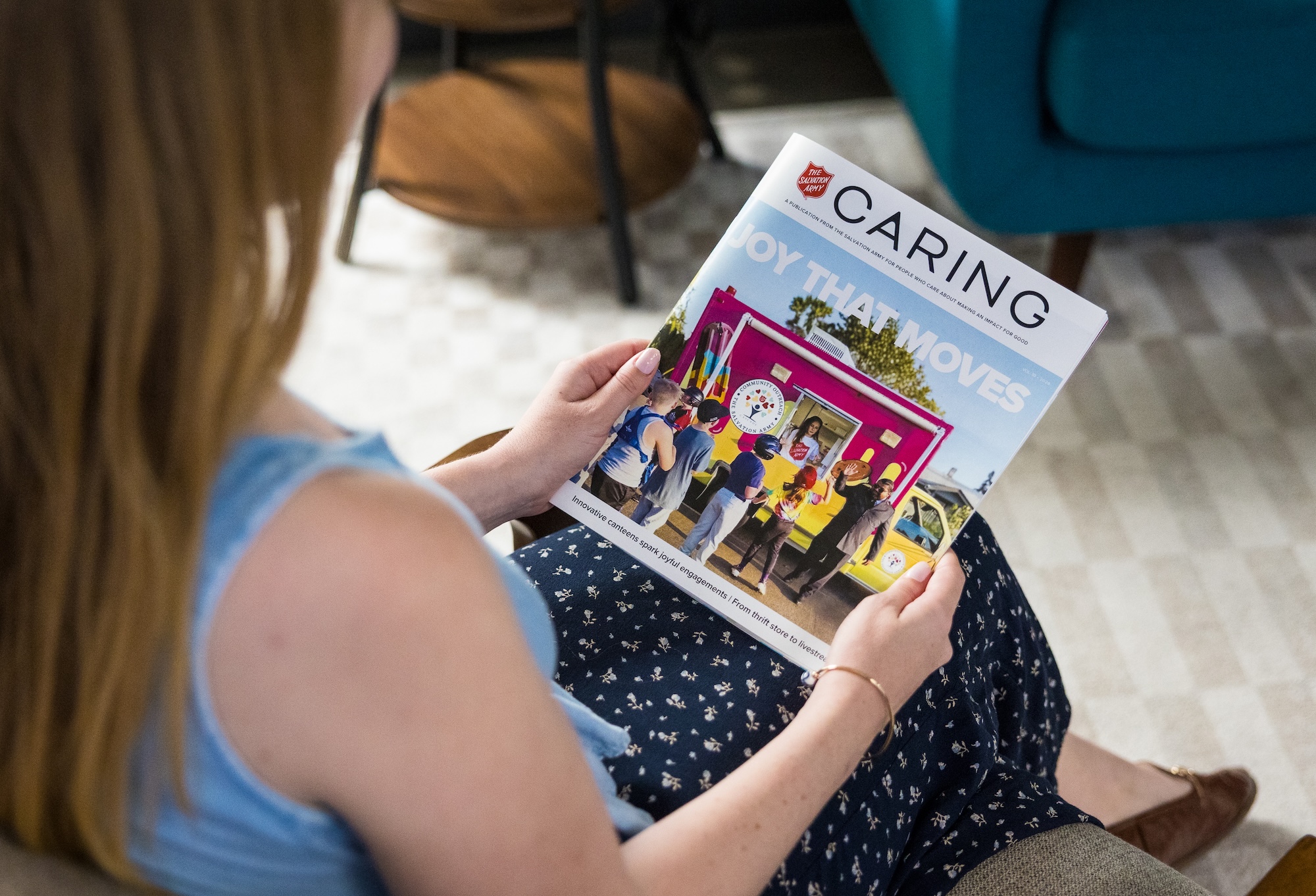
This story is part of Caring’s 2026 print edition, “Joy That Moves,” featuring lives changed through the joy of giving. Read the issue here.
The door closes quietly behind them.
For weeks—maybe months—Nick Carrillo carried the same question everywhere he went: What are we going to do? Where would his family sleep? What would happen next?
But when they stepped inside a Salvation Army family crisis center—a place committed to meeting human need in the name of Christ, without discrimination—something shifted.
“It was as soon as we stepped foot into the shelter,” he said. “That’s when we felt safe.”
They arrived with almost nothing—just some clothes and a couple of plastic tubs holding what was left of their lives.
And yet, Carrillo said, “for the first time in a long time, I felt peace.”
Carrillo’s story begins years earlier in Ensenada, Mexico. His parents split when he was young, and not long after, his mother became ill.
“I remember finding her on the floor more than once,” he said. “I was scared all the time.”
When he was nine, she died.
“That broke me,” Carrillo said. “I didn’t know what to do with the pain.”
He moved in with his grandparents, who provided for him but didn’t know how to help him process such a loss. “They gave me things but not what I needed most,” he said. “I had a big hole in my heart.”
Carrillo tried to fill the hole—first with achievement, then with substances.
“I was chasing things the world said would make me happy, but none of it fixed what was broken inside of me,” he said.
Over the years, he cycled through recovery programs—more than 10. “I always wanted to change,” he said. “But something always brought me back.”
That ended in 2007, when he entered a Salvation Army Adult Rehabilitation Center (ARC), a residential program that provides spiritual, emotional and social assistance to individuals experiencing a wide range of challenges, including issues relating to substance abuse. Last year, nearly 100,000 men and women received support through one of the Army’s 85 ARCs nationwide.
“For the first time, I didn’t feel like an addict trying to get clean,” he said. “I felt like a son who was finally coming home.”
He finished the program, found work, built relationships and met his wife. For a time, life stabilized. Then, in 2015, he stepped away from his job, convinced he could build something on his own.
“I told myself I could handle it,” he said.
But work fell apart. His wife became seriously ill. Financial problems grew. The family moved from place to place, trying to hold things together.
“We started to lose everything—piece by piece,” Carrillo said. “We were about to be homeless.”
Similarly, for many families, housing instability often begins with a single disruption—illness, lost income or eviction—that sets off a chain of consequences.
“For the first time, I didn’t feel like an addict trying to get clean. I felt like a son who was finally coming home.”
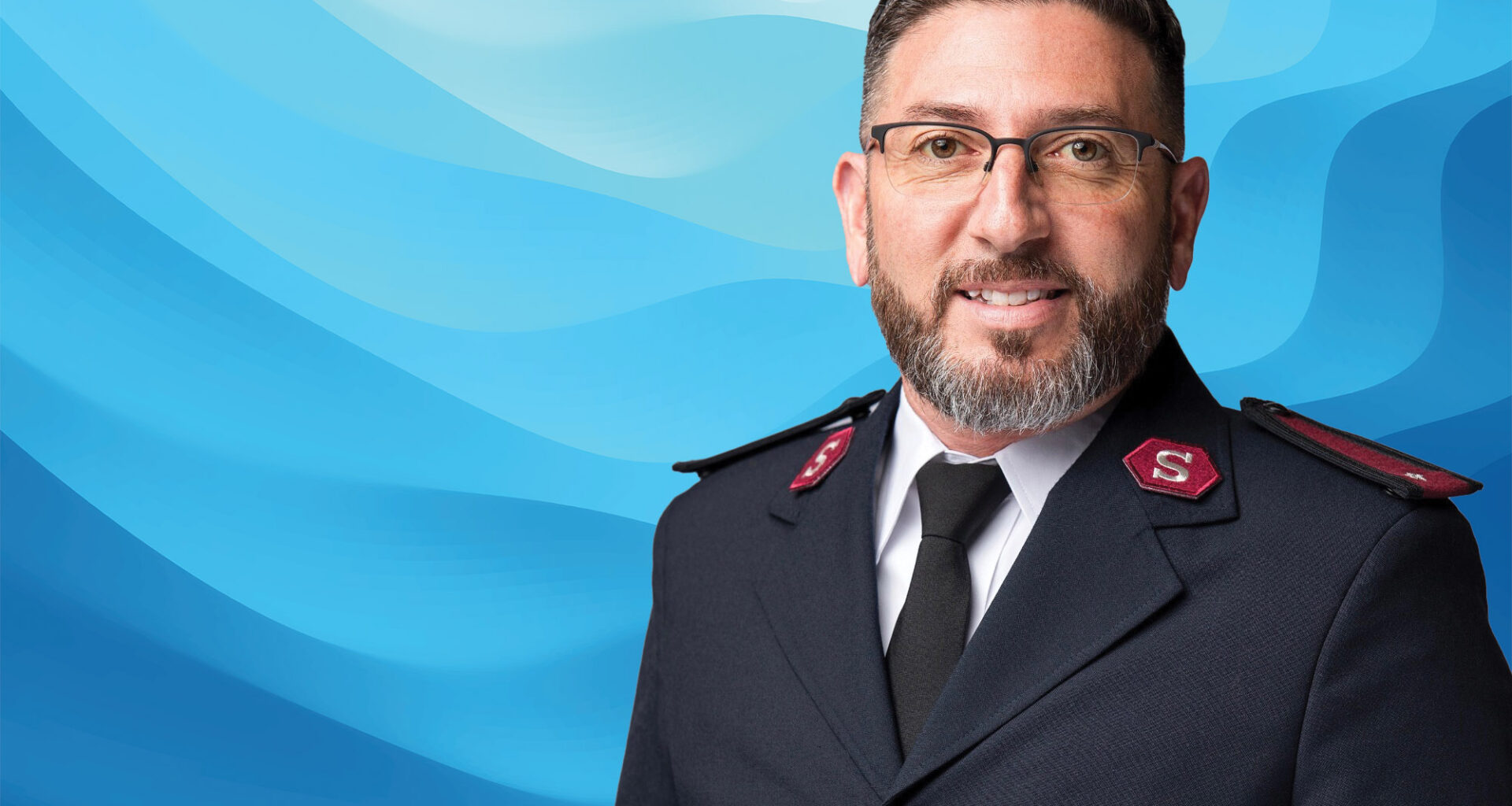
Lt. Nick Carrillo
Homelessness in the U.S. reached a record high in 2024, according to the most recent data from the National Alliance to End Homelessness, with approximately 771,480 people experiencing homelessness on a given night, an 18 percent increase from 2023—the largest single-year increase ever recorded.
It was Carrillo’s wife who finally said what they both knew.
“She said, ‘Nick ask for help. We need help,’” Carrillo said. So he did. He reached out to a Salvation Army officer who had shown him kindness.
“I told him everything,” Carrillo said. “I didn’t hide my mistakes. I told him we had nothing. That we were lost. That we were scared.”
Three days later, a door opened.
Walking into the shelter was humbling, but it was also, in Carrillo’s words, something more.
“It felt like something holy was happening,” he said. “I didn’t have to worry about what are we going to do tomorrow.”
And that opened space for hope, for renewed faith. Carrillo and his family began attending church regularly at The Salvation Army.
Then one day, sitting quietly in the back of the chapel, something unexpected happened. Carrillo turned to his wife. She looked back at him.
“We said, ‘This is what we want to do,’” he said. “We had been loved when we had nothing. We had been helped when we couldn’t help ourselves.”
They recognized the care they had received was not just help, but a calling to offer that same care to someone else.
That decision became a new direction.
First, Carrillo became a Salvation Army shelter manager, walking alongside families facing the same kind of uncertainty he once had. The work felt personal.
“I went through what they were going through,” he said. He recognized the hesitation. The fear. The quiet relief that comes with safety. And he met them there—not just with services, but with understanding.
Over time, he and his wife followed through on their calling, becoming Salvation Army officers. Today, Lts. Nick Carrillo and Maria Duenas serve in Hobbs, New Mexico, where their ministry includes a large food bank, mobile shower units that travel across several towns, and outreach that connects families with housing, clothing and other resources.
What is a Salvation Army officer?
Salvation Army officers (pastors) proclaim the Gospel and serve as administrators, teachers, social workers, counselors, youth leaders and musicians. They have dedicated their lives, skills and service completely to God.
The work is practical, immediate and rooted in the same Christ-centered mission that once changed their own lives. And it’s the same work that’s happening in nearly every zip code across the country.
The Salvation Army annually helps nearly 28 million people in the U.S. overcome poverty, addiction and economic hardships through a range of social services. By providing food, emergency disaster relief, rehabilitation services, clothing and shelter, The Salvation Army is meeting human needs without discrimination in more than 7,400 centers of operation.
Sometimes, the ripple effect of that care becomes visible. For Carrillo, one moment stands out.
It was Christmas. His family had recently left the shelter, and money was tight. That year, The Salvation Army provided gifts for their children.
“It was the best Christmas the kids had,” he said. “The Salvation Army helped us so much. It was amazing.”
Now he stands on the other side, helping families receive those same gifts. “You see how emotional they get,” he said. “It always brings me back to when we got the help.”
Back to what it felt like to be helped. Back to the moment everything began to change.
Ask Carrillo what brings him joy today, and his answer is simple.
Being present. Sitting with someone in a hard moment. Listening. Reminding them they are not alone.
“I get to love people who feel like nobody sees them,” he said.
Years ago, someone opened a door for his family. Today, he stands in that same place, holding it open for others. One life changed, then another. Care received, care shared.
And the ripple continues.
Do Good:
- Be part of the ripple and join us in giving joy to families who are experiencing poverty, hunger, job loss and more. Your generosity offers joyful reassurance that even during our most challenging times, we are not alone. See more at caringmagazine.org/give.
 Download this page as a PDF