


Listen to this article
The Salvation Army program supports both participants and their loved ones through the recovery process.
Substance abuse rarely affects just one person. It can fracture marriages, distance parents from their children, and place emotional, physical and financial stress on the entire family. But recovery at The Salvation Army doesn’t stop with the individual. Families can find healing, too.
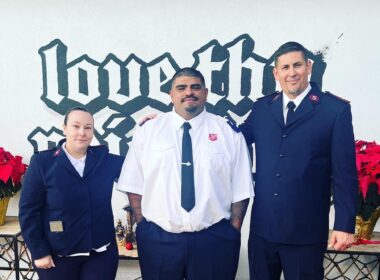
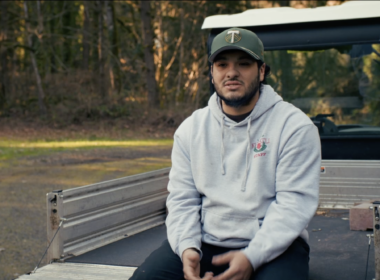
That was the case for Nicholas Matta and Jose Puga. Both men entered The Salvation Army Chico Adult Rehabilitation Program in Chico, California, after substance abuse led to legal trouble and created instability that deeply impacted their families.
The Chico ARP supports families working to rebuild alongside those in recovery.
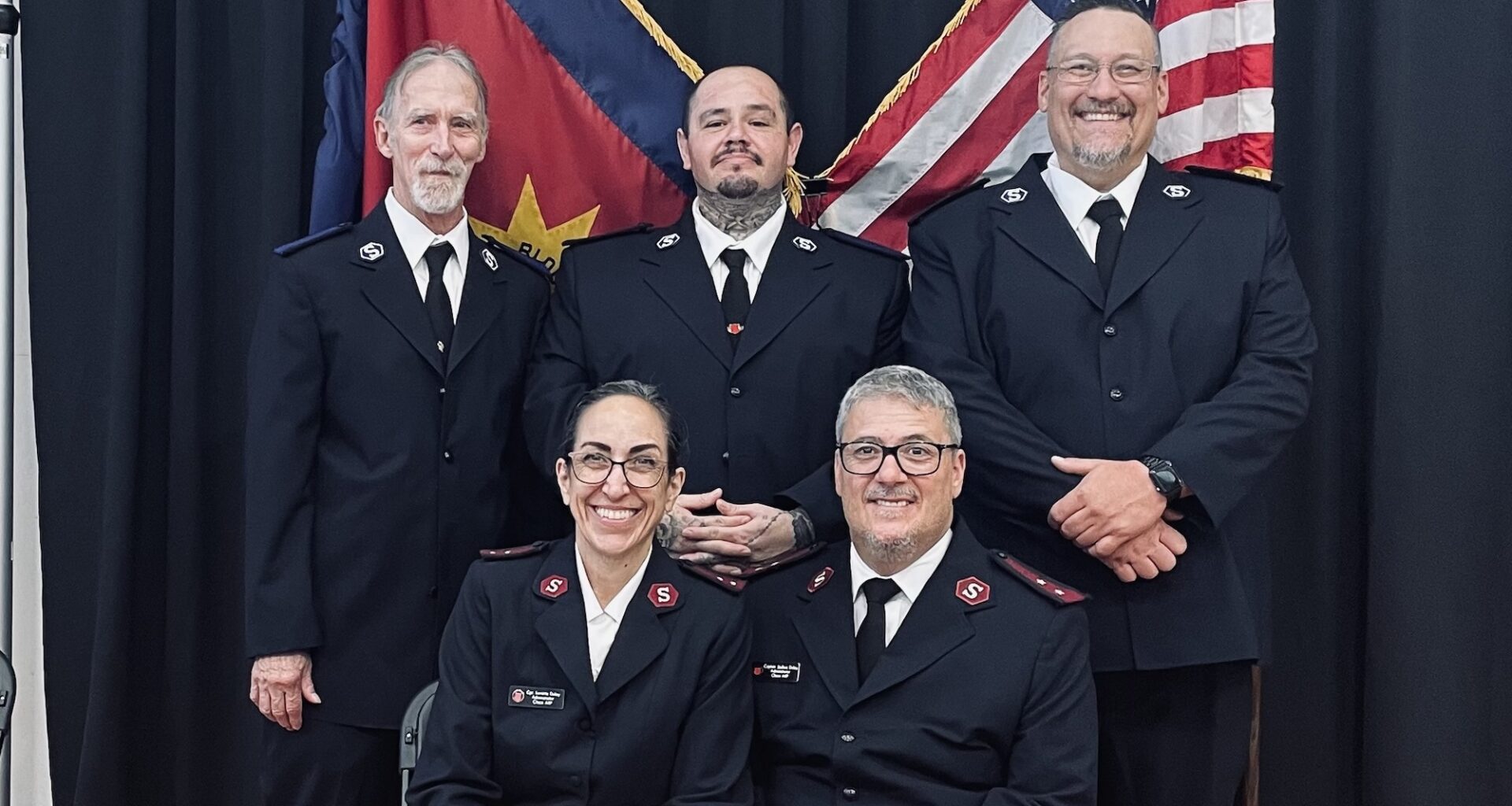
“We do see a lot of families restored through our program,” said Captain Lorretta Dulay, Chico ARP administrator. “We really work hand in hand with the family to make sure they have what they need to be successful once their loved one comes home.”
That approach is reflected in the recovery journeys of both men.
For Matta, that transformation began in a courtroom in September 2024 after his substance abuse led to a violent altercation and a serious criminal charge. He had agreed to a seven-year sentence that would send him to prison.
“I was just crushed. I was just like, ‘I did it this time. This is it,’” Matta said. “I ruined my life. I thought of my little girls and my wife. I was like, ‘I’m never gonna see them again.’ I didn’t know what to do.”
But his wife, Michelle Matta, believed he could change. She collected letters from people who knew of his prior work serving his church and the community, especially with at-risk youth.
Those letters changed the trajectory of his life. Instead of serving time, Matta was allowed to enter the Chico ARP.
“The district attorney goes, ‘Excuse me, Your Honor. There’s been a change. There’s been a curveball. I can’t ignore all the work that Mr. Matta has done in the community and in the church, and I feel compelled to give him one shot to go address his alcohol problem,’” Matta recalled. “So they go, ‘OK Nick, you’re going to The Salvation Army Chico ARP. You have one shot’… I was just blown away.”
Matta knew he had been given a second chance and wasn’t going to take the opportunity for granted.
“I was 100 percent locked in on this…I was not going to fail ever again,” Matta said.
At the Chico ARP, Matta found structure, accountability and a sense of community that helped him stay on track. He built relationships that reinforced his commitment to change.
That transformation quickly extended into his relationship with his wife and children.
“My kids got their dad back. My wife has a husband back,” Matta said. “She doesn’t have to worry about me being immature and taking off and getting drunk, forgetting about all our responsibilities. And my babies, they don’t have to worry about their daddy drinking no more and not coming home. I’m surrounded by godly people now. There’s nobody that’s in my life that’s toxic or that’s not walking with God…I changed everything.”
For Michelle Matta, the difference in her husband was clear.
“Normally, if something would trigger him or bother him, he’d go to alcohol. This time, it wasn’t even a thought. He would want to communicate and he would want to talk about it,” she said. “I finally got my family that I’ve always wanted. Our life is a blessing…everything just keeps falling into place and we have a beautiful home.”
The next step for Matta is to help others the same way the Chico ARP has helped him. While in the program, he was able to get his high school diploma, and after that, the ARP staff helped him enroll in college to become a drug and alcohol counselor.
Dulay said she witnesses success stories like this regularly.
“Within the first 30 days, people are really unsure that they want to be here. Sometimes they’re fighting to leave,” Dulay said. “Then, between 30 and 60 days, you just see that light kick on, and their whole demeanor and will to live just changes. It’s just wonderful to watch.”
“I was 100 percent locked in on this…I was not going to fail ever again.”
Nicholas Matta
For Puga, who entered the program in July 2024, that shift meant confronting patterns he had carried for years.
“My life consisted of just bad choices,” Puga said. “It consisted around life doing drugs and drinking alcohol, and it was just a very inconsistent lifestyle with a lot of failure.”
This lifestyle led him to a similar crossroads, where he could either enter the Chico ARP or face incarceration.
“Salvation Army was always an option, but that was the last option I wanted to take. Because in my world, I didn’t have a problem,” Puga said. “I joined the program to avoid getting a sentence… At first, I thought, ‘Just do what they want me to do and do the program and then get out and, and do you again.’”
When he entered the program, he began to see things differently.
“I found a place where I can be open about what I’m feeling. I found a place where I started learning about my own defects. I started learning how to deal with those defects,” Puga said. “I learned a lot about how addiction works. That place really opened up my vision to a lot of the things that I didn’t see before.”
While graduation felt uncertain, Puga said his perspective began to shift.
“I’m starting to realize that life’s a lot simpler than what people make it seem,” Puga said. “As long as I pay attention and I stay above, being aware of how I’m feeling, what’s going on around me, and just recognizing the tools that the ARP provided for me, life’s simple…It’s worth living.”
This growth helped him begin to rebuild family relationships that had long been strained.
“Before the program, I had a very dysfunctional relationship with my parents,” Puga said. “Now, I can hear the excitement in my parents’ voices when I get home. When they ask me about my day, I hear happiness. I see it in their eyes.”
Puga remains involved with The Salvation Army through work and service. He became a senior soldier and works in a Salvation Army warehouse.
“It’s a job that’s rewarding,” Puga said. “I see people that are going through the same thing that I went through… It makes it easier for me to communicate with them.”
“If I can help the next person, I’m doing a good thing,” Puga added.
Today, both men remain connected to the Chico ARP, and their families continue to be part of that community through events and gatherings.
Dulay said those moments often reflect just how deeply families become part of the recovery process.
“We had a Día de los Muertos event in the park, and his family came and made tamales for like 100 people,” Dulay said of Puga’s parents. “We just called his mom ‘mama.’ They were just very loving people.”
Do Good:
- The Salvation Army is committed to helping individuals in our community rebuild their lives. By working together, we can help individuals break free from chemical dependency and build a brighter future. See more here.
 Download this page as a PDF