

Listen to this article
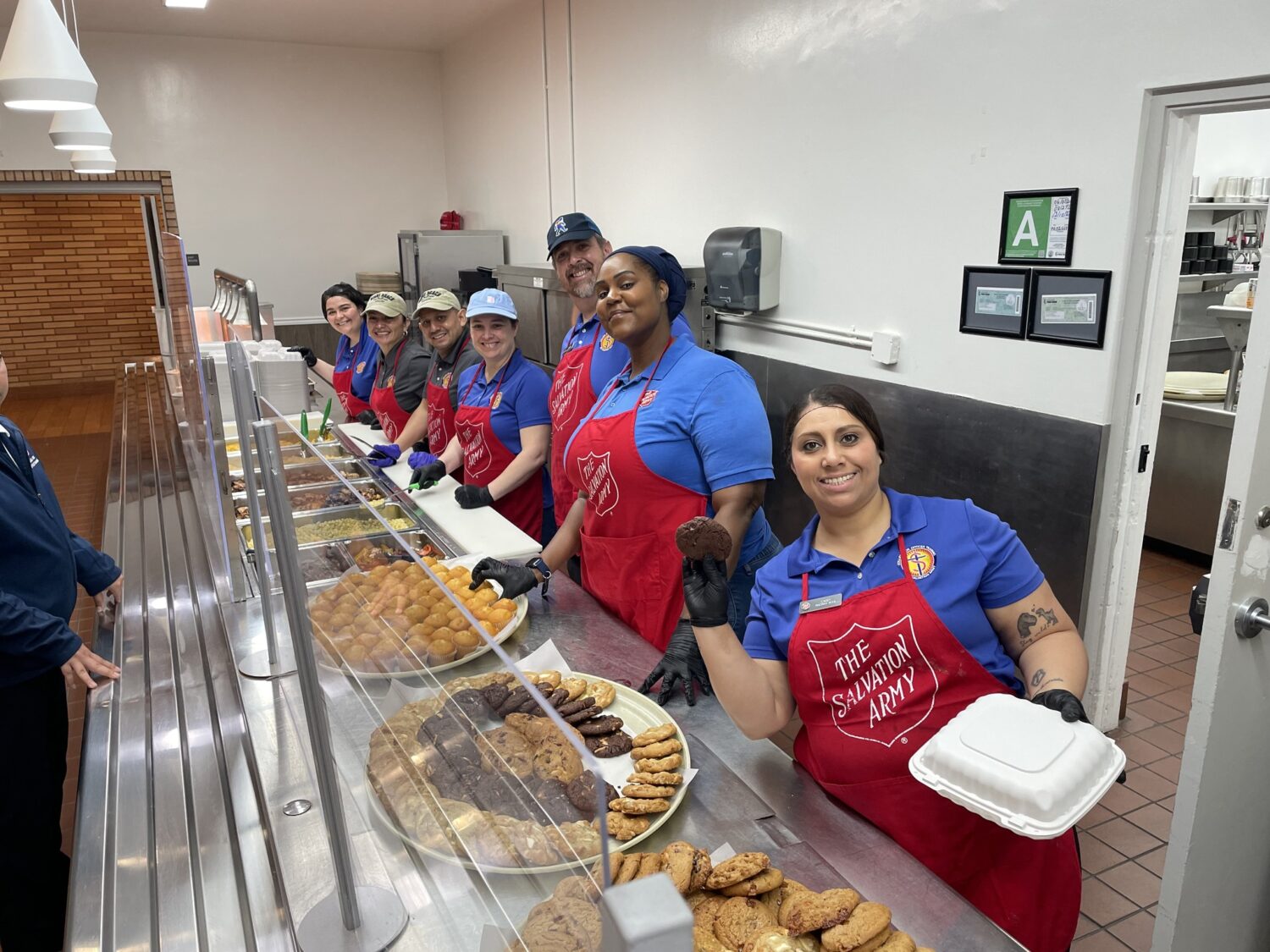
Cadets prepared 180 meals during Emergency/Disaster Services training.
When Salvation Army cadets from the College for Officer Training (CFOT) at Crestmont were deployed to Hawai’i for the 2026 Spring Campaigns, the second-year officers-in-training expected the hands-on experience to focus on ministry in local ministry units. Instead, a Kona Low storm disrupted those plans, requiring them to shift immediately into disaster response.
“What they experienced there is exactly why we train this way,” said Captain Travis Yardley, CFOT Business Officer. “You never know what’s coming.”
First-year cadets receive practical Emergency/Disaster Services (EDS) training, including how to prepare a hot, well-balanced meal for a large number of people. It’s a key part of their preparation to become Salvation Army officers, as once commissioned, they’re the ones on the front lines of communities when disaster strikes.
In 2024, The Salvation Army responded to 1,234 disaster events across the U.S. In many communities, The Salvation Army is part of VOAD, and champions the feeding operations, making cooking experience essential.
At the Crestmont Campus in Rancho Palos Verdes, California, preparation recently took shape in a hands-on exercise simulating real-world conditions.
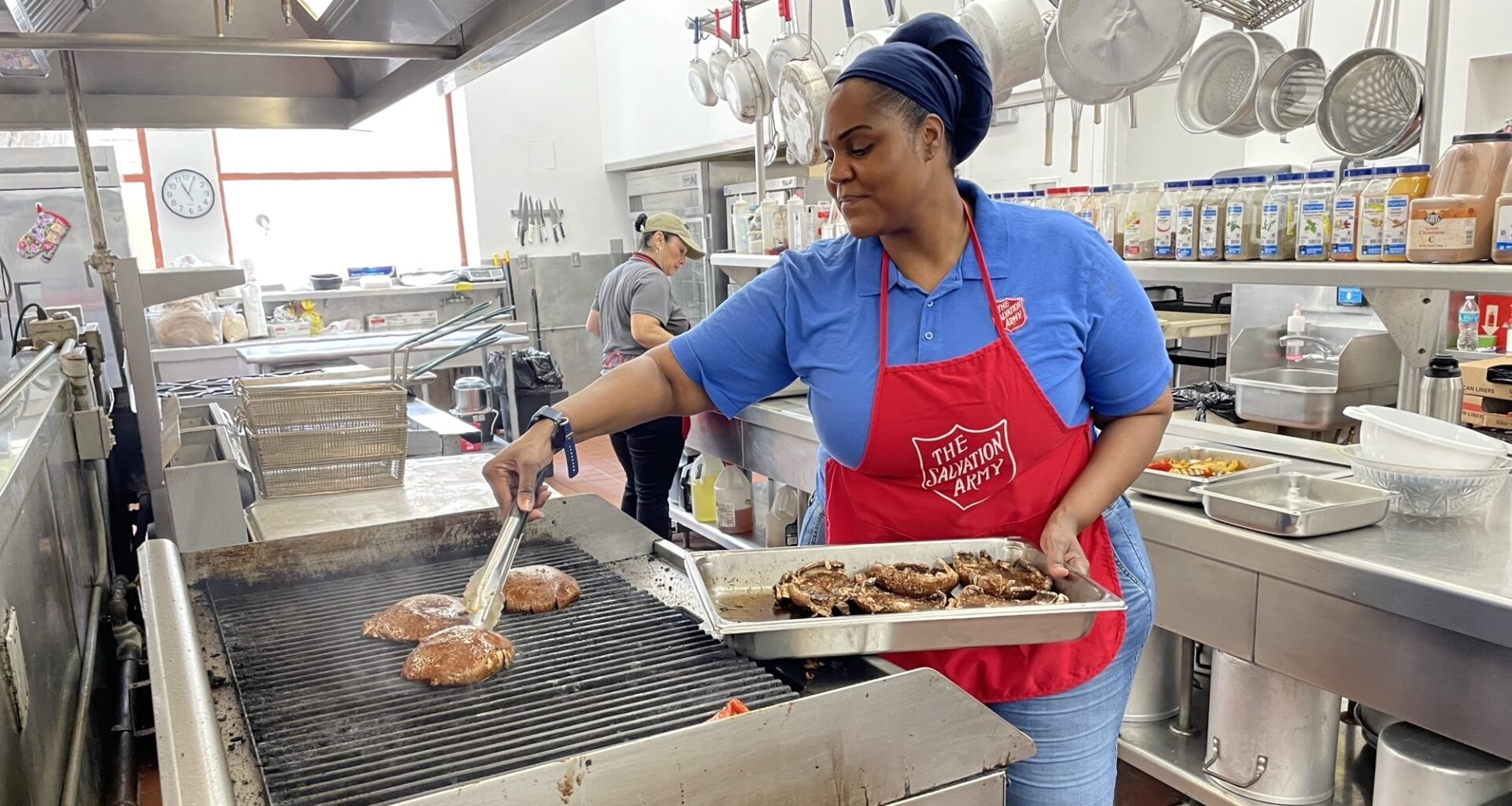
Working in coordinated teams, cadets cooked and served 180 meals to Salvation Army staff, officers and second-year cadets as part of a simulated disaster response scenario. They prepared barbecued chicken, macaroni and cheese, rice, vegetables, salad and cookies, while also accounting for dietary needs such as vegetarian and dairy-free options.
“That’s always something you have to think about in disaster response,” Yardley said. “You’re not just cooking—you’re making sure there’s something for everyone.”
Cadets rotated through multiple roles during the simulation, including food preparation, logistics and food service, while adjusting to changing instructions throughout the exercise.
“We want them to be able to hit the field and know, ‘I can make this meal for 180 people,’” Yardley said.
“This training wasn’t just cooking a meal and putting it on plates. We had them serve it like an EDS meal and ask, ‘Do you want prayer?’ The important thing is they still talk to people, still serve people, still share God — even when it’s just the people they work with every day.”
Captain Travis Yardley
The scale of the exercise challenged many of the cadets.
“I’d only ever cooked for six people before,” said Cadet Joshua Fowler. “Cooking for 180 was a completely different mindset—it gets exponentially harder, not incrementally.”
Yardley and CFOT Chef Doug Lynch, who supervised kitchen operations, said the training reflects a broader shift in disaster response toward a “wheel and spoke” model, in which meals are prepared at a central kitchen and distributed to affected communities.
Along with that operational structure, the training emphasized adaptability. Cadets were required to switch tasks mid-process, moving between stations with little notice.
“In the middle of cooking, you’re suddenly told to switch, and now you’re learning something completely new,” Yardley said. “You have to be ready to pivot.”
He said the training was intentionally structured to introduce pressure while maintaining a controlled environment.
“We want them to learn it here before they’re in an actual disaster,” Yardley said. “Out there, you can’t control the environment the same way.”
When cadets began to feel overwhelmed, Lynch helped them refocus.
“Sometimes it’s something simple—telling a quick story, singing a song or stepping in to help while talking it through,” he said. “Just something to take their mind off what’s overwhelming them and give them a second to refocus.”
Cadet Paloma Kolb said Lynch’s leadership style stood out for its emphasis on guided learning.
“He didn’t just tell us what to do—he asked questions and helped us think through decisions,” she said. “He would ask, ‘What do you think this needs?’ or ‘How are we going to serve this?’ He already knew the answers, but he wanted us to learn how to make decisions as we went.”
She said even mistakes became part of the learning process.
“We realized we had baked far more cookies than we needed,” Kolb said. “But no one was complaining.”
For some, the challenge was cooking within a structured environment.
“I’m used to cooking for my family, so this was very different,” said Cadet Olga Hernandez. “It taught me the importance of teamwork and trusting the person in charge, even when I thought there might be another way.”
Cadet Rachel Utrera said she noticed how prepared and organized the kitchen was before cadets arrived.
“Chef Doug had everything planned out—menu, ingredients, instructions—it was very clear and easy to follow,” she said. “Being able to see the big picture and trust others to carry out tasks is really important.”
Following the training, cadets participated in a debrief session to evaluate their participation.
“We asked them what they would change, what worked and what didn’t,” Yardley said. “That’s where a lot of the learning happens.”
He emphasized that the training was more than it might initially seem.
“It wasn’t just cooking a meal and putting it on plates,” he said. “We had them serve it like an EDS meal and ask, ‘Do you want prayer?’ The important thing is they still talk to people, still serve people, still share God—even when it’s just the people they work with every day.”
Do Good:
- When disaster strikes, The Salvation Army is already there to provide immediate relief and long-term recovery support. By working together, we can make a significant impact on the lives of those affected by disasters. See more here.
 Download this page as a PDF