


Listen to this article
From making cheese to stretching a budget, a new class in Homer aims to strengthen practical skills.
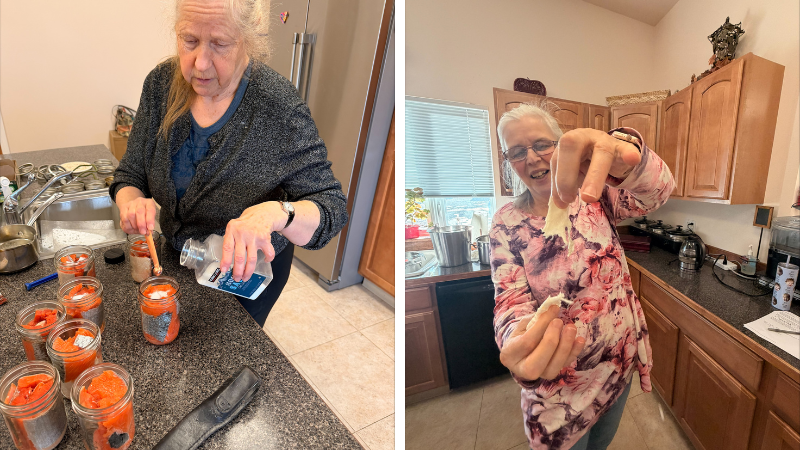
Ina Jones was scrolling Facebook when she spotted it: a post featuring jars of chili. The sharer? An attendee of a recent class she taught on how to safely can food.
“She wasn’t afraid anymore,” Jones thought to herself, recalling how at the beginning of the class, the woman—and others—were intimidated by the pressure cooker until she explained how it’s similar to having a sharp knife in the kitchen.
“You treat it with respect,” she said.
This kind of growth is what Jones had in mind when she put it out on Facebook that she was willing to share her knowledge with others, empowering them to deepen self-sufficiency through what she considers to be lost life skills—the things your grandmother would pass down if she lived closer. She just needed ample kitchen space to do it.
When The Salvation Army Homer (Alaska) Corps Officer Major Tina Bottjen saw the post, she reached out. After all, The Salvation Army had the kitchen.
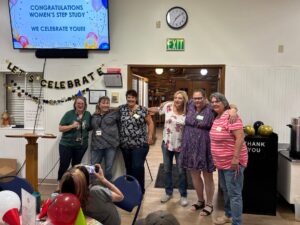
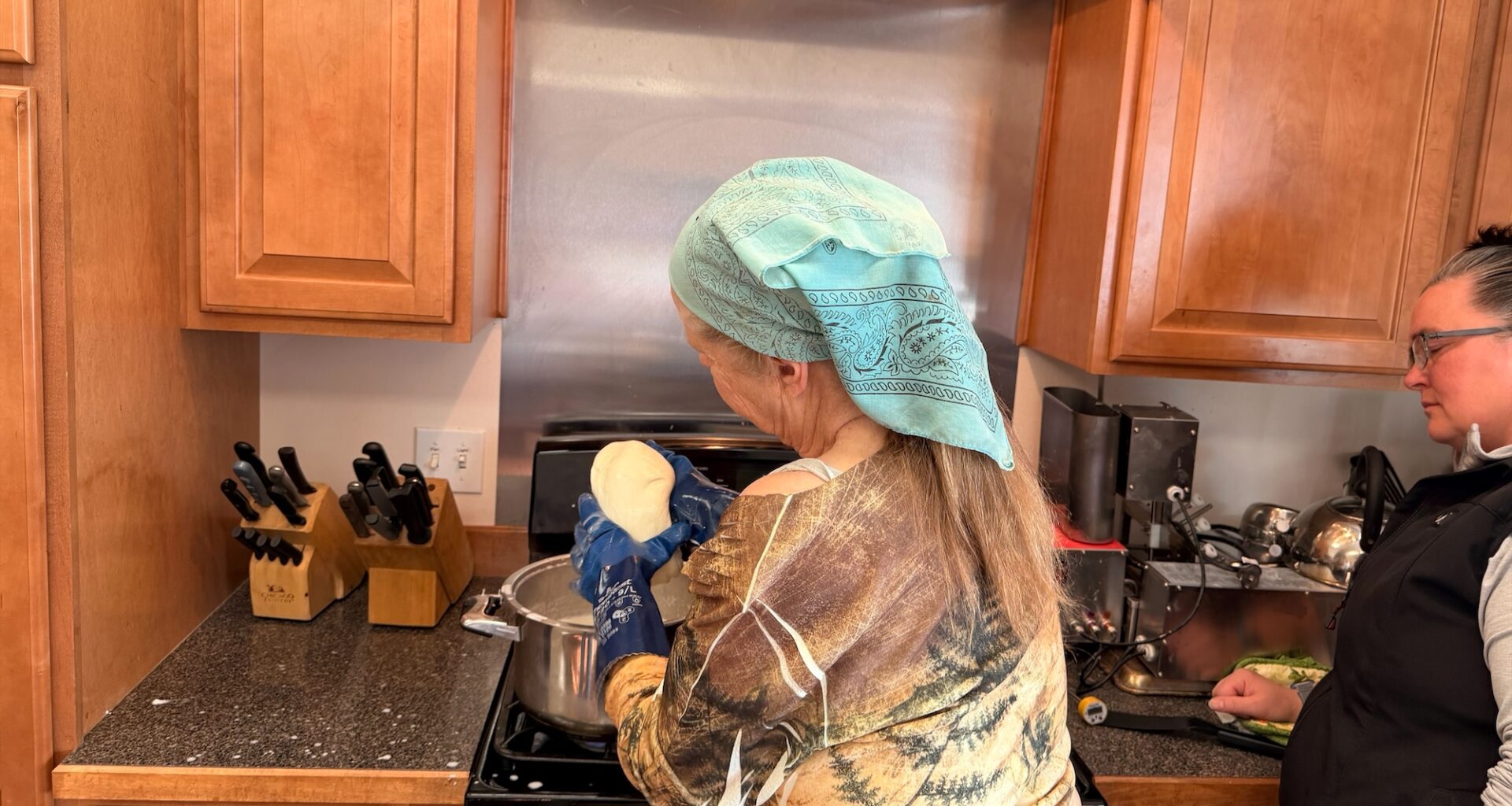
After meeting, the pair launched The Salvation Army Homer Corps’ first Homestead Cooking Class Feb. 21, with a session on making farmer’s cheese and mozzarella cheese—something Bottjen said has resulted in requests for a repeat.
“My core of my hope is, for the things that I don’t know how to do, is that someone will raise their hand and say ‘I do and I will teach it.’ That’s my heart’s desire.”
Ina Jones
The goal is to offer one class a month, free to the community, throughout spring in preparation for the summer, when the skills will be needed to harvest produce, fish and preserve food.
“We’re excited to offer something practical that helps people build skills and connect with one another,” Bottjen said. “It’s been a meaningful way to support and strengthen our community.”
Bottjen said she’s always hoped to have a program like this throughout her service as a Salvation Army officer in Alaska.
She’s noticed a need for cooking skills, especially among food pantry clients who receive commodity food, like beans and rice from The Emergency Food Assistance Program (TEFAP), a federal program that provides people with low incomes with emergency food assistance.
She said people will often donate the items back or give them away since they don’t know what to do with them.
She’d often wonder: “What can we do to help those families know how to use these items?”
“My goal was always wanting to do something like this,” Bottjen said. “I didn’t want to do the teaching, since I myself am not a good cook.”
Fortunately, Jones believes that when you have a skill others could use, you should share it.
She said the class at the corps is the most organized she’s been with her skill sharing—she has a lifetime of offering to teach others, but usually in the way of “I’m over here today taking honey out of my beehive or milk a cow or make butter, would you want to learn?”
“I enjoy it and I enjoy pulling in other people in the community with life skills and life experiences,” she said.
Future classes include shopping on a budget, led by another individual who is skilled at meal planning, along with another salmon canning class ahead of the salmon season.
Later in the year, Jones hopes to have a sewing class for mending clothes.
“The core of my hope is for the things that I don’t know how to do, is that someone will raise their hand and say ‘I do and I will teach it.’ That’s my heart’s desire,” she said. “If one person learns something from me and will teach that to someone else, and if they have a skill or a knowledge, if they will take that and pass that on to someone else …I’m trying to capture that spirit a little bit.”
Do Good:
- You already have a story worth sharing. Our free 5-day course helps you notice the moments that matter, shape them into a short story, and share the joy with others.
 Download this page as a PDF