



Listen to this article
Belonging often begins long before we have language for it.
Sometimes it begins when a family arrives with little more than hope. No roadmap. No safety net. Just the quiet question: Will we be welcomed here?
For refugee families, hospitality isn’t abstract. It’s tangible. It’s food on the table. School supplies. A warm coat. A Christmas present. A place where someone sees you.
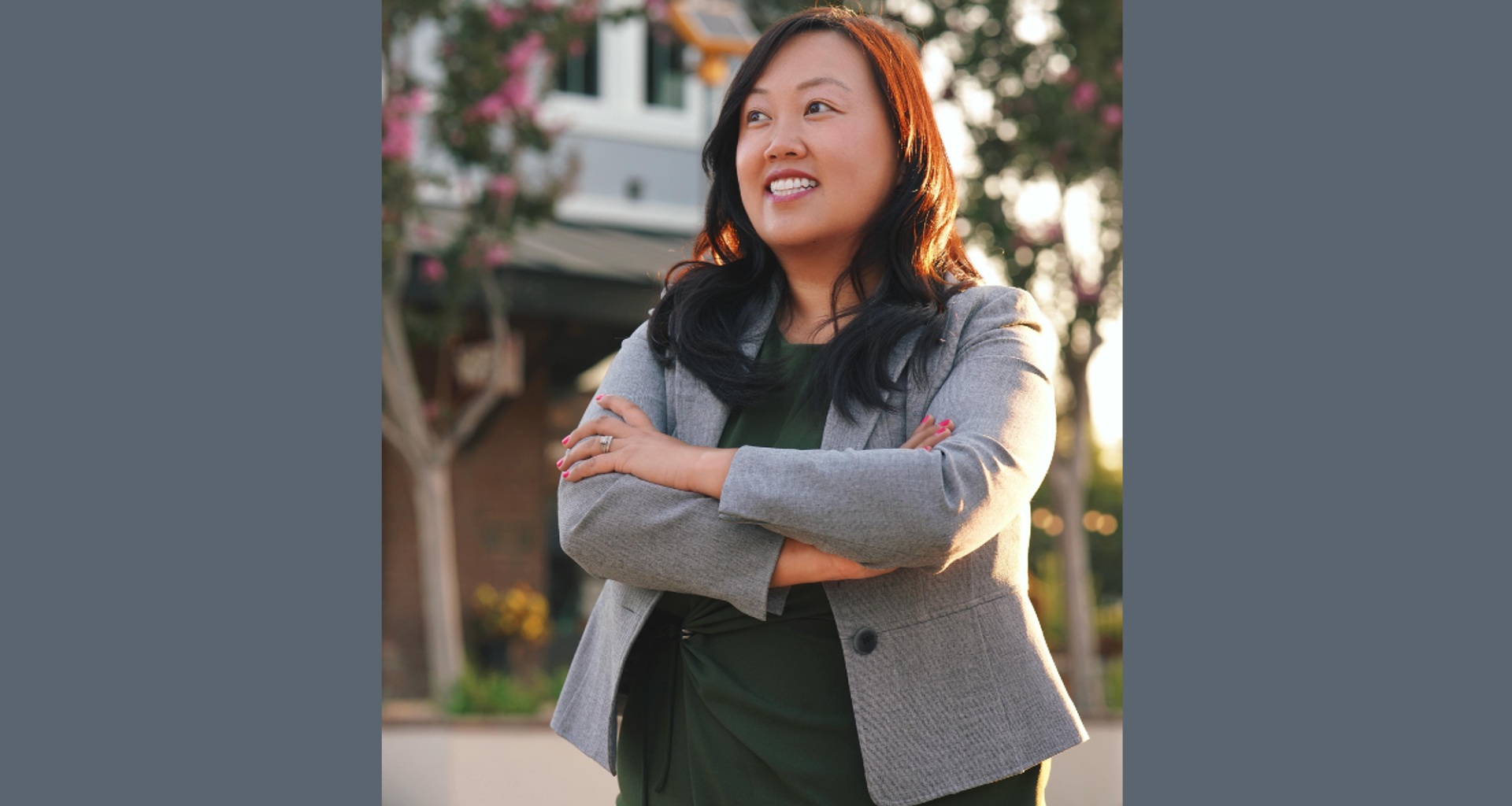
For Mai Vang, belonging began in moments like these.
Her parents arrived as refugees from Laos. They found support—often in small, ordinary ways—that helped them settle and find a new sense of home.
As a child, Mai didn’t see those moments as charity. She experienced them as care. As community. As joy.
A steady feeling of being included. Of being seen. Of being welcomed in.
That kind of hospitality leaves a mark.
It teaches you that communities are built—not by sameness—but by care. That generosity isn’t transactional—it’s relational. And that when someone helps you belong, you carry that lesson forward.
Today, Mai Vang serves her community as a city councilmember in Sacramento, California.
She helps shape policies, advocate for families and build systems that reflect the same compassion her family once received.
But her story didn’t begin in city hall.
It began with welcome. With a seed of compassion planted early—and grown over a lifetime.
Show highlights include:
- Mai’s earliest memories of standing in line at The Salvation Army to pick up Christmas gifts for her siblings.
- What it meant to grow up as the oldest of 16 children—and how that shaped her understanding of responsibility and leadership.
- How receiving gifts, clothing and access to safe spaces created a sense of belonging and safety.
- The realization in college that helped her understand her family’s refugee history—and sparked her desire to advocate for others.
- Why she believes institutions and organizations play a vital role in loving communities.
- What she wishes more people understood about refugee families.
- How early acts of generosity planted a compassion that continues to fuel her civic leadership.
- The importance of volunteers and everyday people stepping in to create joy and belonging.
Listen and subscribe to The Do Gooders Podcast now. Below is a transcript of the episode, edited for readability. For more information on the people and ideas in the episode, see the links at the bottom of this post.
* * *
Christin Thieme: Can you share a little bit about some of your earliest memories of your family receiving help after arriving in the U.S.?
Mai Vang: Yeah, so hi everyone. I am Mai Vang, the proud city councilmember of South Sacramento, the city of Sacramento, and also a candidate running for Congressional District seven. I am a proud daughter of Hmong refugees and a true believer of really important safety net programs that exist within our government infrastructure and within our charity giving infrastructure as well. And I know that I would not be where I am today without the love and support of so many people loving on families across our country.
And so I was born and raised right here in South Sacramento, but I know that my parents really struggled, came here as refugees and did everything they could to provide for my siblings and I. So I remember when it got cold around Sacramento and the lights were going up, I knew that it was time for the holidays, but that also meant that I would be going to the brick building off of Alhambra, which is where The Salvation Army is located in Sacramento.
And I remember getting in line with my mom picking up Christmas gifts for my little brothers and sisters. I’m the oldest of 16 children. I have six sisters and nine brothers, and I remember picking up toys and dolls and trucks for my siblings. And so that’s actually how I remember The Salvation Army. I always remember when it was cold, when the Christmas lights went up, that it was time to go there because mom and dad couldn’t afford Christmas gifts for us.
And then fast forward, just growing up in South Sacramento as well, I played basketball as well, and we actually practiced playing basketball at The Salvation Army as well. And so The Salvation Army has been part of my life since I’ve been growing up. And again, I know that I wouldn’t be where I’m at had it not been for The Salvation Army, bringing moments of joy in my life from something like Christmas gifts from my siblings to even clothing.
That’s what I also remember—waiting in line for clothing as well, jackets, sweaters as well from The Salvation Army, and then even playing basketball, right moments of joy because mom and dad really didn’t let me out of the house. I didn’t play much in the neighborhood because they felt that it wasn’t safe. We didn’t have safe places to go to. And so we played at The Salvation Army and that was kind of our safe place. And I love playing basketball. I love basketball. And so I remember it was good times growing up.
Christin Thieme: I love that. It’s interesting you mentioned safety. How did—I mean Christmas is such a obviously big part of The Salvation Army, and really we mobilize to make sure that kids and families have those experiences, just like you’re describing. How did not just those Christmas experiences, but just sort of in general, the kindness, the generosity you received as a child, how did that shape your sense of safety and belonging in the community?
Mai Vang: Yeah, as a little girl, I would say, when I’m thinking of initial feelings, when I was a little girl waiting in line with my mom, a sense of excitement for sure, and a sense of being loved on and that my siblings and I mattered and that they saw us, they saw that it was the holidays and that even that we were going to get gifts. I shared this only because I will say the first earlier years growing up, we really didn’t have Christmas because I probably have the earliest memory compared to all my siblings of not having Christmas gifts and going to school and kids talking about it. And then I’m sure, I mean, I probably talked to my parents about how they found out. It was probably through nonprofits and organization reaching out to families in need. And my mom and my dad probably saw probably a flyer or something.
Someone probably told them that The Salvation Army also would be providing Christmas gifts. And then I remember as I got a little older, I ended up going with my parents to go pick up gifts. But growing up as a little girl, there was definitely Christmases where we didn’t get anything. But I think with my parents, we knew that the holidays were here, but we didn’t even know that presents was part of it. I think my parents did a really good job of hiding the presents. So I didn’t really know growing up that that gift was part of Christmas or that you would get something. I just knew the lights were up and it was that feeling. But never had Christmas gifts until my mom told me, hey, let’s go to The Salvation Army. We’re going to pick up some gifts. And I’m like, oh, lucky, that’s cool. We’re going to pick up some toys.
And then when my mom told me, we’re going to wrap this up. I was a little confused at first—why are we wrapping? Why can’t we just give it? My mom said, it’s part of Christmas, what we do as Americans. And I said, okay, cool. I can wrap it up and the siblings don’t know what it is. And so when I saw the joy on my siblings face, I was really happy and I also knew what I got because I got to pick my own Christmas gift. So yeah.
Thanks, Christin. As I’m having this conversation, I realize that I haven’t really talked about it a lot. It’s something that I’ve just kept in my own lived stories, but the fact that as I’m jogging my memory, that before The Salvation Army, we had Christmas, the Christmas without gifts, and I thought that’s what Christmas was.
But when I think about it, it’s about that joy and seeing the look on my siblings face when they open up their presents and receiving something for me. I think that was the gift that I received in that time that I got to be part of that. And now reflecting on it now, it’s a whole 360. I’m sure that when I went to The Salvation Army, I have no poker face. So I’m sure as a little girl, I was very excited and perhaps those that were working were volunteering at The Salvation Army, probably saw a little my face lighting up as well. So yeah, it it’s the gift that keeps on giving.
Christin Thieme: When you look back now, how did those moments, how do you think they influenced how you see community today?
Mai Vang: Yeah, just thinking about my childhood and the ways in which people stepped up to volunteer and to love on our community really shapes the ways in which I see the world. It is really true. What I have said when I’m with my students or with family members, that at the end of the day, we got us. We have to take care and love on each other. And as a city councilmember, I do my very best to love on the community and ensure that we’re doing everything we can to provide resources and opportunities for our youth, our babies, our seniors, our families. And so my upbringing has shaped the ways in which I see the world and the need for institutions and charities to continue to hold that space because we know the need is incredibly dire, especially even in this moment.
Christin Thieme: Was there a moment as you were growing up then and became an adult and so on, when you realized that you wanted to give back in a public or civic way, what was that realization or that moment for you?
Mai Vang: Yeah, there are multiple moments of the ways in which I wanted to pay it forward or give back. I mean everything from when I went to college. So something I also shared with you is that growing up we didn’t have a lot growing up for sure, and you knew that when classmates tell you of things that they have or things they’re able to do, and you recognize at a young age that you’re not able to do those things because your mom and dad don’t have the resources, but you don’t make full sense of it until you learn about your own history. And I didn’t really learn about the Hmong people until I went to college. And when I went to college, I read about the Hmong people and how we were recruited by the United States to fight in the Vietnam War and how the U.S. left the Vietnam War, leaving many Hmong families behind.
And in those moments when I was in college, a light bulb went on and it made me realize that our systems, the ways it’s set up, it’s not set up to really love on and take care of our community unless there are advocates, unless there are volunteers like folks from The Salvation Army to really address those needs. And so because of that education and because of my upbringing and because I’ve seen the work that The Salvation Army has done, it filled my fire to actually be vocal and to make sure that family in need has everything they need.
And so that has actually been the driving force for why I do what I do, is that I’ve been there, I’ve seen the struggle of families, but I’ve also seen the good that has come out of it. And so it has to shape me as a human. It has shaped the ways in which I serve. And yeah, I would say probably starting my college years was when I started trying to organize to do charity, whether that’s collecting gifts to give to families when I went to college in the Bay Area, learning that, hey, I got gifts when I was a kid at The Salvation Army. Maybe we can have a toy drive on the college campus, which I did in college. And a lot of that had to do with me just growing up and going to The Salvation Army.
Christin Thieme: How did that experience of being the eldest of 16 children and just your family story in general, how do you think that shaped your understanding of leadership?
Mai Vang: Yeah, Christin, if you were to ask me, I always tell the story of as a human being, if you close your eyes and you ask yourself what are the earliest memory that you have as a human being, if you can close your eyes and think of the earliest memory that you can recall. And my earliest memory that I can recall is walking to the refrigerator to grab a bottle of milk for my mom to feed my little sister. So I share that because if that is my earliest memory as a human being, then for me it is like that is what I remember in terms of who I am and how I see the world in terms of walking to the refrigerator to grab a bottle of milk, to support my mom, to feed my little sisters, right? Because I think for me, I’ve always just have carried on and love on my brothers and sisters.
But I will also say that I didn’t do it alone. I didn’t do it alone. And what I mean by that is that there were 16 of us, and while I am the oldest of 16, I couldn’t have done it without my sisters who grew up alongside me. And it was very humble beginnings. But I’m so grateful that I had sisters to also help me raise my younger brothers and sisters. And in some ways, while I take the mantle of being the oldest of 16, I often look to my sisters as my older sisters too, because we had to learn together to take care of each other. And I am grateful that while I am the oldest, I also had sisters right there that also took on that role too.
Christin Thieme: And your family gatherings today must be a lot of fun.
Mai Vang: Yeah, it’s a crazy thing. And we’re doing the thing where if you’re over 18, we’re not buying gifts. We used to growing up when I was in college, and as the siblings go to school and they have a job, everyone buys gifts for everyone. So there’s so much gifts on the Christmas tree that you can’t see the Christmas tree anymore. But now we’re only doing, okay all the nieces and nephews and any siblings that are under 18 will get a gift. But yeah. Yeah, it’s a, family gatherings are amazing and very grounding.
Christin Thieme: I love it. In your role, how do you think communities can create joy simply by helping people feel included?
Mai Vang: I would say that there is a role for everyone. There are so many ways to support organizations that are already doing the work. They need volunteers. They need volunteers to actually do the work that they’re doing. And so if you’re watching this, The Salvation Army, they’re always looking for volunteers. And so there are ways that you can help out whether that’s contributing to The Salvation Army, volunteering, there are lots of ways to actually tap in and that you don’t need to be the one to reinvent the wheel or try to create the infrastructure, but there are some systems there that are good that we can continue to invest in. And so that’s what I would say.
Christin Thieme: What do you wish more people understood about refugee families specifically?
Mai Vang: I would say in terms of refugee families is that we want the same things. Refugee families, all of our families, no matter your status, we all want the same thing. We want love care. We want access to housing and healthcare to make sure that our kids grow up and they’re able to have the resources they need to reach their full potential. That we have a shared humanity, all of us. So no matter your status, whether you’re a refugee or a citizen or you’re undocumented, no matter what language you speak, is that we seek the same thing that is a sense of belonging, a sense of care, and a sense of community.
Christin Thieme: It sounds like receiving help early in your life sort of planted a compassion that has lasted. Would you say that’s fair?
Mai Vang: Absolutely. Absolutely. Yeah. I often think about the work that I do with community and the ways in which I govern or the ways in which I advocate for a community. And I often think about little Mai—who was there for her and who was able to fuel joy in her life at that time. I need to make sure I model that and where the things that were missing in little Mai’s life, I want to make sure that as an advocate, I’m helping to fulfill those things.
And so for me, the lived experience of growing up in South Sacramento and going to The Salvation Army, it has informed the ways in which I see the world because it wasn’t easy growing up as well. And I often think about what type of resources are needed in order for kids to thrive, for families to thrive in our region. And I’m reminded of the things that were there to support our family. And I’m also reminded through dark times where there was missing gaps in our family and our community. And as elected official, I think it is our role and our responsibility to fill in those gaps or to address those gaps and why they exist in the first place. So that’s why I’m here.
Christin Thieme: Well, councilmember, thank you. This has been a lot of fun getting to chat with you. As a last question on the show, I like to ask people, what is bringing you joy right now?
Mai Vang: I would say my husband, because I’m a newlywed.
Christin Thieme: Oh, congratulations!
Mai Vang: Thank you so much. Yeah, I would say my husband. I hardly see him because my life is so busy and he is truly my rock. Without him, I mean, house is clean, there’s food. When I get home, even though he works 12 hour shifts in the auto industry, he somehow is able to find time to still love on and care for me. And so he brings me joy.
Christin Thieme: That’s sweet. I love it.
Mai Vang: And also my dog, Coffee, too. My red husky, she’s great, too. So yeah.
Additional resources:
- What if one small story could spark hope? Join our free 5-day email course, Find Your Story: Share the Joy. Discover how everyday moments from your own life can encourage courage and kindness in others.
- If you are enjoying this show and want to support it, leave a rating and review wherever you listen to help new listeners hit play for the first time with more confidence.
- Join us in giving joy to families who are experiencing poverty, hunger, job loss and more. Your generosity offers joyful reassurance that even during our most challenging times, we are not alone.
Listen and subscribe to The Do Gooders Podcast now.
 Download this page as a PDF