


Listen to this article
At the San Francisco Harbor Light, a weekly music class offers residents a pathway to healing, connection and hope.
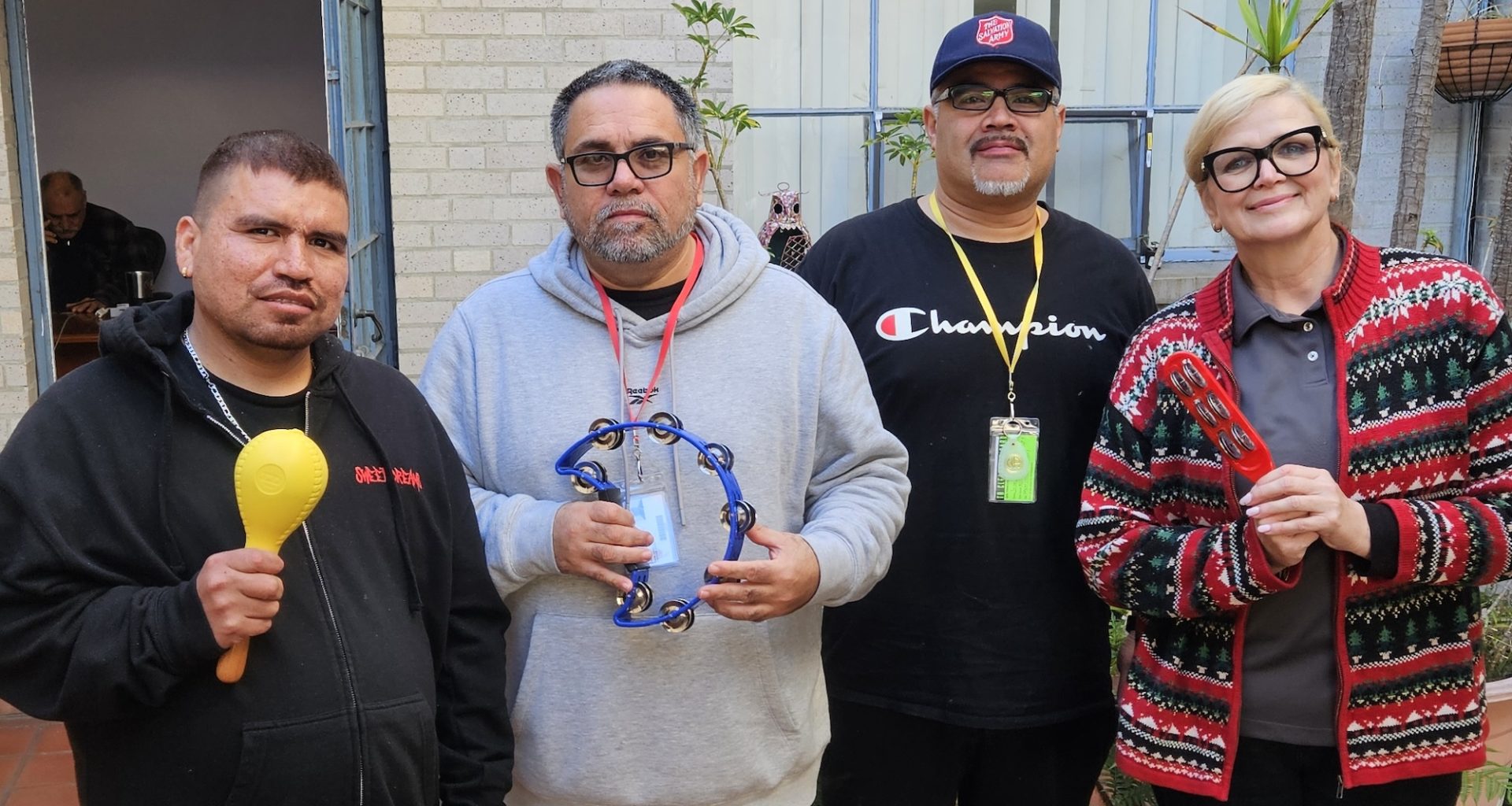
Captain Andrea Finch has learned to expect the unexpected in her weekly Music as Therapy class at The Salvation Army Harbor Light in San Francisco. But one session still stands out.
Staff had warned her to be mindful of a resident whose mental illness could leave him withdrawn and unpredictable. When the music began, though, he rose from his chair and started to dance—fluid, expressive and completely in sync with every song Finch played.
“He’s the best dancer I’ve ever seen,” Finch said. “He was able to dance every genre—Latin, country, pop—he really came to life.”
Moments like that reveal why Finch says the Wednesday class is the best time of the week. When she arrived at Harbor Light in 2023 as Associate Corps Officer for the Lighthouse Corps, administrators asked what she wanted to contribute—something she cared about and could build. She knew immediately.
“I want to do music,” she told them.
She said she created the Music as Therapy class off the top of her head as a way for everyone to come together. She had researched the topic beforehand.
“I’m not a music therapist,” she said, “but there are songs and musical genres known to be therapeutic—uplifting songs, fun for all musical tastes”—which suited the diverse group of participants at Harbor Light.
The San Francisco Harbor Light is a residential program that provides comprehensive treatment for adults struggling with substance use and co-occurring mental health disorders. Residents participate in clinical groups, individual therapy and various enrichment activities. Each week, residents choose between Music as Therapy and an art class, and Finch said more than half opt for the music session. In this hour, rhythm, movement and community help participants reconnect with parts of themselves that can feel out of reach.
“We meet people where they are, and we give them tools to heal, grow, and reconnect with hope.”
Captain Andrea Finch
A typical session begins with a short reading from slides that introduce the week’s theme—selected by Finch—such as “Living Your Best Life,” “Glisten” or “Positive Affirmations.” Residents then follow Finch through hand movements, stretches and percussion with tambourines or other handheld instruments. Dance ribbons encourage free-flowing movement.
Sometimes Finch tells participants, “You guys are so tense”—often drawing a laugh as participants relax. The class is flexible. Those who prefer to sit and watch are welcome to do so, joining in when they are ready.
For many residents, music serves as a bridge back to themselves.
“It helps me open up a little bit, and I actually understand myself a little bit more,” said Avery, a regular participant. “Most times I’m more reserved, but through dancing, that’s how I express myself. Having that avenue has helped me reintroduce or introduce myself to people in a new way. I’m willing to open up and show who I am when the time comes.”
Finch said she chooses songs that are uplifting and that connect with the class themes, selecting a mix of secular songs and occasionally Christian rap, choosing themes that can resonate with residents’ recovery journeys. Selections have included “Celebrate Good Times” by Kool and the Gang,” “This Little Light of Mine,” and songs by Jelly Roll and Christian rap artists like Sevin.
Some weeks she explores sub-genres such as yacht rock; other weeks the focus is on songs with lyrics about resilience or joy. About every three months, Finch introduces pool noodle drumming, an activity that synchronizes rhythm and movement in a playful, high-energy exercise. She also incorporates skits and uses a disco ball to create a lively atmosphere.
The impact on residents is notable, according to Finch. While some may quickly respond to the music, others slowly gain confidence and ease into participation, encouraged by the communal, nonjudgmental environment. Music therapy’s effectiveness in supporting mental health and recovery is increasingly supported by research, showing improvements in mood, cognitive function, and social engagement in clinical and community settings.
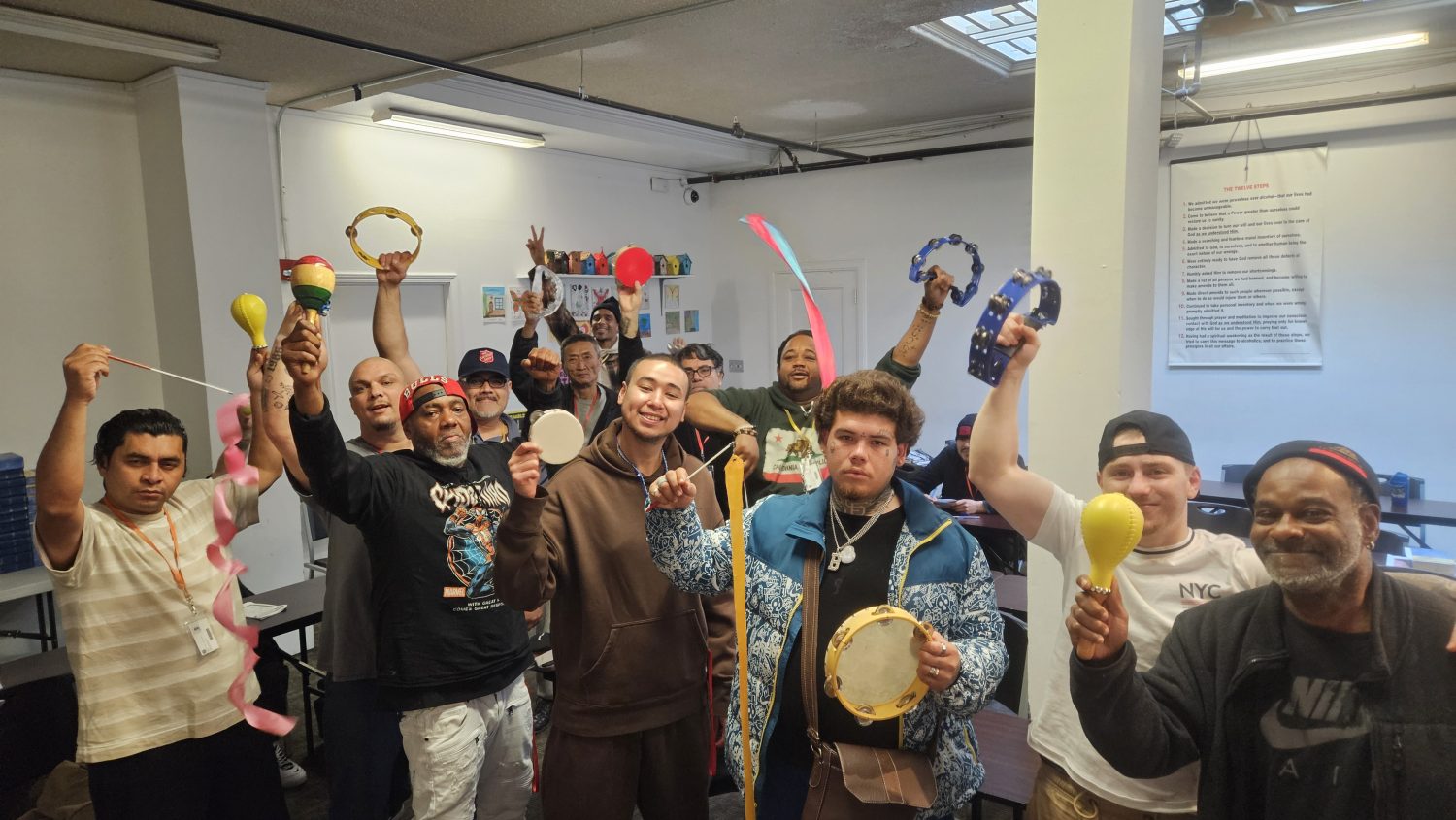
“Music class helps residents come out of their shells,” said Harbor Light Recovery Counselor Eric Greenlee. “It lifts their spirits and gives them space to experience joy, even in the midst of hardship. I’ve seen it make a real difference—encouraging people to step beyond their comfort zones. Most of all, I see smiles. Residents smile, laugh and genuinely look forward to the class each week.”
Over time, the program has inspired other initiatives. Harbor Light now offers a praise band and guitar classes, and some participants are writing their own music. Meanwhile, the weekly hour of Music as Therapy continues to be a space for residents to rediscover joy, culture, and self-expression.
The class aligns closely with Harbor Light’s mission to promote whole-person recovery.
“We meet people where they are, and we give them tools to heal, grow, and reconnect with hope,” Finch said. “Music bypasses defenses and reaches places that trauma has shut down. Through rhythm, lyrics, movement, and creative expression, participants start to feel again— safely, honestly, and in community.”
Finch said leading the class is deeply personal.
“I’ve been preparing for this my whole life,” she said. “Music is everything to me. Seeing the light come on in their eyes brings everything full circle. I’m in recovery myself, and these songs bring my own self-healing as I see them finding joy.”
Do Good:
- The Salvation Army is committed to helping individuals in our community rebuild their lives. By working together, we can help individuals break free from chemical dependency and build a brighter future. See more here.
 Download this page as a PDF