




Listen to this article
Not every calling arrives as a clear plan.
Sometimes it starts as curiosity. A sound you’re drawn to. A place where you feel like you belong—before you know why.
For many young people, talent shows up before confidence does. Before purpose has a name.
Before anyone asks the question: What might this become?
In Salvation Army music programs, instruments are often the first invitation. A cornet placed in small hands. A seat in a band room. A chance to try.
And trying—without pressure, without perfection—can be transformative.
Because when a young person realizes they’re good at something…when effort turns into ability…when practice turns into expression…something deeper begins to form.
Identity. Belonging. Joy.
For Rhys Jones, music wasn’t just an extracurricular activity. It became a language. A discipline.
A way to connect faith, creativity, and community.
What began as participation eventually grew into leadership. And what was once a gift given to him is now a gift he gives away—daily.
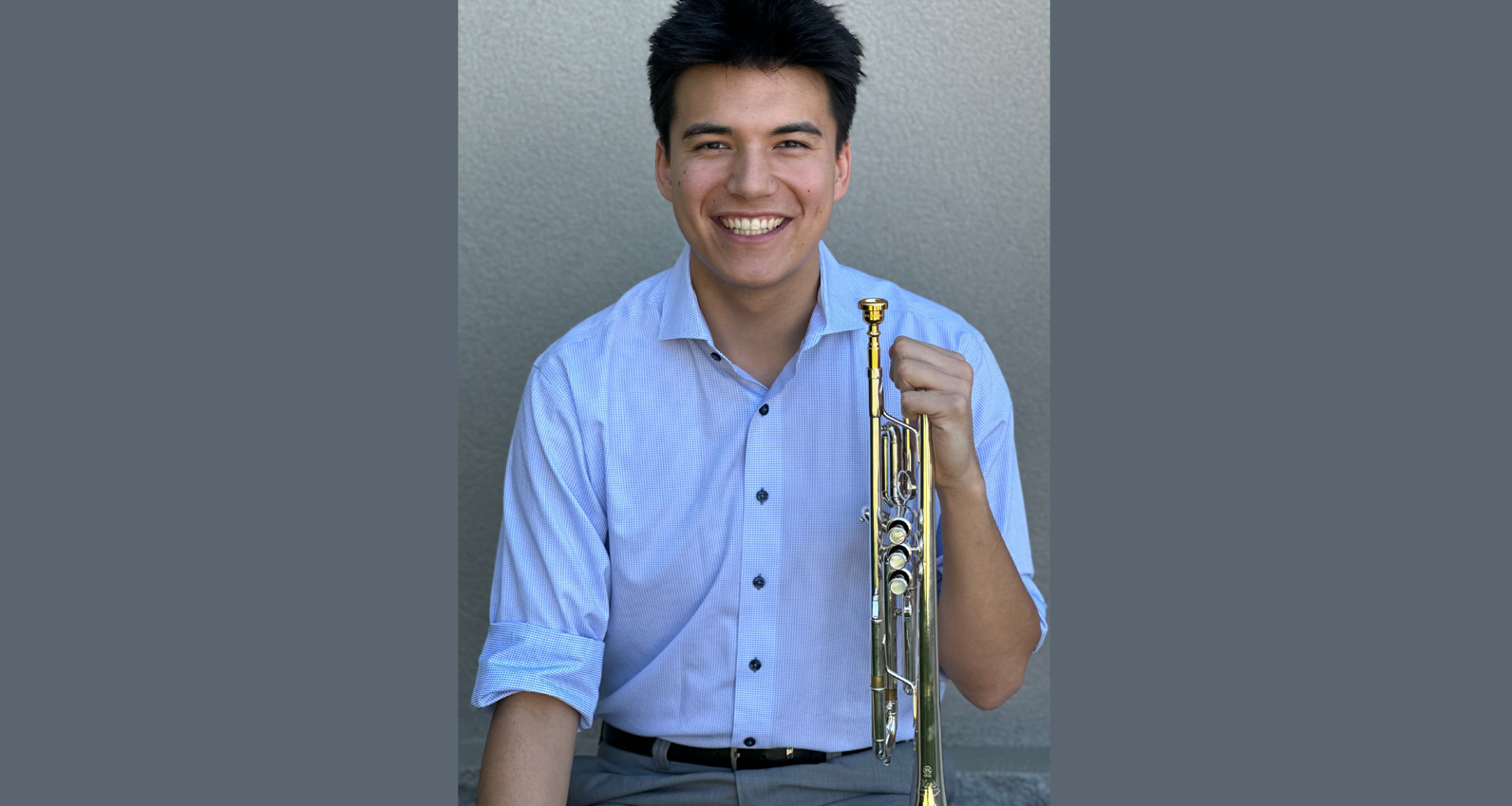
Today, Rhys serves as the Divisional Music Director in The Salvation Army’s Cascade Division, based in Portland, Oregon. But his story didn’t begin with a title.
It began with someone noticing potential—and creating space for it to grow.
This is a story about discovering your gifts. About the joy that comes from developing them. And about what happens when talent is shared—not for applause, but for service.
Show highlights include:
- How growing up in a Salvation Army family shaped his early relationship with music.
- The moment music shifted from something he “did on Sundays” to something deeply personal.
- Why practice, discipline and consistency matter—not just in music, but in life.
- The power of mentors and simple words of encouragement in shaping a young person’s confidence.
- What it feels like to move from student to teacher—and why teaching beginners can be deeply fulfilling.
- How faith and music intersect in moments of worship and spiritual impact.
- Why humility matters when you discover your gifts.
- How comparison can hinder growth—and why becoming “1 percent better than yesterday” is a healthier goal.
- What it looks like to share your talent in a way that multiplies joy instead of ego.
- Why remembering that every gift comes from the Lord changes how we use it.
Listen and subscribe to The Do Gooders Podcast now. Below is a transcript of the episode, edited for readability. For more information on the people and ideas in the episode, see the links at the bottom of this post.
* * *
Christin Thieme: Do you remember when music first became more than just something you did? Wwhen it really started to feel like yours?
Rhys Jones: For me, when I first started getting that feeling was kind of in college when I was playing there because it became less of like, I’m doing this on Sunday. This is for the Lord. That was always something, but then it became a little more personal when I was in college and I had to kind of audition to get a spot. I really had to work toward a goal as a little bit more competitive, I would say. So it’d make me spend more time away from a group and do my own personal, rigorous training and practice in my own time and hours to get to a better standard.
Christin Thieme: Yeah. Take us back to when you first encountered music. How did that come about? Were you put into a band? Was it a choir? Take us back to the first moment that you met music.
Rhys Jones: Well, when I first met music, I was maybe six or seven years old, and my parents are officers, so I was forced right into it. I remember my first music camp I went to in Denver, Colorado. I didn’t actually know how to play or I could buzz on my cornet, but the fingerings I didn’t know, and I kept peeking to the side in the beginning band watching the person next to me because I didn’t know what the notes were. As well as my mom having us all do piano. So my mom was the pianist and my dad is the brass and percussion guy. So I’d say my very young childhood, I got thrown right into the music and I just became a part of my life and everything I’ve done has been centered around music.
Christin Thieme: So what do you play now, or what do you most enjoy playing?
Rhys Jones: What I most enjoy playing, I would have to say, is trumpet, but I haven’t played much anymore, in this last year and a half in my new role here. So when I do play, it’s a lot of fun and I kind of need to make sure I practice more regularly because when I play with the groups, my stamina is kind of getting lost. I also enjoy playing the piano as well, so I get to play piano actually more consistently because I’ll play at DHQ Chapels in various worship opportunities in the division.
Christin Thieme: What do you think music gave you, particularly as a young person that maybe you didn’t have words for then, but looking back, you can see that it really added to your life in some way?
Rhys Jones: I think it taught me that it takes work to get better at something that you can’t just go straight into something and be good at it, that it takes time and it takes progress and it’s not instant. It’s a marathon, not a sprint, and I’ve been able to use those music practice skills in my life in other capacities. What I think of, because in brass you have to be consistent every day because you’re training your muscle here on your lips, which is not, our bodies are not made to blow through a little hole of tube and make it vibrate and create a sound. So it takes consistency and rehearsal to get to an end goal of being, Hey, I can play the trumpet, I can play the cornet, I can play the piano. So that can be used in other ways in your life, like learning public speaking. If I want to get good at talking to people, I need to go around in my day and say, hi, good morning, good afternoon, how are you? I’m just trying to start a conversation and it takes time to get more comfortable with those other skills.
Christin Thieme: Yeah. What did it feel like to realize that your talent could grow with practice and with guidance?
Rhys Jones: I’d say when I started hearing, when I got more developed on my musical skills and musical foundations and fundamentals, when I start hearing other players and musicians that are better than me, I’m like, wow, I can tell they put a lot of work into their craft and it didn’t happen overnight, and it’s going to take a lot of hours and practice to get there, and that kind of gives you more inspiration, okay, I got to really work on this if I want to go to that next level.
Christin Thieme: Yeah. Were there mentors or leaders who helped you see what was possible and encouraged you along the way? What was that like for you?
Rhys Jones: I’d say in The Salvation Army setting of it, hearing the staff band at Commissioning and different trips and they travel around, I was like, oh, I love listening to the prelude at Commissioning. To hear the brass band play like, oh, I want to try that one day. I wish I could reach that level of brass banding. So hearing that is a bit of an inspiration and then eventually getting an opportunity to play with them for the first time, I was like, wow, this is what it sounds like to play in a really good, tight band where everyone’s worked on their own craft personally, and then come together and make one beautiful sound.
I’d say in my early years, it was really my dad just saying, Hey, you got to practice. At first I didn’t understand, why do I have to practice? I don’t want to do that right now, but it’s just, at first you don’t enjoy it. I’d say that with anything. If you want to get good at it, at first it’s like, oh, I don’t want to practice. I don’t want to spend some time doing this when I could be playing outside, playing video games, doing something else, but eventually it kind of clicks like, oh, this was important. I’m glad I was pushed to do this. And then it becomes more of an intrinsic thing of I need to practice if I want to get good at this.
So I’d say my dad and my mom really pushed me a lot, or for a band leader, getting encouragement from Neil Smith, Kevin Larsson at summer camps, as well as Steven Yalden. He was my first DMD [divisional music director] when I remember being in the youth groups in the old Sierra del Mar Division, just words of encouragement. I think that goes a really long way to say, hey, Rhys, you’re doing really well. And then it kind will brighten up your mood and say, hey, I’m doing good at this. I want to keep that pace up.
Christin Thieme: Yeah, totally. At what point did you start to sense that music might be more than a skill, more than something that you were good at, but might be part of your calling? Obviously, you went to work specifically with music, so at what point did you realize that this could be more than just something that you do as an extracurricular?
Rhys Jones: I’d say when I had the opportunity to lead our beginning band and junior band at the Concord Corps, just the opportunity to spend time with the young people that are learning and beginning for the first time, and then when I’m teaching them and kind of seeing them as like, oh, that was me. I was a beginner. I wish not I wish, but this is a great opportunity to flip the tables and say, now I get to teach them how to do it. And it feels really fulfilling when you get to the end goal and we can play a piece all together, even if it’s just really beginner “Hot Cross Buns” every time when you play that first “Hot Cross Buns” and everybody has it down themselves and nobody’s peeking at each other, but they’re all creating it and at the end just to give ’em a big smile like, woo, we did it. It feels really good when able to do something like that.
Christin Thieme: Totally. I love that. How did faith and music begin to intersect for you, and how do you see that relationship today between your faith and your music?
Rhys Jones: It happened a couple times. It normally happens while I’m playing in a group setting and you’re really thinking of the lyrics of the piece and what it means, and a couple of times I’ve kind of struck by the Holy Spirit and feeling it, and it kind of brings me to tears and say, this is a message that I’m really getting to share with other people. The Lord’s given this opportunity, this music as a way to share his message with others, and yet you can feel it emotionally like pulling on your heart the Lord, and it’s like, wow, this is something beautiful. He’s given to us a way we can express and a way we can worship the Lord through music, and what a beautiful opportunity it is through music, because music is amazing.
Christin Thieme: What do you love about music?
Rhys Jones: I love that there’s a lot of variety. You got fast music, slow music, movie scores, jazz. There’s just so many different styles, and they all have their own deep culture in each area that people really become really masterful at, and I just love the diversity and how many different styles and genres there are.
Christin Thieme: And now you work as the divisional music director in the Cascade Division for The Salvation Army. Can you tell us a little bit about what that means, what your role is, what you do?
Rhys Jones: Well, what it means to be here is I just feel really blessed. I never thought I’d end up being a divisional music director coming out of university. I wasn’t thinking about this at first, but I worked here at the summer camp at camp. The role was open, I applied, I was able to interview and I guess this is really happening, and then I kind of got thrown right into it. I was never expecting this to be my life now, and I feel really blessed to be here and have the opportunity to share music with the next generation.
And now that I’ve been here about a year and a half, the second year has been much better than the first. The first was good as well, but it’s a lot of first things, first times first time meeting new officers and new corps members and soldiers throughout the year, but now going second time, second year through, I feel much more fulfilled and more comfortable in this role as I’ve met the people across the division and met my team at DHQ [divisional headquarters] as well as in the field, and I like where things are going here and just being able to lead the band and the chorus.
I do a lot of things. I’m an AV guy, a band instructor, a course instructor, the administrator—actually, a lot of the administrative side I never expected. It’s a lot of emailing and contacting people and a lot of inviting say, hey, get your butt over here. It’s time for a rehearsal next month. I hope you’re able to make it. And a lot of encouraging and just staying in touch with people and building relationships.
I think that’s been a really important part of my job, and I just want to keep building relationships with the young people and the old people and the in-between people to say, hey, I’m your friend. Let’s make some music together and we can’t do it without you. And that’s really, really true, and I believe that because the more of us that come together, we get a share in that fellowship and that music making altogether.
Christin Thieme: How does your own experience throughout your life, as a young person especially, shape the way you think you lead now?
Rhys Jones: I think as a young person, just hearing the words of affirmation and encouragement from people that are older than you really goes a long way, and that’s something I’ve tried my best to really do with those that I’m teaching now. I have a couple lessons I do in the week as well as in the band and say, hey, we’re moving in a good direction. You’re doing really great. Instead of, I think also there’s been a little bit of a culture shift, unless it’s just I’m getting older, and it’s not as harsh as I thought. When you’re younger, it’s scary, like, oh, you’re missing that F sharp. You got to get that sharp, and it feels really personal, but it’s not always really a personal thing. They just want you to play the right note. But I think as I get older, maybe they’re just trying to help me out, so just directing negative feedback to lead to a positive improvement in the music playing.
Christin Thieme: Yeah. Now that you’re on the other side as a leader, an instructor, what do you see happen when a young person realizes it’s like, I’m good at this?
Rhys Jones: I think when a young person realizes they’re good at it, they have a little bit of spark, a little more excitement, they’ll feel a little more on board about, hey, I want to do this. Especially in our Encore program with the divisional and territorial music competition, when I’m visiting the corps, they’re like, hey, Rhys, I’m going to try and do bass guitar this year. I was like, oh, great. That’s good. Try expanding and trying another instrument. If they come up to you and say, and they want to tell you about a music thing, I think that spark has kind of ignited and now they’re in it now.
Christin Thieme: Yeah. For someone who maybe is still discovering their gifts, still working up to that point, what encouragement would you offer?
Rhys Jones: For somebody who’s still trying to find their gifts, I would say, you’re not going to be great at first. You’re going to make a lot of mistakes. You might feel down on yourself. People are going to be better than you, but that doesn’t mean you can get better. Don’t compare yourself to people that are better than you because they’ve already had the time to put in the hours and the work, but with your own personal practice, you have the chance to get to that level, so less comparison of yourself to others, but comparison to yourself yesterday, can I get 1 percent better today and just keep working and working and working, and it’ll take time.
Christin Thieme: What about for those who maybe have found what they’re good at, they have the skills, the talents in some specific area of music or otherwise, what does it look like to share those talents in a way that multiplies joy for others?
Rhys Jones: I think if you want to share the joy of music and you get to a higher level and you’ve spent a long time in it is just to remember where your gift came from. It came from the Lord, because if you become arrogant or self-centered about your music, that’s going to put people off. Say, hey, I don’t want to be that guy. I don’t want to be that girl in music. If you’re able to stay humble and now that you know a little bit more about music than other people, maybe you can share that with them and teach them a little bit. That’s a great opportunity to become a mentor to somebody, especially at your corps. If there’s a young person and you feel, oh, I’m the best player here. Hey, just share that gift with somebody. I’ll say, Hey, do you want me to teach you? Do you want me to spend some time with you? And really pick someone up under your wing and train them up in your musical talent.
Christin Thieme: Absolutely. Rhys, this has been a lot of fun. Thank you. As a last question for you, I’m wondering what is bringing you joy right now?
Rhys Jones: I think what’s bringing me joy is the joy of the Lord because he’s my Lord and my savior. Everything I have is because of him, and I wouldn’t be here without it, and so everything I do in my life is for the glory of the Lord. I worship him through my life and through my music, through my speaking to other people, and that is my source of joy.
Additional resources:
- What if one small story could spark hope? Join our free 5-day email course, Find Your Story: Share the Joy. Discover how everyday moments from your own life can encourage courage and kindness in others.
- If you are enjoying this show and want to support it, leave a rating and review wherever you listen to help new listeners hit play for the first time with more confidence.
- Join us in giving joy to families who are experiencing poverty, hunger, job loss and more. Your generosity offers joyful reassurance that even during our most challenging times, we are not alone.
Listen and subscribe to The Do Gooders Podcast now.
 Download this page as a PDF