

Listen to this article
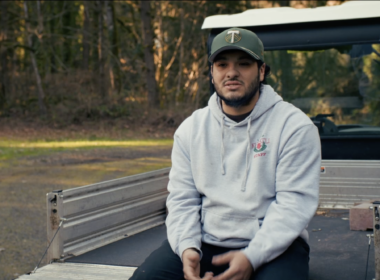
Fabian Vivero grew up a straight-A student and had college soccer scholarships lined up.
In his teens, experimenting with marijuana and alcohol began to steer him off the path he had charted.
After being caught under the influence at school twice, Vivero was expelled. Although he completed high school through a continuation program, his soccer scholarship was gone.
He describes the 18 years that followed as a cycle of addiction—one marked by lost jobs, strained relationships, DUIs and on-and-off homelessness.
“It got to a point where I knew I had to truly look at my behaviors—what I’d been through and why I kept making the same choices and mistakes,” he said.
Eventually, that reflection led him to seek help.
In March 2025, Vivero entered The Salvation Army Seattle Adult Rehabilitation Program (ARP), a free, six-month residential recovery program designed to help men overcome substance use challenges and rebuild their lives.
“I was nervous at first,” Vivero said. “But over time, I realized I was in the right place—I could see myself improving, reconnecting with God and thinking more clearly.”
He said he was surprised to notice changes in how he spoke and thought, often turning to Psalm 23 for comfort and a reminder to trust God’s guidance and provision rather than worrying about what comes next.
“I just took everything one day at a time and learned to let God lead me,” he said—a new habit he’s developed in recovery.
The ARP’s structured daily routines combine counseling, recovery education and spiritual support along with practical assistance for employment and housing.
Vivero said classes in anger management, relapse prevention and substance use disorders were especially helpful for him to identify triggers and learn new ways of coping.
He said the holistic approach is guiding him to become independent and has prompted him to consider a future helping others navigate recovery.
“I committed myself to the program because I wanted to understand myself and others,” Vivero said. “I wanted to get to the root of my issues and studying it felt like the only way.”
In fall 2025, Vivero received a scholarship to continue his education through City Vision University’s Wounded Healers pathway that’s designed for students who were formerly affected by substance use, homelessness or incarceration. He is now working toward an associate of science degree in business administration with a certificate of nonprofit management.
The ARP was a turning point for me..I was nervous at first…but over time, I realized I was in the right place—I could see myself improving, reconnecting with God, and thinking more clearly.”
Fabian Vivero
“Recovery doesn’t stop when the program ends,” said Seattle ARP Program Administrator Captain Kyna Kelley. “We want the men to leave here with connection, stability and a clear sense of what comes next.”
Once ARP beneficiaries reach the fourth month in the program, they have the option to enroll in the City Vision University Wounded Healers Program.
Kelley said her own experience studying at City Vision showed her how education, spirituality and service can work together in recovery, leading her to help establish the ARP’s partnership with Wounded Healers in 2023.
Today, the ARP is one of more than 50 recovery and reentry programs across the country engaged in the educational partnership to ensure those who complete programs have access to continued education.
Salvation Army Adult Rehabilitation Centers (ARC) in the eastern U.S., including the Columbus (Ohio) ARC, have also partnered with Wounded Healers, helping lower tuition costs for program graduates.
“For some individuals, education becomes part of their recovery,” Kelley said. “It gives them a gradual way to build confidence and envision what life can look like after the program.”
Kelley said every man who graduates from the ARP leaves with employment or housing in place. She added that support continues for up to 18 months after graduation, offering assistance with enrolling in courses, accessing resources and staying connected.
For Vivero, his days are now filled with lessons, assignments and meetings with professors, offering a new rhythm that supports both his education and his sobriety.
“I’m learning more about the science of addiction and how it affects the way people think, behave and cope,” Vivero said. “The more you know about a problem, the more you can do to help find a solution.”
As he continues his studies, Vivero said he’s already begun to see his experience as something he can offer others.
“I know what it feels like to be stuck,” Vivero said. “Now I want to be part of what helps someone move forward.”
Do Good:
- Join us in giving joy to families who are experiencing poverty, hunger, job loss and more. Your generosity offers joyful reassurance that even during our most challenging times, we are not alone.
 Download this page as a PDF