

Listen to this article
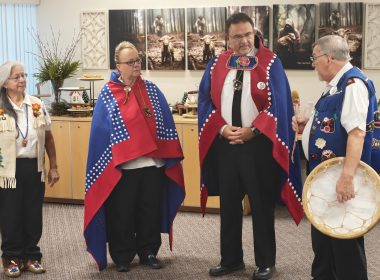
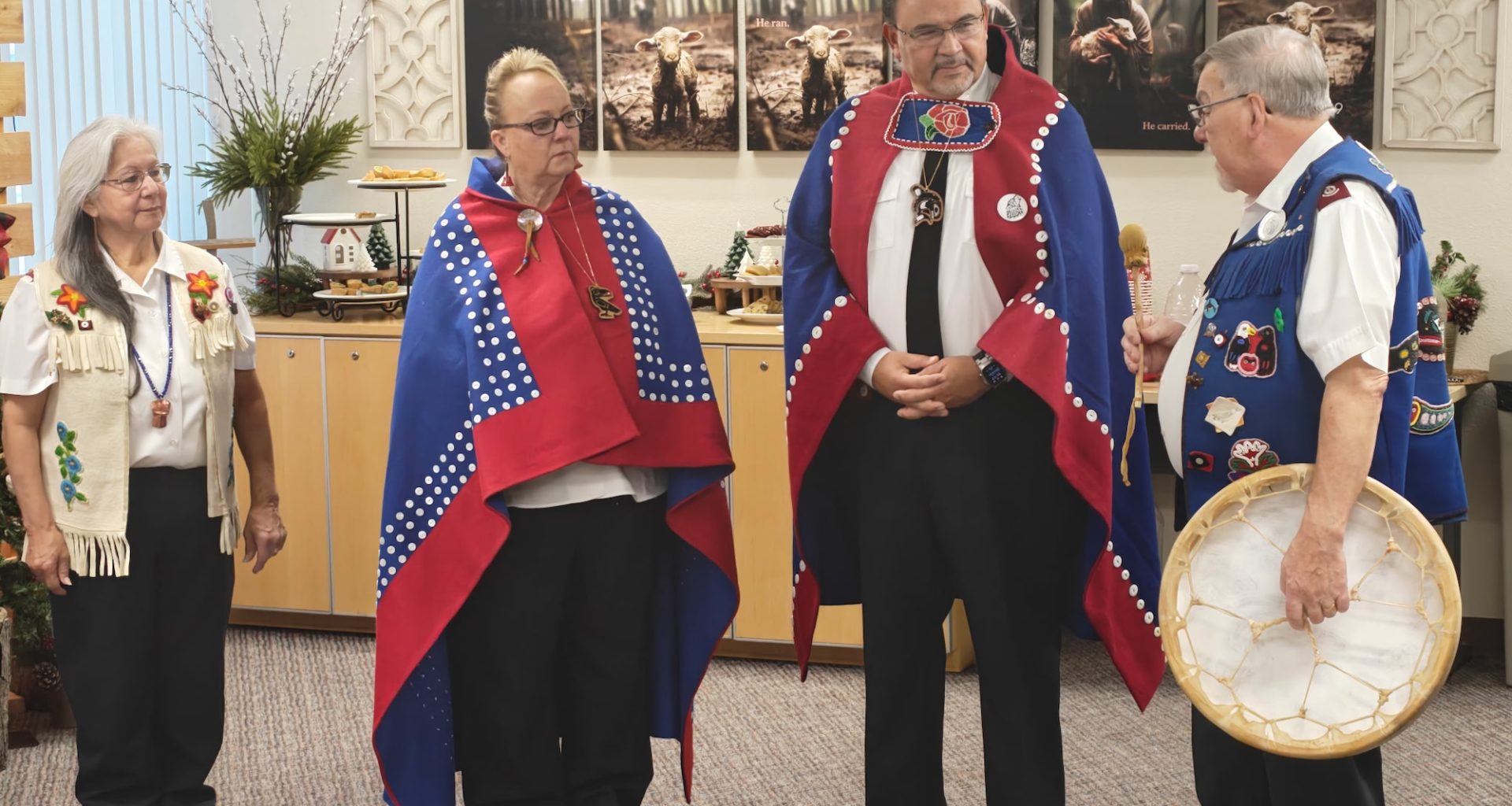
A beating drum signalled the climax of the traditional Tlingit ceremony, held Dec. 10, 2025, at The Salvation Army Alaska Divisional Headquarters in Anchorage.
The Tlingit Tribe was officially adopting then-divisional leaders Lt. Colonels Henry and Dina Graciani and granting them new names. Draped in traditional blankets, Henry Graciani received the title “Big Killer Whale,” and Dina Graciani received the name “Sea Lion who Travels Much.” To seal the adoption, clan leaders pressed a $20 bill to the Gracianis’ foreheads, representing the ceremony’s permanence.
Standing in front of his partners in ministry, joining a new family, Henry Graciani said he was baffled.
“I was just speechless, which is rare,” he said. “It was very cool and very humbling.”
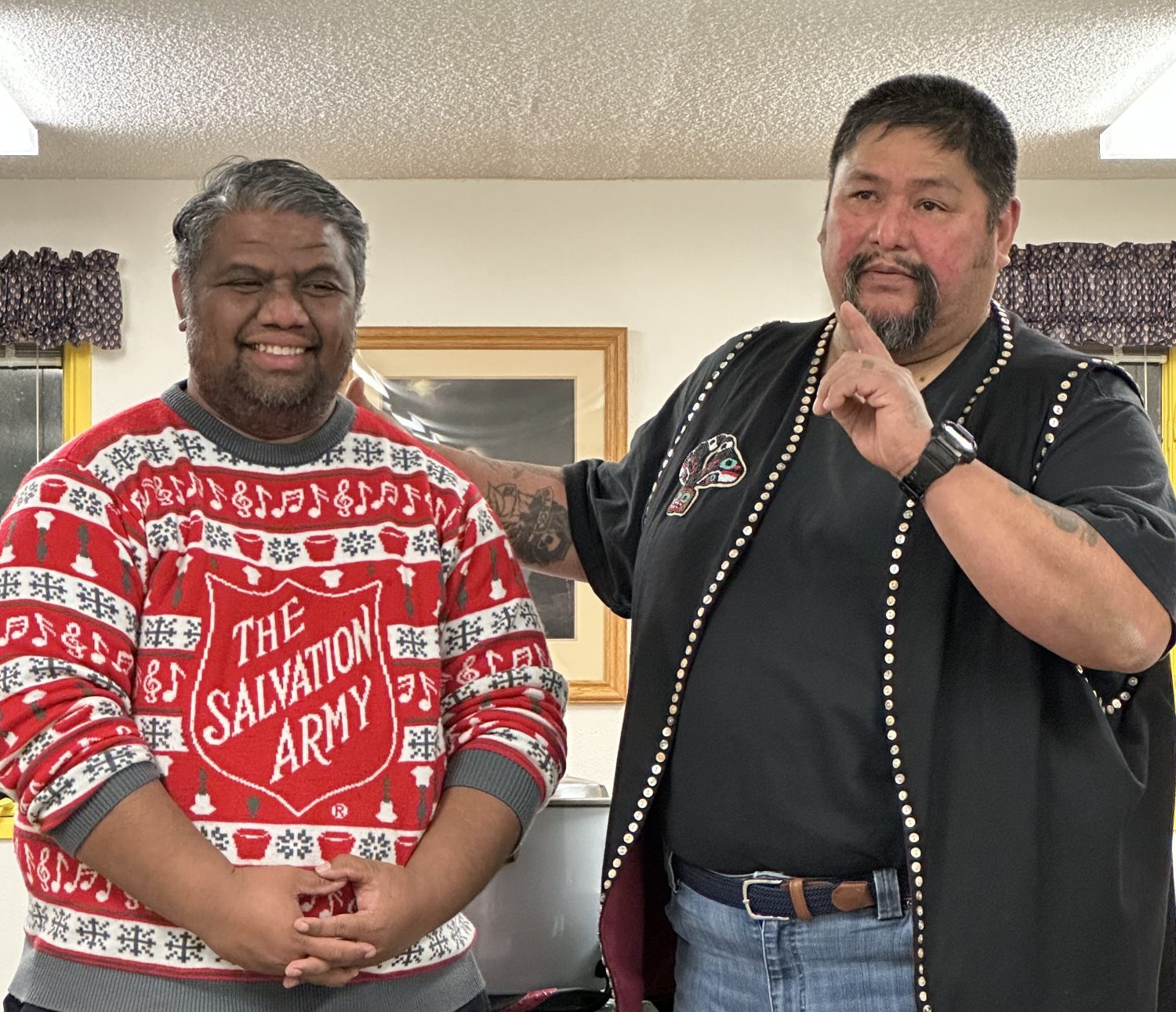
The Gracianis are not the only Salvation Army officers adopted by an Indigenous Alaskan tribe or clan. Throughout the organization’s ministry in Alaska, which first began in 1898, many officers have received the honor. In fact, Klawock Corps Officer Captain Luke Betti was adopted into the Shankw’eidi Clan Dec. 13.
Graciani said his adoption is possible, in part, because of The Salvation Army’s legacy of cultural respect in the community.
“It’s humbling to go visit and for people to tell you how The Salvation Army helped their family yesterday, yesteryear, or their grandmother 50 years ago, or their great-grandmother 100 years ago,” he said.
“We’ve been blessed to be invited to experience the beautiful culture and the beautiful people of Alaska. It’s been phenomenal.”
Lt. Colonel Henry Graciani
In light of that history, Graciani said he can better connect with the communities he served.
“I have such an appreciation for the faithfulness of both officers and church members, corps members, who have come alongside the respective communities throughout all of Alaska,” he said.
Betti said he also tries to carry that legacy forward at his appointment in Klawock, a village in Southeast Alaska with fewer than 800 people. When he first arrived, Betti asked Jonathan Rowan, a local totem-carver, to help him try every traditional dish—herring eggs are now Betti’s favorite—and teach him about every tradition.
Betti also started spending time in Rowan’s carving shed, where clan leaders gather to spend time together, tell stories and laugh. Investing in those relationships has helped Betti reach the population he’s most passionate about: youth.
“When I first came, it seemed like…adults would say hi and greet me, but like they didn’t really push their kids to come to the youth program. There were only three kids,” Betti said. “But this last program session, we had an average of 15 kids.”
In addition to regular Salvation Army programs, like summer camp, Betti said he hopes to take the youth group to a four-day cultural celebration in Juneau this summer.
“It would be nice to expose the kids to the fact that their culture is bigger than just right here,” he said.
While serving in Alaska, the Gracianis made a point to attend similar cultural events, including a totem pole raising and Betti’s adoption.
“We’ve been blessed to be invited to experience the beautiful culture and the beautiful people of Alaska. It’s been phenomenal,” Henry Graciani said.
Now, as they start new appointments as leaders of The Salvation Army Southwest Division, the Gracianis hope to take the lessons they learned with them to Phoenix.
“I’ve always known the importance of looking out for your neighbor, but it’s that much more pronounced in Alaska because of the small size of the communities,” Graciani said. “And I really want to recreate that sense of tight-knit community, even within the city of Phoenix.”
The Gracianis are taking hand-carved badges representing their new Tlingit names to Arizona to remind them of the relationships they’ve built in Alaska. The badges also show the Gracianis, like other officers before them, are not only part of God’s family and The Salvation Army family, but the Tlingit family, too. None of those identities change with a different address.
“It’s very important to make people a part of the family,” said retired Salvation Army officer Major Joe Murray while performing the Gracianis’ adoption ceremony. “It has to be done before they leave town; this is unfinished business. We want family down in Arizona.”
Do Good:
- You know the red kettles. You’ve seen the thrift stores. But The Salvation Army? It’s so much more. Who are we? What do we do? Where do we serve? Come take a quick tour — The Salvation Army 101.
 Download this page as a PDF