


Listen to this article
Anaheim ARC and Santa Ana police team up for an early morning outreach.
One October morning in Santa Ana, California, just after sunrise, a small team from The Salvation Army Anaheim Adult Rehabilitation Center (ARC) met with police behind a local Dollar Tree—a spot known as a hub for drug activity and homelessness.
But this morning was different. Instead of arrests, the focus was on hope.
The outreach grew out of a developing partnership between the Anaheim ARC and the Santa Ana Police Department, formed as both groups looked for ways to respond to the needs of people living on the streets. Together, they decided to offer an alternative to arrest—direct access to recovery services.
Those needs have been increasing across the region. According to the 2024 Orange County Point-in-Time Count, homelessness in the county rose 37 percent from 2022 to 2024, with Santa Ana experiencing a 71.5 percent increase in its unsheltered population. Substance use can be a factor for people experiencing homelessness, making recovery services and support—such as those provided at no cost by The Salvation Army’s adult rehabilitation centers—an important resource.
“The city is dealing with a homelessness epidemic,” said Rolando Rios, Anaheim ARC Administrative Aid. “The police didn’t want to just take people to jail—they wanted to connect them to help. When they learned what The Salvation Army does, it all came together.”
The partnership between the Anaheim ARC and the Santa Ana Police Department began earlier this year at a community outreach event, where their booths happened to be side by side.
“At first, it was a little nerve-wracking,” Rios said. “We come from backgrounds where seeing police brings fear. But they approached us differently—they wanted to know about the ARC, how it worked, and how they could help.”
“They were being received with love, not judgment. Instead of being told they were in trouble, they were being offered an opportunity for a better life.”
Rolando Rios, Anaheim ARC Administrative Aid
The conversation led to a connection with Corporal Jonathan Perez, who later invited The Salvation Army to join officers on the early morning outreach in Santa Ana.
That morning, ARC staff—ARC Administrator Captain Timothy Pemberton, Intake Coordinator Matthew Stark, volunteer Ernesto Martinez and Rios—set up behind the Dollar Tree with intake forms and coffee. As the police officers spoke with people in the area, they introduced the ARC team. For some, conversations turned into prayers and offers of support.
Pemberton described the outreach as “a living example of The Salvation Army’s mission in action—to preach the gospel of Jesus Christ and meet human needs in his name without discrimination.”
Rios said people were surprised.
“They were being received with love, not judgment,” he said. “Instead of being told they were in trouble, they were being offered an opportunity for a better life.”
By the end of the morning, five individuals had accepted that offer: three checked into a detox program, one went to UCI Medical Center for a mental health evaluation, and one—though close to entering—chose to return to the streets. For the others, it was a first step toward recovery.
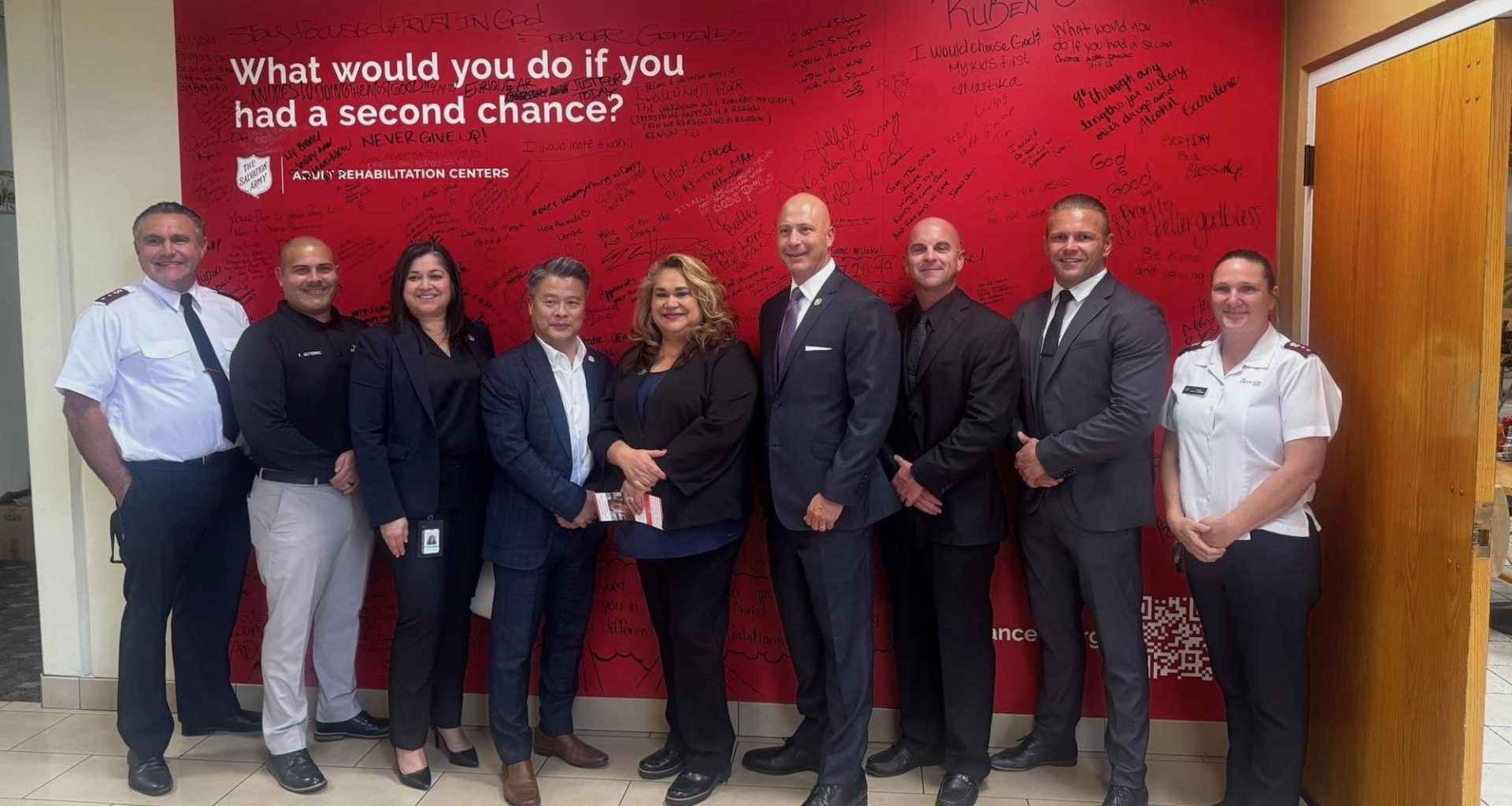
The outreach sparked broader collaboration. In the following weeks, Santa Ana Mayor Valerie Ameyusko and city council members toured the Anaheim ARC with local law enforcement. Mayor Ameyusko has since joined the ARC Advisory Council and invited the team to participate in city meetings on recovery and homelessness.
For Rios, the outreach experience was personal. He remembered what it felt like to be on the other side—when people were reaching out to help him.
“We were once the ones in handcuffs,” he said. “Now, we’re the ones helping people who are in those same situations find a chance to change their lives. It was amazing.”
Pemberton said The Salvation Army believes in meeting people where they are.
“Behind a Dollar Tree or on the streets of Santa Ana—God is already there,” he said. “We’re just showing up to extend his hand.”
Do Good:
- The Salvation Army is committed to helping individuals in our community rebuild their lives. By working together, we can help individuals break free from chemical dependency and build a brighter future. See more here.
 Download this page as a PDF