



Listen to this article
A journey back in time to the first Angel Tree
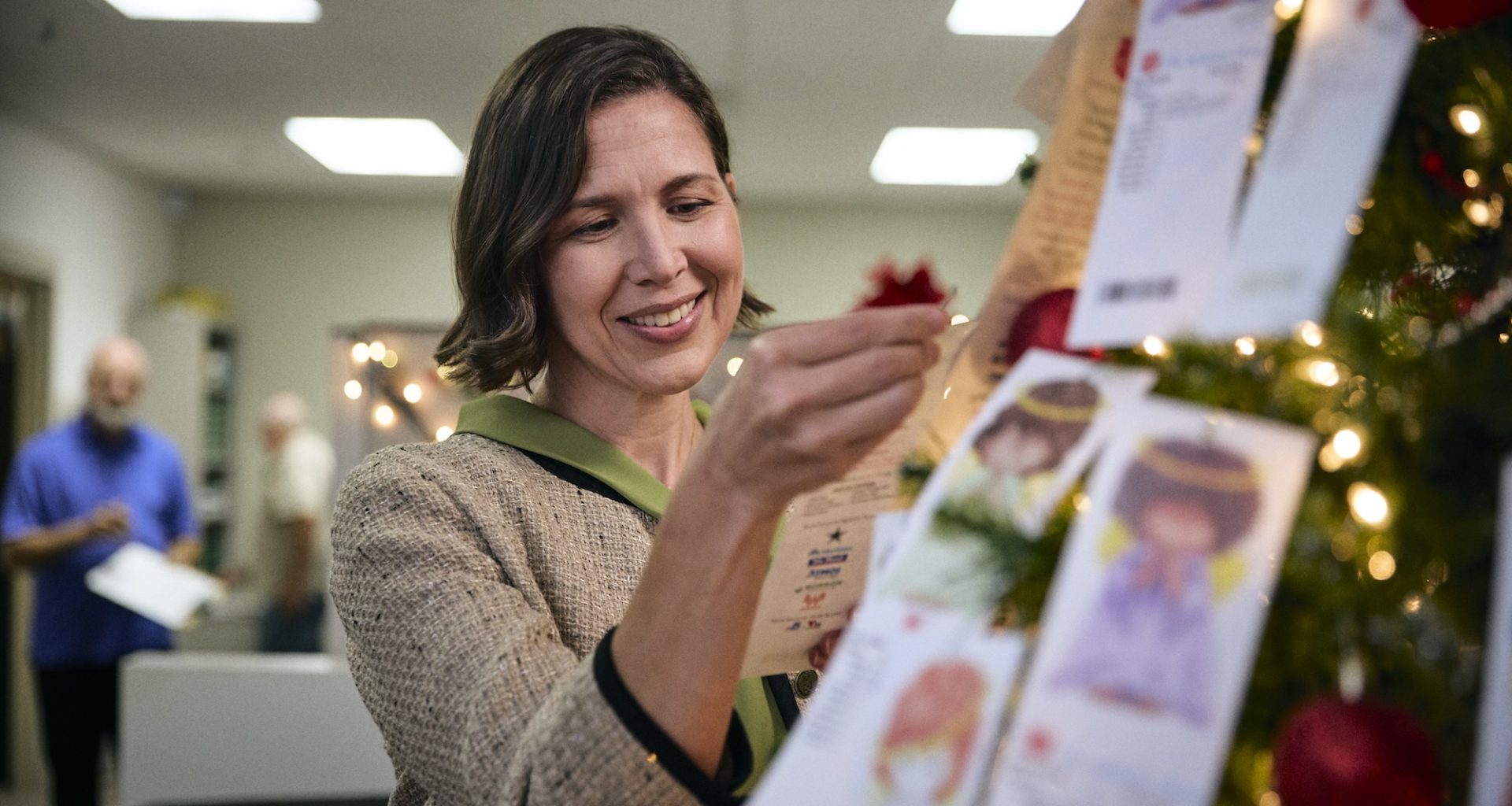
Have you ever chosen a paper angel from a Christmas tree and shopped for a child you’ve never met? If so, you’ve been part of a story that began nearly half a century ago—with a setback, a Hallmark card and an act of faith.
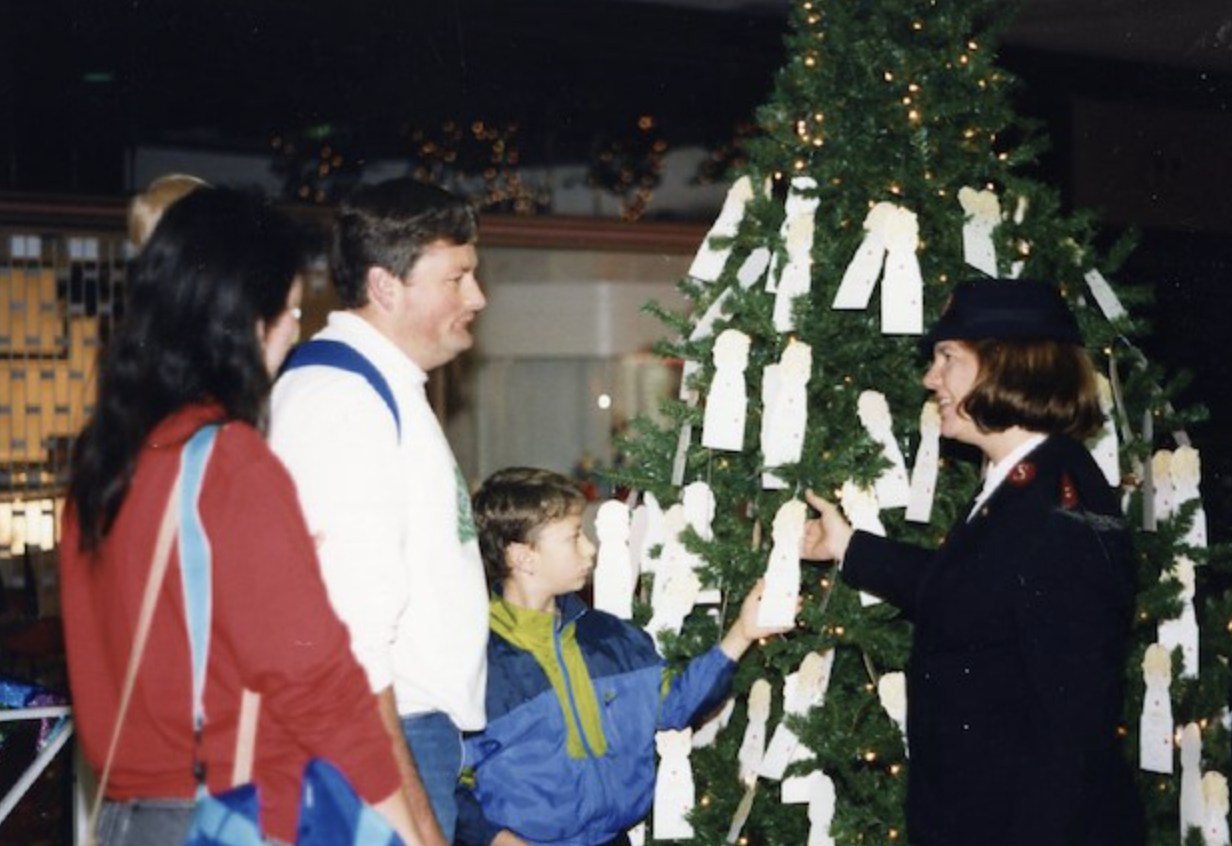
In 1979, Salvation Army Captains Charles and Shirley White were serving in Lynchburg, Virginia, when a local mall refused their request to place Salvation Army kettles inside for Christmas fundraising. What began as a disappointment became the spark for one of the Army’s most enduring holiday traditions—the Angel Tree program.
Caring Magazine spoke with Lt. Colonel Shirley White, who shared the story behind that first Angel Tree and how the program has expanded to reach more than a million children each year.
1. The Angel Tree was born because a mall said “no.”
“When the mall managers told us we couldn’t have the kettles inside, they said, ‘But there are these big trees in the center of the mall. If you can think of something to do with them, we can work with that,’” White recalled.
That comment changed everything—and as one door closed, another opened.
“We took a walk down the mall, and when we came to the Hallmark store, we saw this beautiful Christmas card with three angels on the front,” she said. “We thought, ‘We could cut those angels apart, write a child’s information on the back, and hang them on the tree.’ And that’s what we did.”
Thus, the Angel Tree was born—not from a grand plan, but from creativity, compassion and no small measure of divine guidance.
“It was really a God thing,” White said. “We would have never come up with it on our own.”
2. The first tree had 476 angels—and no identification codes!
First, the Whites had to find enough angel images to fill the trees.
“When we saw that Hallmark card with three angels, we bought every one they had,” White said. “Later, we contacted Hallmark to see if we could use the design, but they didn’t agree, so we had an artist draw us a similar angel. From then on, we printed our own.”
That first year, the Lynchburg Angel Tree held 476 first names of children. But one logistical detail nearly derailed the distribution.
“We didn’t think about how we were going to match the angels back to the families,” White said with a laugh. “We just put the first name of the child on the angel. We spent most of the night before Christmas distribution going through every file, trying to match children with their families. It was quite a night!”
Even so, every child received gifts—and a new tradition took root. In a sweet twist of fate, the Whites were able to place a kettle in the mall that year. They couldn’t ring the bell, but with a representative always at the tree, the kettle found its way there—a victory for that year’s Red Kettle Campaign.
3. Angel Tree was never just about toys.
From the start, the Whites wanted the Angel Tree to meet real needs, not just fill Christmas morning with toys.
“We were already doing a toy shop,” White said, “but we thought about what happens when the kids go back to school and they don’t have new clothes like the other children…That’s how it became clothes and toys together.”
To this day, every Angel Tree tag lists both a child’s clothing sizes and wish list—a reflection of the original vision of dignity and care.
4. The program spread through Nashville—and around the world.
After two years in Lynchburg, the Whites were transferred to Nashville, Tennessee, where they presented the Angel Tree idea to their advisory board.
“They said, ‘Maybe we’ll try that next year,’ but we convinced them to give it a try right away,” White said. “By the time we left Nashville, we were doing over 10,000 angels each Christmas.”
Television interviews—including spots with Ted Koppel on Nightline and Larry King Live—helped the Angel Tree idea spread nationally. And before long, it expanded outside the U.S. to Canada and beyond.
“The first overseas program started in Amsterdam [the Netherlands], when a visiting officer saw the Angel Tree here and took the idea home,” White said. “Now there are several other countries doing it, too.”
5. Angel Tree is about connection—not just giving.
More than anything, White says, Angel Tree is about human connection.
“One thing we learned early on is that the people we registered as angels just wanted someone to hear their story,” White said. “We take a lot of applications online now, and there’s not that one-on-one contact. We need to get back to having families come in so we can really connect with them.”
She recalled moments when that connection changed lives—like a blind couple in Nashville with sighted children who received help beyond Christmas.
“We helped them get furniture, find a job and get back on their feet,” she said.
White made it her personal mission to track down families who didn’t come back for their gifts.
“We always had two, three, maybe four families that didn’t come back in,” she said. “So I just made it my thing to find out why. Some had been in the hospital, or there was a death in the family—there were lots of reasons—but they still really needed assistance.”
She remembered one mother in particular.
“I had to do a lot of research to find her,” she said. “I finally located her working at a Pizza Hut and was able to get her what she needed.”
For White, that’s the essence of Angel Tree: listening to stories, meeting real needs, and showing people they are not alone.
Bonus: Someone even wrote a play about it.
At the 35th anniversary celebration in Lynchburg, a local man shared that he had written a play about the Angel Tree, which his church performed before Christmas.
“He sent me a copy of it,” White said.
White encourages people to get involved with the Angel Tree program by adopting an angel or helping their corps with the gift distribution.
“It’s a blessing to serve,” she said. “Just remember—you’re helping the child. And when people come in, just love them.”
Do Good:
- Join us in giving joy to families who are experiencing poverty, hunger, job loss and more. Your generosity offers joyful reassurance that even during our most challenging times, we are not alone.
 Download this page as a PDF