



Listen to this article
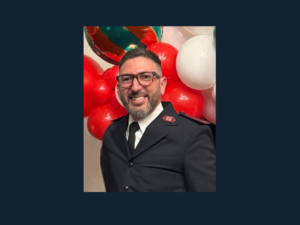
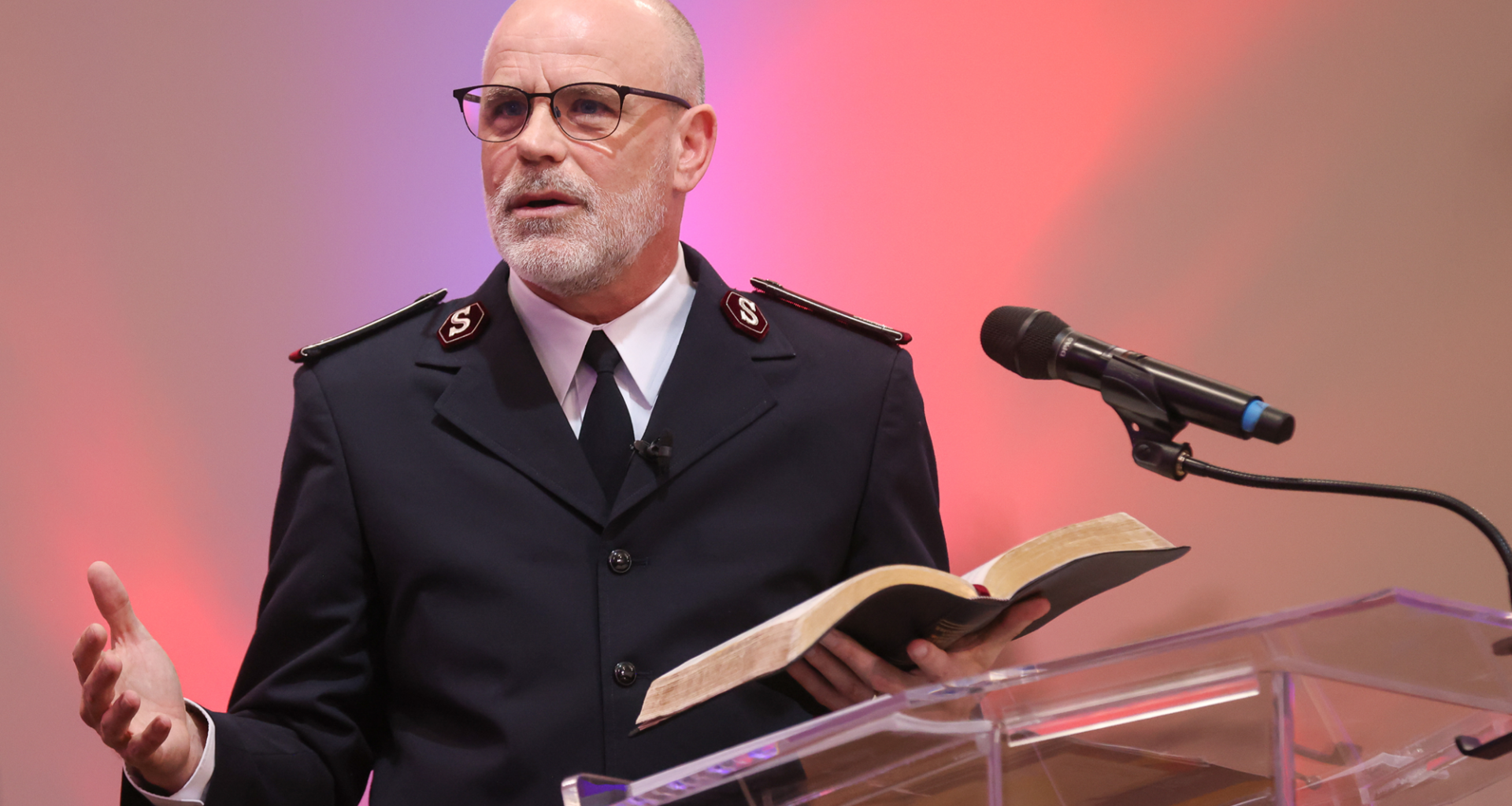
Of course, you will remember meeting Commissioner James Betts in our first episode of the year, in which we introduced him as the new Territorial Commander in the West. Today, we’re sharing a message from him, delivered just recently during the Welcome and Installation service held February 14 at the Tustin Ranch Corps in California.
Drawing from Romans 12, Commissioner Betts challenges us to move beyond forgiveness alone and into a life of daily surrender—a life shaped by unity, holiness and transforming love. In a world quick to divide and slow to trust, this message calls us back to the refining fire of God’s mercy and the joy that comes from laying our lives fully before him.
As you listen, we pray you would be encouraged, challenged and renewed—and that the joy of the Lord would strengthen you for the season ahead.
Here now is Commissioner James Betts with his message, “Transforming Love.”
Listen and subscribe to The Do Gooders Podcast now. Below is a transcript of the episode, edited for readability. For more information on the people and ideas in the episode, see the links at the bottom of this post.
* * *
Commissioner James Betts: Our hearts are already full. And we probably don’t need me to talk anymore, but I’m going to talk for just a few moments anyway. Because I do not want to miss the opportunity to thank the Lord, to praise him for all that has happened, to take an opportunity to thank you for all that you’ve done, not just tonight, but in the wonderful, warm welcome we’ve had to this territory. But before we do that, would you pray with me?
Heavenly Father, we thank you again for the privilege that is ours to be in your house tonight and to be gathered with those that love you. We pray that you would continue to bless our time as you have up to this point, and we pray that as we hear from your Word, even if just for a few moments, that you would anoint it and that you would use it to transform lives. Because we love you and we ask it in Jesus’ name, amen.
It is so good to be among friends. Family is one thing, we always make a way to be with family, but friends…until you’ve served away from your territory, you don’t realize that you don’t necessarily interact with them naturally unless you make it a point to. And so being here among friends, some we’ve known for many, many years, and some we’re just getting to know, we’re very, very grateful.
We’ve been fascinated to see the differences in this territory from where we’re from. It’s very, very different. First of all, the scenery is stunning. You live in a beautiful territory, and I don’t just mean Southern California. We’ve been privileged to go to Hawaii. We’ve been privileged to go to Alaska and even Phoenix, where we learned that sunsets are most beautiful because of the dirt in the air. And the divisional commander reminded us that God can do some pretty amazing things with dirt. The entire territory is breathtaking.
You enjoy In-N-Out burgers better than Five Guys it would appear. Yes?
We’re starting to understand why.
You say, and this is an odd one, you say “the” before your interstate numbers, right? The 405, right? The 110. Any of them, whatever the number, they could be called the parking lot.
Where we come from, we reserve the word thee for our beloved college teams.
Ooh, he done gone to meddling.
Another interesting thing to me is as it relates to your relationship with fire. Now I don’t mean fire like wildfire. That is obviously traumatic and tremendously devastating here. But I’m talking about like the fire that you can control.
The fire in your home, the fireplaces, where we come from, it’s always a little bit chilly. And so we would have a fireplace on a regular basis. Or we would have a fire pit in our backyard, maybe on our deck, which I think was illegal, but we still did it once in a while. It’s an interesting thing. We got here and first of all, we were told it never rains in Southern California and that it’s never cold in Southern California. And you sit on a throne of lies.
That’s from the great theologian Elf.
We went to turn on the fireplace because it got chilly one night and the fireplace looked at us like we had three heads. Like, what do you want me to do? It wouldn’t even light.
Well, our passage this evening talks about fire as well. Maybe not directly, but you’re going to see it with me. We’re going to talk about fire. We’re going to talk about things that go into the fire.
When you were growing up, does this territory, does this part of the country have burn barrels? Did you have those? Praise Jesus, we had one of those. For the youngins here, that was this 55-gallon drum that we would put in our backyard, and we would throw our garbage in it, and we would burn it, right? You with me? Everything went in that barrel.
Some of it was there when we were done. Some of the glass, some of the metal, that didn’t burn, but sometimes it changed. But the burn barrel, everything went into the fire.
Well, this evening, as we look at our passage of Scripture, we’re gonna talk about fire for just a few moments, because it’s been a very impactful passage to me as I’ve read it, and I just wanna share it with us as a territory.
If you have your Bibles with you, I invite you to open them to Romans 12. It was read beautifully for us earlier by our son Jimmy—thank you for that. Romans 12, if you don’t have a Bible with you, you can use the one on your phone, but that’s all you can do on the phone. Just read the Bible.
Now before we read this passage, I’m not gonna read the whole thing, because Jimmy did that beautifully. We’re gonna read just a couple verses. Before we do that, I think we need to put things in a little bit of context.
You have to understand a little bit about the book of Romans. Now, right out of the gate, we have Paul talking about unity in the body of Christ. Right, he’s talking about that throughout the Bible.
If you’ve ever read Romans, you would know that this is one of the most incredible books in the Bible. It’s that book that you want to go to to understand what the Christian faith is all about. What do we believe? What do we ascribe to? You go to the book of Romans, right? Because Paul wrote that. But why was he then talking about, right out of the gate, unity?
He recognized that there were several distinct groups in the church at Rome. There were several groups. There were Jewish believers and there were Gentile believers, non-Jewish believers, right? Now the Jewish believers were people that had been steeped in the Jewish traditions, in the law, in understanding very specific things that they were supposed to do as part of their faith walk. And then you had the Gentiles who were just coming to know who God was through Jesus Christ.
Now somewhere along the line, Emperor Claudius expelled the Jews from Rome. He sent them away. Now they had been the ones that were pretty much the leaders of the Church. You have to understand, they were the ones with the faith background, right? They had the history. So naturally, they were the leaders of the Church. But now they were being expelled out of Rome. And so the Gentiles stepped into those places and began to take on the mantle of leadership.
It was very interesting because eventually Emperor Claudius passed away and the edict that he had issued expired. And so the Jewish believers from Rome came back. This is where we are. Because they got back and they were used to being in charge. They were used to knowing where they would sit. They were used to knowing what their role was in the body of Christ. But they got back and found somebody sitting in their seat.
Now I don’t know if that happens in your church, but in the Eastern Territory, sometimes that’s a problem, right? Sometimes somebody’s sitting in our seat. And so essentially, the old guard had returned and the new guard was in their place. And so there was some conflict. There was some tension that was happening. Not only were they trying to figure out who was in charge, but they were trying to figure out how to live as one body, Jews and Gentiles together.
For nearly 2,000 years, the Jewish people had been told that they were to be set apart. They were not to mix with the other people around them. But now, with the new covenant in Christ, they were being asked to embrace their Gentile brothers and sisters. They were being asked to live in community in ways that they had never done before.
Well, this would explain why Paul spent so much time talking about unity. Why he spent so much of these first few chapters reiterating the claims of the gospel. We’re talking about the beginning of Romans, not just 12, but way back, Romans 1, 2, 3. He’s talking a lot about unity. He’s doing it by presenting the claims of the gospel and saying, none of us are better than anybody else because we were all sinners in need of a savior. That was chapters 1 through 3.
Chapters four through eight, he was breaking down how we’re justified not by who our forefathers were, but by faith in what Jesus had done. His salvation was a gift freely given to everyone when they put their faith in him. And chapters nine through 11 are where we read that God desires to bless and redeem all people, not just Jews or Gentiles.
So with that background, you got it? You understand why there’s a little bit of tension? And why we’re reading what we’re reading, chapter 12? I’ll read just a few verses right there at the beginning.
Therefore, I urge you, brothers and sisters, in view of God’s mercy, to offer your bodies as a living sacrifice, holy and pleasing to God—this is your true and proper worship. Do not conform to the pattern of this world, but be transformed by the renewing of your mind. Then you will be able to test and approve what God’s will is—his good, pleasing and perfect will (Rom. 12:1-2).
So what is he talking about here? What is he talking about in this whole chapter? He talks about living sacrifices. He talks about love. Well, if chapters one through three, we’re talking about multiple groups with a shared problem, this tension. And if chapters four through eight described how everyone is justified by faith in the finished work of Jesus. And if chapters 9 through 11 talked about how God desires to bless and redeem all peoples, then we could safely describe the rest of this book, chapters 12 through 16, as Paul saying, therefore, love.
Therefore, love.
We get it. Those people are not like you. They don’t think like you. They don’t look like you. Love them anyway. But, but, but, but, but, but…Did I stutter? No one here is better than anyone else. Love them anyway. But how? This is where the fire comes in. Verse one gets right to the point.
Therefore, in view of God’s mercy—we have to start there. We’re only here because of God’s mercy. Offer your bodies as living sacrifices. Did you catch that? That’s a strange phrase.
What do we know about sacrifices? They’re dead. No, he called us to be living sacrifices.
The sacrifices that the Jews would have been familiar with all went through the fire. Now, some are fully consumed, some are partially consumed, but none bypass the flame.
We are called to allow God’s purifying flame to burn away all that is not of him.
We are called not to tolerate each other. Tolerance is not enough.
If we were with Jesus on the Sermon on the Mount, we might hear him say, you’ve heard it said that we should tolerate each other. If you don’t have anything good to say, don’t say anything at all. But I tell you, lay yourself on the altar and allow the fire of the Holy Spirit to change your heart so that you can truly love your neighbor. That’s how he would change that around according to his spirit.
At times in church history, we’ve sometimes been overly focused on justification while struggling to teach what transformed living really looks like.
“Just get them saved and all will be okay.”
“Come to know the Lord.”
“Make sure they know the Lord before he returns again.”
“Make sure they know the Lord before they die, and that’s the most important thing.”
Of course, it’s important that we know the Lord.
Does that sound familiar to you?
But Romans 12 says that justification is only the beginning. No amens? No, because we don’t preach that much. Justification is where it starts.
He laid down his life, he defeated death, and he sent the Holy Spirit so that we could be made holy. Salvation and holiness go hand in hand. Because we belong to Christ, we can offer ourselves fully without fear into his transforming work.
It’s the difference between forgiveness and forging. Right?
Forgiveness, when we come to Jesus, he says, I forgive everything you’ve ever done. I forgive all of your sins. I make you into a new creation. You are not lost. You are no longer under the power of sin in your life, right? And sometimes we just stop there and go, whew. But he says, no. Now what I want to do is I want to forge you, right? What is that? The shaping of metal that happens. It’s into something new. I’m going to forge you in the fire.
I’m gonna take you from a place of salvation and I’m gonna take you to a place of holiness. Justification just gets us started because we recognize that it’s not in our own power that any of this happens. It’s just where it starts and then through the power of the Holy Spirit he says, now I’m going to enable you to live eternal life here and now. Not just in the here and now but here in the not yet.
None of this was about getting fire insurance. He’s offering to set us ablaze with his righteousness.
Eternal life does not start at our death. Holiness isn’t reserved for glory. He died and was raised from the grave so we could know a life marked by eternity in the here and now. But it starts with the fire. We’re called to be living sacrifices. We must bring everything to the fire. We must bring it all.
We must start with ourselves. Bring your sin, bring your hurts, bring your fears, bring your disappointments, bring your brokenness, and bring your pain, and throw it all in the fire. Bring your resentments and your righteous anger. Bring your politics and your plans and your desires and your dreams. Cast it all in the fire and allow God to determine what happens from there.
Some of it may be there when the fire is done burning, but it won’t be the same. It will be transformed. Much of it, though, will turn to dust because it’s not of him.
Allow God to transform whatever he wants to transform. He created you. He has no desire to destroy you. His desire is to make you into the most complete, most eternally fulfilled version of yourself. He knows who you’re supposed to be, as Sue said earlier, because he knits you together in your mother’s womb for a specific purpose, for a specific design, for a divine calling on your life.
That’s what he wants to give you. He wants to give you what he created you for. Only he knows what that looks like because he’s the author and perfecter of you, your life and your faith. My question for you is: do you trust him to do that? We say yeah, but do we? Do we trust him? Verse 11 is a key verse for us. Do you see it there?
In the New International Reader’s Version, it says, never let the fire in your hearts go out. Keep it alive. Serve the Lord. But don’t stop there. We have to go to verse 12. It says, joyful in hope, patient in affliction, faithful in prayer. Now this verse is interesting to me because it gets to the heart of the issue. These are all related to our attitudes toward God. Do you see it?
It doesn’t seem to speak about how we treat or engage with each other. When do I lose hope? When do I get discouraged in my affliction? When do I neglect prayer? All of these happen, I believe, when we’ve got a beef with God.
That’s when we lose hope. That’s when we get discouraged in our affliction. That’s when we begin to neglect prayer, when we think that God doesn’t have anything for us. All of these happen when we’re failing to trust God.
We’re called tonight to trust God and through that trust learn to love God. Through that love, be transformed that we might be able to love each other. Our ability to love others is fully unleashed when I trust God fully.
Sometimes we hold back because, like Jonah, we say to ourselves, well, I don’t know, I kind of don’t think…I want them to be saved. What if he goes through with his promises? I don’t really like that guy. Right? And we start to get in this mindset that I’m the judge and jury. Right? That’s the mindset or maybe I should say the heart set that we sometimes get. I’m the judge. Like they don’t deserve salvation. That’s when I’ve got a beef. When we start talking about politics and we look on the other side of the aisle, do we believe that they are deserving of God’s love?
Sometimes we do, but I bet there’s some other times we’re not sure.
This is why it all starts with laying our life on the altar and allowing the fire of God’s Holy Spirit to consume us and transform us. The fire won’t kill us. It will make us into who he created us to be. To be clear, not every fire we walk through is chosen by God, but every fire can be used by God.
So what might that look like? We stop limiting God to forgiveness alone. We must let him sanctify us. We must allow him to change our hearts. Verse two says, do not conform any longer to the pattern of this world, but be transformed by the renewing of your mind. Then you will be able to test and approve what God’s will is, his good, pleasing, and perfect will.
For me, I have to think about holiness like I think about my marriage. Speaking of which, happy Valentine’s Day, everybody. Happy Valentine’s Day. Husbands, boyfriends, you’re welcome. We gave you a ready-made date for you to take your loved one to.
I think someone might be able to help me with this. [Presents flowers to Commissioner Sue Betts.]
Darling, I love you.
And we couldn’t be anywhere else. I wouldn’t want to be anywhere else except with you. Happy Valentine’s Day.
Now, to be clear, I don’t always get it right.
But the success of my marriage is not about me memorizing a bunch of rules.
Is it? Who was that? Maybe it is in your house.
Don’t be unkind, don’t stay out too late, don’t lust after other women. The success of my marriage is about laying down my wants and desires each morning and committing to living that day for the one I love. When we run into a rough patch, we have two or three times in our 33 years of marriage.
Instead of looking at it as something that I need to win—an argument or a dispute that I need to win, instead of that, I need to look at it and say, what is it about her that I might not understand as fully as I thought I did? Because something is upsetting her that I didn’t expect would upset her, or maybe I didn’t think should upset her, and yet it did.
And so when we have a disagreement, it becomes an opportunity for me to get to know her better, to get to know her more deeply as I lean into that moment to say, what is it about this that affects you in a way that I didn’t expect? And so we take these times of conflict, we take these times of struggle, we take these times of battle, and instead of looking at them as a fight we’ve got to win, we go through the fire and we allow God to show us.
What is it about that other person? What is it about that neighbor that I’m called to love that I might not be understanding? How can I know them better?
The same thing happens with God. We talk about needing to trust God. We need to, because we get frustrated with him, right? And those days that we get frustrated with him, instead of being like, God, I can’t believe you, blah, blah, blah, blah, blah, we should stop and say, what is it that I don’t yet know about you that’s causing me to be this frustrated with you?
Conflict becomes an opportunity for growth. It becomes an opportunity to deepen our love for each other. And so as I think about our wedding day, that day we were declared husband and wife, right? It was a done deal. But every day since then, we’ve become more and more one.
At my moment of justification, I was 7 years old in the basement of the Massillon Ohio Corps. I can picture it like it was yesterday. At that moment, I was saved thoroughly. God’s holiness was placed upon me. But every step from there going forward should be bringing me closer and closer to the Savior whom I want to become one with.
Holiness is not about rules for clean living. It’s about laying down my life each moment of every day and living for Christ. It’s not about asking Jesus to teach me more about what to do. It’s not about asking what Jesus would do. It’s about asking him for more of himself. Holiness is found in him. The closer we get to him, the more we will resemble him.
My question for you is, do you want that this evening?
Are you tired of just getting by in life? Are you tired of carrying your burdens alone? Are you tired of tolerating sin in your life when you were clearly created for more? The fire of God is never forced. It only falls where it is welcomed.
I’m going to invite you to think about coming to this place of prayer. We talk a lot about the altar. I think there are many teachings today within churches all across this country, maybe this world, that suggest maybe the altar is a thing of the past. Maybe that’s something we’ve grown out of. Maybe we’ll just have, you know, maybe just agree to pray about it later and we’ll call it done deal.
And does God meet you there? Of course, God can meet us anywhere. But I think that theory comes from a society focused on self. I can sit in my seat by myself and I can pray and God can meet me here and we can deal with some stuff and then we’ll call it a win. I believe God can meet you there. But I believe these things do something different.
This, I believe, is a place of communion. This is a place of community prayer. This is a place of community surrender because when you come to this place of prayer, you don’t come alone. Even if you come and pray alone, you’re not praying alone because everybody out there is praying for you. They see you’re doing something with God. You got something going on. Maybe you’re asking him to forgive you. Maybe you’re saying, God, I’m ready to live that eternal life that you’re offering.
Maybe it’s just like I’ve got some burdens on my heart, I need to, I just need to let go of whatever that is. I can say to you that we are not…if we ever get too high of a rank in this Army to kneel before our Savior, God help us.
Uniform, no uniform, blue, red, doesn’t matter. Come to this communal place of prayer as a community.
Lay yourself on the altar and allow the fire of the Holy Spirit to do its work.
The altar’s never full. There’s plenty of stairs, plenty of chairs. There’s just a brother and sister. You can kneel anywhere.
Lt. Emily is playing a song for us called, “Refiners Fire.” The words say this, “Purify my heart, let me be as gold and precious silver. Purify my heart, let me be as gold, pure gold, Lord.” She’s gonna sing that for us while we continue to pray and allow God time to do what he wants to do in our lives.
[singing]My prayer for you tonight is that if God is speaking to you, he’s nudging your heart. If he’s saying to you, he’s made you very uncomfortable in your chair, my prayer is that you don’t go home tonight not responding to him, because you will regret it. You will go away and go, I was probably supposed to go pray.
Receive the gift that he’s offering to you tonight. Come to this place of prayer, allow the fire of his Holy Spirit to do the transforming work that he wants to do in your life.
This invitation is not from a leader to a congregation. It’s from God to all of us.
[singing]Additional resources:
- If you are one of the hopefuls, get on the list for the Do Good Digest, our free 3-minute weekly email newsletter used by more than 20,000 hopefuls like you for a quick pick-me-up in a busy day.
- If you are enjoying this show and want to support it, leave a rating and review wherever you listen to help new listeners hit play for the first time with more confidence.
- Join us in giving joy to families who are experiencing poverty, hunger, job loss and more. Your generosity offers joyful reassurance that even during our most challenging times, we are not alone.
Listen and subscribe to The Do Gooders Podcast now.
 Download this page as a PDF