


Listen to this article
There are moments in life when everything feels temporary.
Not just where you sleep—but how you live. Where your family will land next. How long you’ll be okay. Whether the ground beneath you will hold.
For many people, housing insecurity doesn’t arrive all at once. It shows up quietly, incrementally—after a job loss, a medical bill, a move that didn’t work out. It’s situational.
But the instability is real.
For Nick Carillo and his family, that season meant not knowing what came next.
It meant carrying the weight of uncertainty while still trying to show up as a parent, a partner, a provider.
And when you’re in that space, survival takes over. You’re not thinking about long-term goals or future dreams. You’re thinking about today. About safety. About rest.
Then came a door that opened.
A place to stay. A shelter. A chance to breathe.
It wasn’t just a roof—it was relief. It was someone saying, You’re not alone in this.
And that kind of help does something quiet but powerful.
It restores dignity. It steadies your nervous system. It gives you enough space to imagine tomorrow again.
It gives you hope.
For Nick, that stability became a turning point.
Not because everything was suddenly easy—but because everything was suddenly possible.
With a place to live, life began to widen. One step led to another. Help turned into healing.
And eventually, into hope.
Nick didn’t just move forward—he moved back into the very spaces that once supported him.
First as someone receiving help. Then as someone helping others find their footing.
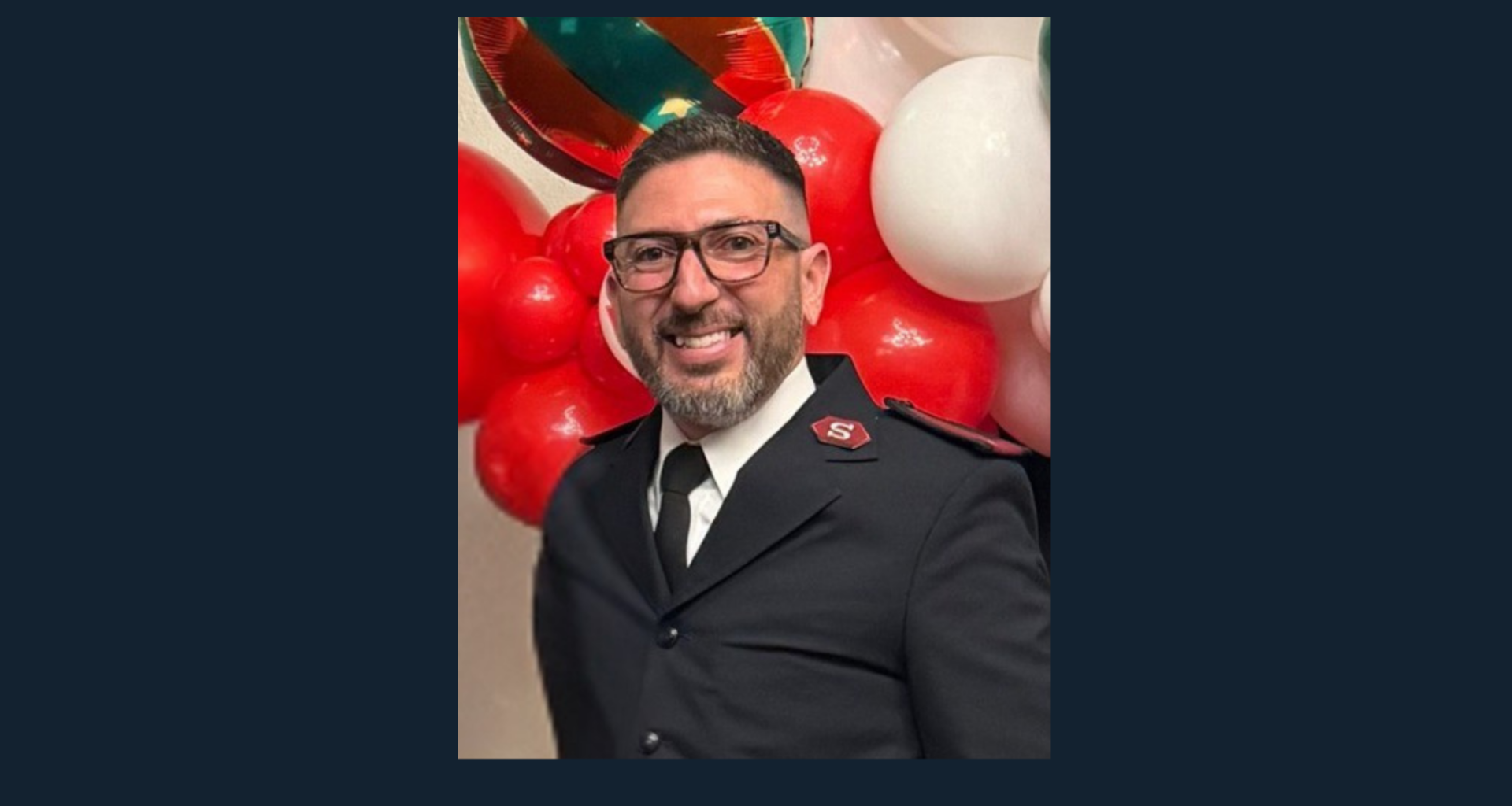
Today, Lt. Nick Carrillo serves as a Salvation Army officer or pastor—walking alongside individuals and families facing the same uncertainty he once knew firsthand.
He understands what it means to need shelter. And what it means to help build it.
This is a story about housing security. But even more, it’s a story about the ripple effect of stability—how when someone is given a place to stand, to be, they might just help someone else find the same.
This is a story about paying it forward.
About joy that doesn’t end with relief—but grows as it’s shared.
Show highlights include:
- What situational homelessness really looks like—and why it often happens quietly, not all at once.
- How housing insecurity affects families emotionally, spiritually and relationally—not just financially.
- Why simply having a safe place to be changes what a person can think about, hope for and plan.
- How stability restores dignity, calms the body and creates space for healing.
- The role faith played in Lt. Nick Carillo’s transformation during a season of deep uncertainty.
- What it was like to move from receiving help in a Salvation Army shelter to managing one himself.
- How lived experience shapes empathy when walking alongside others in crisis.
- What the “ripple effect of stability” looks like in real life—when help received becomes help given.
- Why paying it forward brings a deeper, lasting kind of joy.
- What brings Lt. Nick joy today as a Salvation Army officer serving families facing the same uncertainty he once knew.
Listen and subscribe to The Do Gooders Podcast now. Below is a transcript of the episode, edited for readability. For more information on the people and ideas in the episode, see the links at the bottom of this post.
* * *
Christin Thieme: Lt. Nick, can you take us back to the season of your life when maybe, you could say, housing felt uncertain? What was going on for you in your life at that point?
Lt. Nick Carillo: So for me, it all started when I went through The Salvation Army ARC [Adult Rehabilitation Center] in 2007. And I came from Mexico. I was born in San Diego, but I always lived in Mexico. I lived in Ensenada, Baja, California, Mexico, and that’s where I grew up. And my childhood was good. Stuff did happen through my childhood that kind of changed my life.
I lost my mom when I was nine. I grew up with my grandparents. I came out of a dysfunctional family where there was drugs, there was alcohol, there was a bunch of stuff happening at home. Financially, I always had everything, but that’s not everything in life.
I knew there was a God; I didn’t have a relationship, but it all changed really a lot when my mom passed away. And I pretty much grew up by myself. I grew up with my grandparents, but they always thought that by giving me money I was going to be okay. And that’s not what I needed at that time.
And so growing up, yes, I used drugs, I drank and in 1999 I was 19 and that’s the first time I went to a program and it was in Mexico. And I did a lot of programs over there. I think I did like 10 or 11, 10 of them in Mexico.
Christin Thieme: Oh wow.
Lt. Nick Carillo: And I went in and out, always wanted to change, but there was always something I still wanted to do and it always brought me back to my addiction. And in 2007, I went up to my dad and I told him I needed to change all that. I couldn’t be doing the same thing over and over. It was just a cycle. And I told him I wanted to go to a program in the U.S. and he told me about The Salvation Army.
My dad lived for many years in Anaheim, California. So he always used to go to The Salvation Army there in Anaheim. And he’s like, Nick, there’s a program there. And so I told him, let’s go.
So in 2007, we drove from Ensenada to Anaheim and we got there was a Friday, it was late. They were not doing intakes anymore. So we went and spent the weekend in Riverside. I have an uncle there, and then my uncle was like, why don’t we just go to the one here in Perris? And that’s where, for me, it all started. That’s where I went into the [ARC] program.
After I finished the program, I started to work for The Salvation Army at a thrift store, the one there in Perris. And after a few months went into production and I worked for the ARC for about three and a half years.
Then TradeWest opened back up. That’s when I moved to work for TradeWest. All that time, I wasn’t going to any corps or maybe once in a while to church there at the ARC, but I was going to a different church.
I got married right before I moved to TradeWest, and my wife is from Mexico, too. So she came and she came down with me and working for TradeWest. It was when I feel that God planted that seed for officership, we started to travel back then trade traveled a lot to all the different camps, different events, and we were seeing all what The Salvation Army was about, not just the ARC. And we went back and forth. I used to tell my wife, we should do this. And she’s like, no. And then she’ll tell me later. I’m like, no. So it was always like a back and forth thing.
Time went by in 2015, I believe, I left TradeWest. I wanted to do my own thing. I wanted a regular job and it didn’t work out. Everything went really bad. My wife got really sick with time and we ended up losing everything. And it was there in 2019 that my wife told me, Nick ask for help. We need help.
And that’s when I reached out to Major Julius Murphy and he was up in Yuba Sutter, California. And he’s like, Nick, I have a shelter here, a family shelter, just come over. And that’s where it all started for us again, that’s where we went into the shelter and it was really hard having my family there, having my kids there. But I can tell you that that was the best thing we did. We came closer as a family. We came closer to God. We started to go to the corps.
I think we were a few weeks in the shelter, and we were sitting in the back of the chapel and me and my wife just looked at each other and we’re like, this is what we want to do. We want to be there for someone. Like they were there for us. I think from that point on, we did everything we could to be where we are right now. I really see that place as a second home for us.
Christin Thieme: So when you hear the phrase ‘situational homelessness,’ what do you want people to understand about it? That it’s not necessarily the picture that we see on the news.
Lt. Nick Carillo: Yeah, I’m going to go back a little bit. Right before we called Major Julius, we were about to be homeless. We were going to get evicted. We were going to be out on the street. And for me, I think for everybody is a little bit different. That bottom could be somebody that’s already in the street, living in the street, or somebody that’s about to be there.
I think it’s more emotionally, spiritually where you are, how you feel, what you’re going through. And when we went through the shelter at that point, we were considered homeless, but we had a roof over our heads. We had people that we can talk to that about what we were going through because it was hard. Our marriage became really hard. We were going through so many issues that it affected everything in our lives. And being there helped us a lot.
Going to church helped us a lot. And we started to see more of what the actual corps life is and how they help people. They help families, not just going to church, but going to the food pantry, helping them with all the resources that are there. And I don’t know, it was just something that just opened our eyes and it was something that we said, we wanted to do this, we want to do this.
Christin Thieme: Do you remember a moment where you realized you were going to be okay? That you had somewhere safe to be, that everything was going to work out?
Lt. Nick Carillo: I think for me it was as soon as we stepped foot into the shelter, that’s when we said we felt safe. We had a place I didn’t have to worry about, what are we going to do tomorrow? And that just stepping into the shelter, that’s when we felt safe.
Christin Thieme: Yeah. What do you think becomes possible for someone once that daily stress of what’s going to happen tomorrow, once that subsides, what does that then allow for you to think about and do?
Lt. Nick Carillo: I mean, for me, I think you can start focusing on how to change your life, how to get back to where you were or even a better situation than you were before. For us, before going to the shelter, we really weren’t going to church much. And just being there, being able to go to church every Sunday and all the stuff that was happening during the week and just starting to have that relationship again with Christ helps so much. It changes everything. The way you see life was just completely different.
Christin Thieme: Can you share a little bit more about that? How did your faith change while you were in the midst of trying to figure out what was next?
Lt. Nick Carillo: Well, I felt like something just came off completely that I was trying to fix everything by myself. And I just went in deeper in this hole that I was digging. It was just getting worse and worse, and I couldn’t do it on my own. And until I just stopped and just, I left it all to God and said, I’m here. Just, I needed help. I needed help. And I think that peace, even if we were in the middle of living in a shelter, the peace that I felt that we as a family felt was amazing. I
t changes everything. It doesn’t matter. We’re going to go through good things and bad things, but if we have that relationship with Christ, and yes, there’s going to be moments that you’re going to be stressing, but at the end of the day, everything’s going to be okay.
Christin Thieme: You eventually became a shelter manager yourself.
Lt. Nick Carillo: Yes.
Christin Thieme: What was it like to stand on the other side of that experience in helping people who were just starting to navigate what was next?
Lt. Nick Carillo: I think what it helped a lot was that I went through what they were going through, so I was able to talk to them. If they needed somebody to talk to about what they were going through, I could talk about my experience and my testimony that you’re going to be okay. If you do what you need to do, you’re going to be fine. So I think that’s one of the main things that helped a lot.
Christin Thieme: Yeah, definitely. Now you’re a Salvation Army officer. Can you tell us a little bit about your appointment now and what you are doing these days?
Lt. Nick Carillo: Right now, me and my wife, we’re the corps officers in Hobbs, New Mexico, at the Hobbs Corps, and it’s great here. We love it. The community here is great. We’re doing a few programs here. We do have a food bank. It’s not just a food pantry. We have a huge warehouse with food where we can help the community, but we can also help other nonprofits and other agencies with food. Also, we do have the Street Level ministry.
We do have the mobile showers, and we’re not just serving Hobbs, New Mexico, we’re serving the whole county. So there’s five other towns where we take the showers with us and while we’re there, we’re doing case management, so not just the showers that people come. If they need help with rental assistance, utility assistance, clothing, hygiene, we can help them right there because it’s really hard for them to come all the way to the corps for help, and so we’re trying to make it easier for them.
One of the things that we’re going to start doing, we’re going to be taking food boxes to the whole county, separate from the food bank at church. We do have women’s ministry on Mondays. We have Bible studies for adults on Wednesdays, and we also have Troops.
Christin Thieme: Is there a moment that you felt like you could really see this ripple effect of stability, where you realized you received help and now you were the one giving help? Have you ever had one of those moments of doing the work that you’re doing where you really felt like this is like a full circle?
Lt. Nick Carillo: I can tell you that Christmas, I remember the first time we got help with an Angel Tree. We barely came out of the shelter. We have our house and we’re barely starting, and it was hard. It was hard to get the presents for our kids and coming back here and seeing the families when they get here and how emotional they get when they’re getting all the toys that we’re giving them for their family. I think right there, it always brings me back when I got the help, what I felt, and it was so great. I think it was the best Christmas the kids had. It was when we barely came out of the shelter because The Salvation Army helped us so much. It was amazing.
Christin Thieme: I love that. If someone’s listening right now and they’re in a season of housing insecurity or other insecurity, what would you want them to know right now?
Lt. Nick Carillo: To reach out to their local Salvation Army. There’s always help, and if they don’t have the resources to help them, they can point out where to go because that’s one of the things we do here. We don’t have everything. We can’t help everybody. What we try is to be connected to other resources in the community so we can point ’em out to where to go.
Christin Thieme: And for those who maybe aren’t worrying about where they’re going to be tomorrow, what’s a small way that they could get involved in creating that safety and stability for someone else?
Lt. Nick Carillo: I mean, we always need help. Go to the local Salvation Army or give them a call and ask them if there’s anything we can help you with, maybe with some food or clothing. Right now, for winter, we have a lot of people bringing us jackets and sweaters because they know we give that out at this time.
Christin Thieme: Yeah, love that. Look to do what you can where you are.
Lt. Nick Carillo: Exactly. Yeah.
Christin Thieme: Well, Lieutenant, last question for you. What is bringing you joy right now?
Lt. Nick Carillo: What is bringing me joy right now? I think I’ll go back to when we were in the back of the chapel and me and my wife looked at each other and we said, this is what we want to do to be there for someone that’s in need. Somebody was there for us when we were in need. I think that right there, being able to do that and talking, because sometimes you just want to have somebody to talk to or somebody to listen to them, and just being able to do that, how somebody was there for us in the past. I think that’s the thing that brings me joy, more joy than anything else.
Additional resources:
- Join us in giving joy to families who are experiencing poverty, hunger, job loss and more. Your generosity offers joyful reassurance that even during our most challenging times, we are not alone.
- What if one small story could spark hope? Join our free 5-day email course, Find Your Story: Share the Joy. Discover how everyday moments from your own life can encourage courage and kindness in others.
- If you are enjoying this show and want to support it, leave a rating and review wherever you listen to help new listeners hit play for the first time with more confidence.
 Download this page as a PDF